For master’s and PhD students
A thesis defense your committee can follow.
Attach your thesis as a PDF and your results as a spreadsheet. Slicess turns months of work into a twenty-minute talk: the question, the method, what you found and why it matters.
Free to start · No card needed
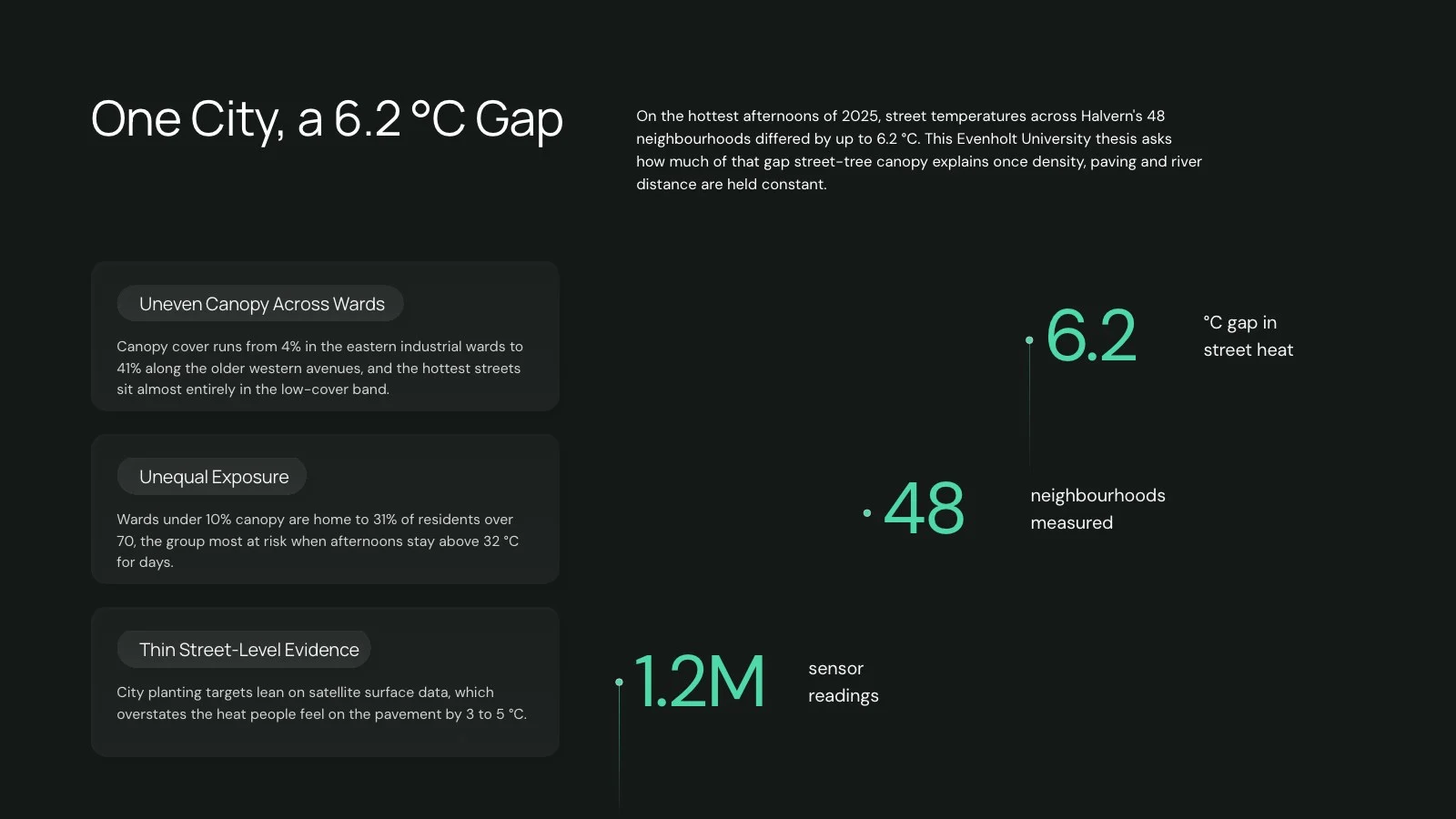
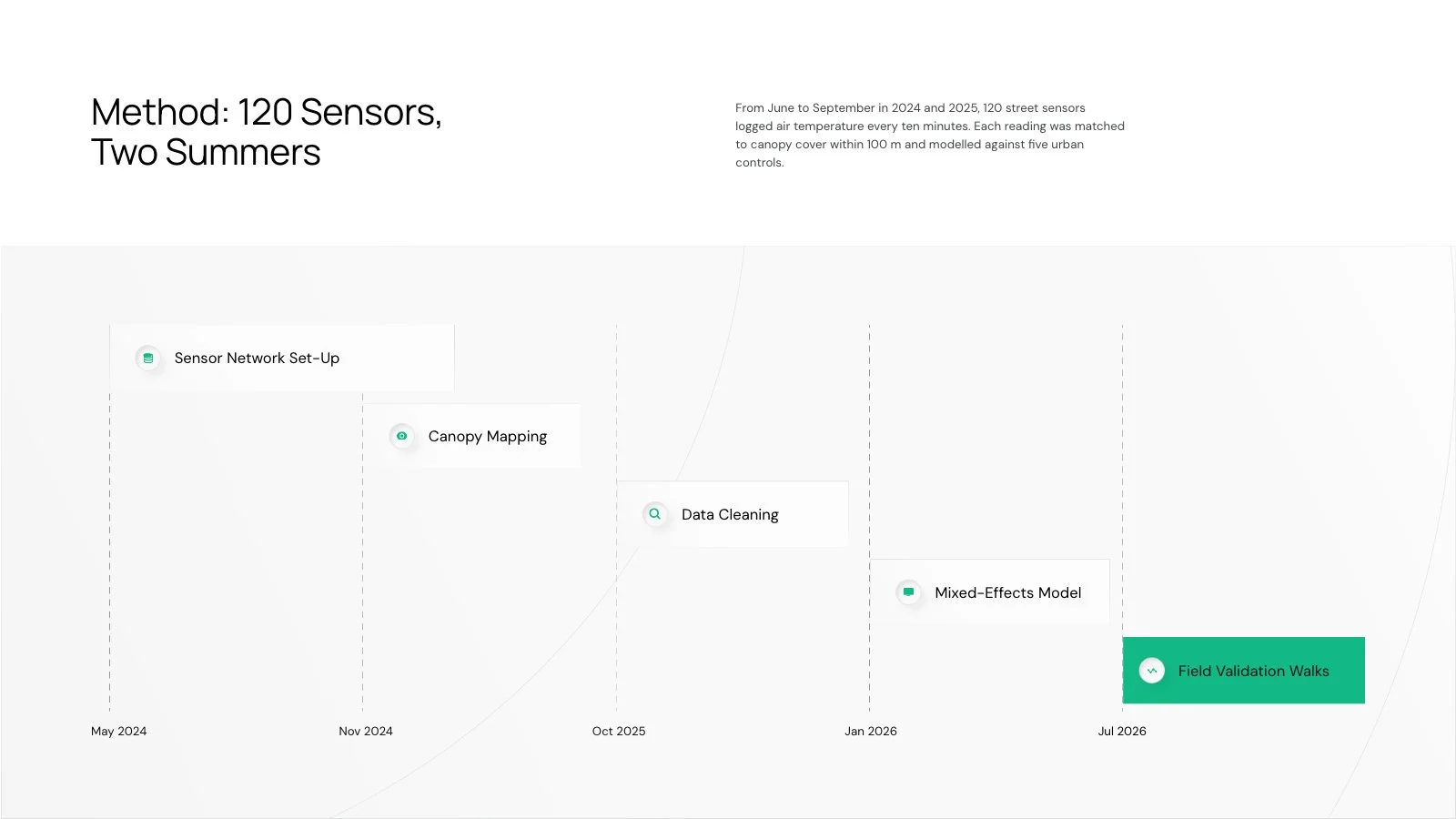
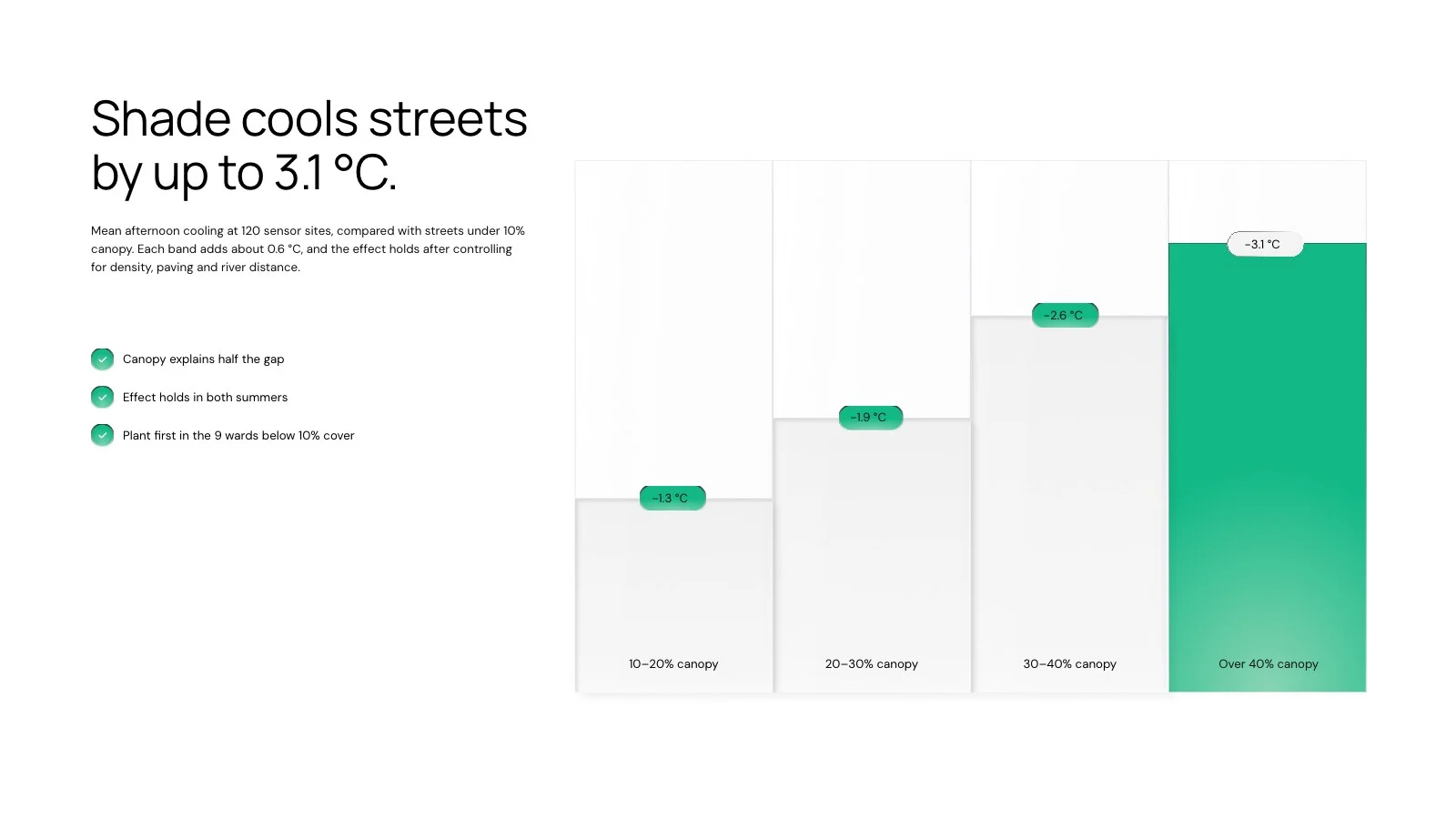
Slides from an example master’s thesis defense on street trees and summer heat, built in Slicess
How it works
From thesis to defense in three steps.
Attach your thesis
The thesis or its key chapters as a PDF, and your results as an Excel or CSV file. Say how long the talk is.
Generate
Slicess picks out the question, the method and the findings, charts your data with its exact numbers and designs every slide.
Rehearse and defend
Add speaker notes, rehearse in presenter view with a timer, and present from your browser on the day.
What you get
Your research, in the order the committee thinks.
The question, why it matters, how you answered it, what you found, and what it means.
- Question, background, method, results, discussion and conclusions
- Charts from your data, with exact numbers
- Fewer words per slide, so the committee listens to you
- Speaker notes and presenter view for the talk
- Present from the browser, or export PDF and PowerPoint
| Sources | Your thesis as a PDF (up to 5 MB on Free, 10 MB on Pro and Ultra), Word files and spreadsheets |
| Deck length | Up to 10 slides on Free, 30 on every paid plan |
| Credits | Reading spreadsheets is free; decks use your monthly credits |
| Free plan | 1,000 credits every month, no card |
| Export | PDF on every plan; PowerPoint on Pro, Ultra and Business |
The ten slides
What goes on each slide.
Most defenses follow this order. Name the slides in your prompt, or let Slicess plan them.
- 01
Title
Your thesis, your name, your supervisors.
- 02
The question
What you set out to answer.
- 03
Why it matters
The gap in what we know.
- 04
Background
The work yours builds on.
- 05
Method
How you answered the question.
- 06
Data
What you collected, and how much.
- 07
Results
What you found, charted.
- 08
Discussion
What the results mean, and their limits.
- 09
Contribution
What your thesis adds.
- 10
Conclusions
The answer, and what comes next.
Questions
Thesis defenses, answered.
Can it read my whole thesis?
Will the charts use my real data?
Can I add speaker notes for the defense?
Does it work for a master’s or undergraduate dissertation too?
Is it free?
More with Slicess
Other ways to start a deck.
Your defense is one PDF away.
Describe it, drop in your sources, and get a real canvas back in about a minute. Free to start.
1,000 free credits every month · No card needed