Pitch deck examples
Pitch deck examples you can learn from.
Six complete pitch decks for made-up startups, from pre-seed to Series A. Each one follows the ten slides investors expect, with a short note on why every slide works.
Pre-seed · raising $750K
Mavlo: a pre-seed pitch.
A freelancer money app raising $750K for 12 months. Early revenue, a bottom-up market and a quiet, confident tone.
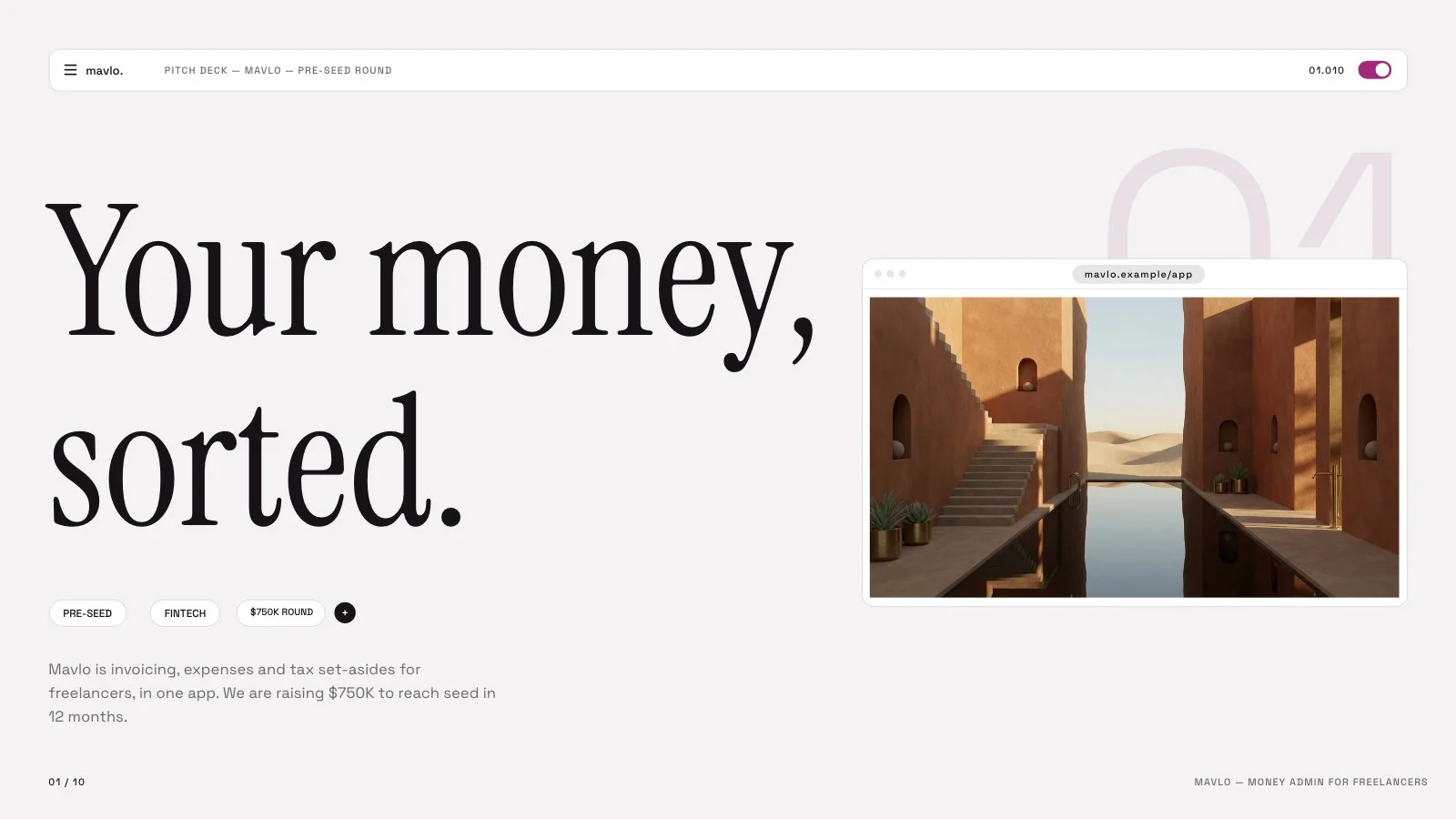
01 Cover
The headline is a promise the customer would say out loud, and the line under it names the product, the buyer and the round, so nobody has to guess.
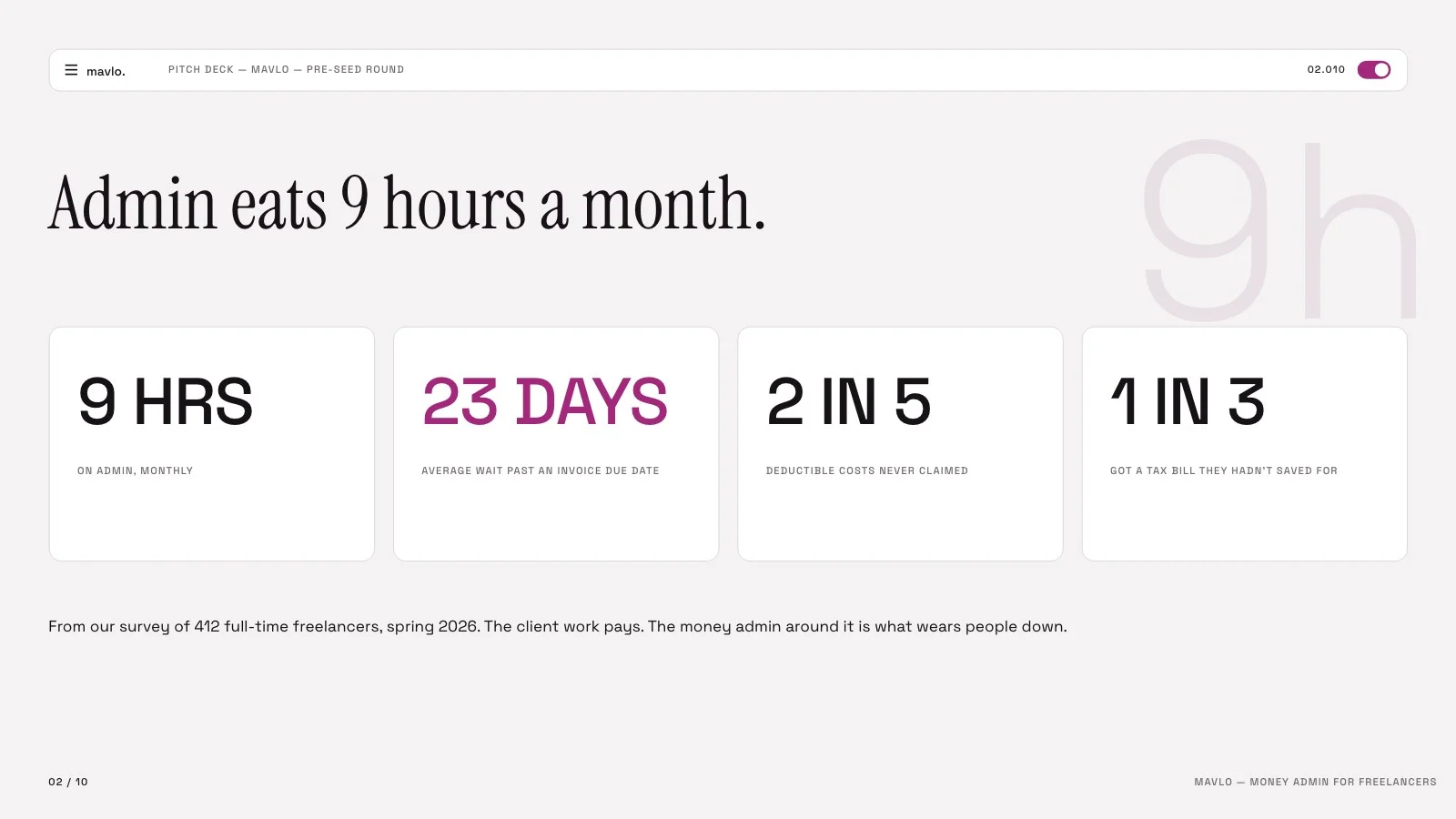
02 Problem
Four hard numbers from the founders’ own survey make the pain concrete. The investor sees time, cash and tax losses before hearing a word about the product.
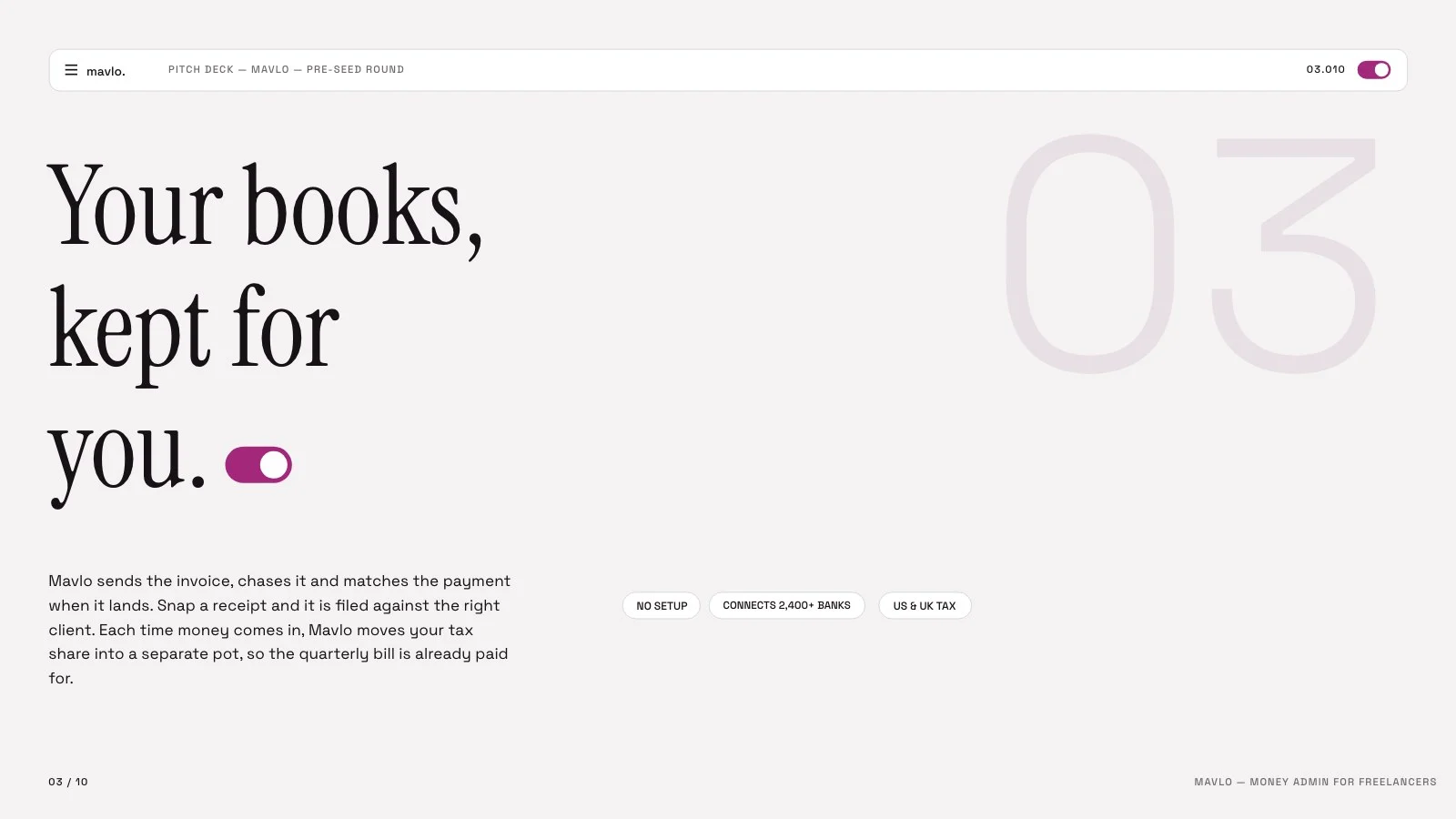
03 Solution
It answers each problem from the previous slide in the order the customer feels them, and ends on the outcome: the tax bill is already paid for.
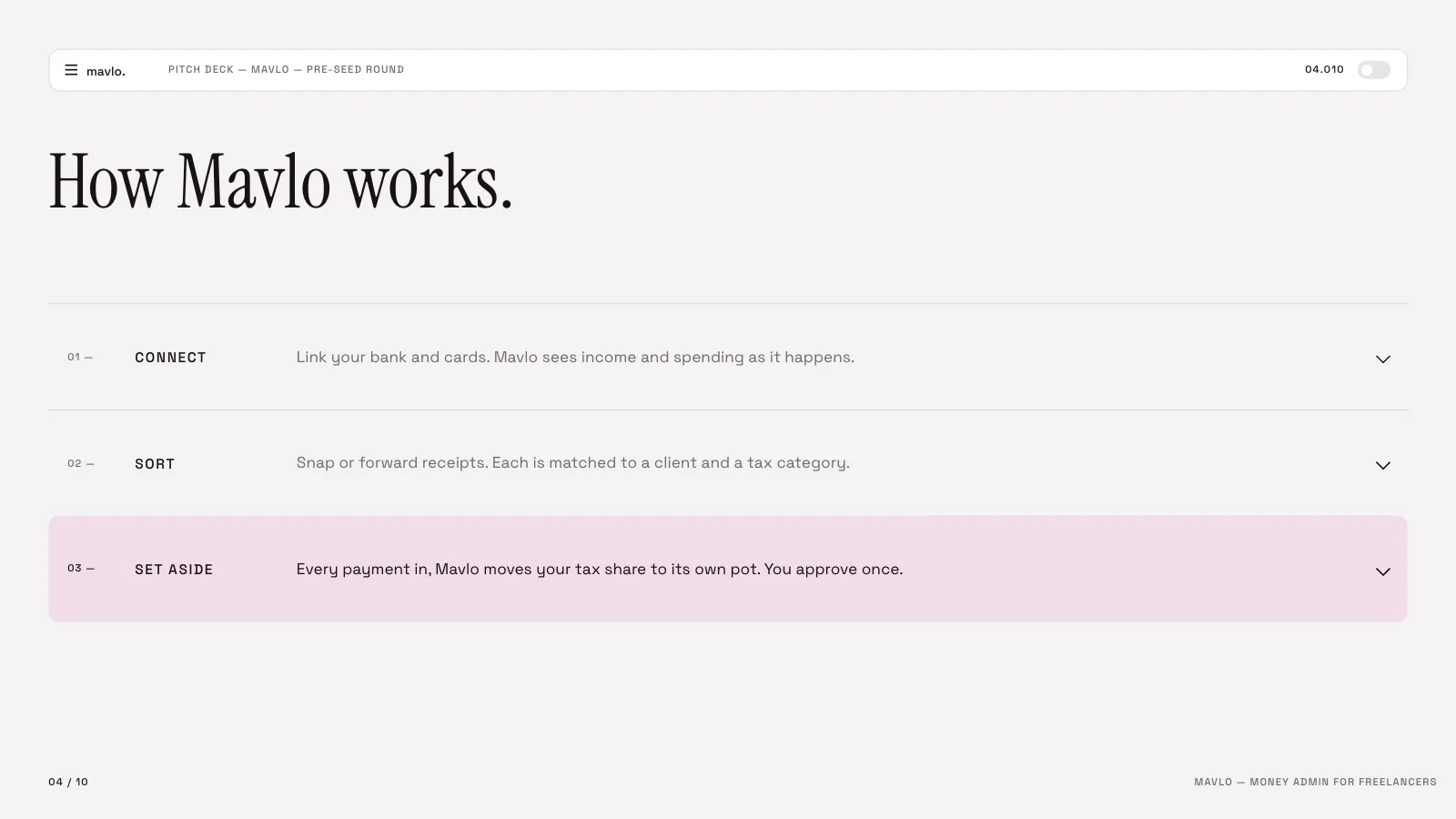
04 Product
Three verbs show how simple the product is to use. Highlighting the last step points at what competitors don’t do.

05 Traction
The title states the result and the chart proves the curve. Pairing growth with churn shows the founders know which number investors check next.
06 Market
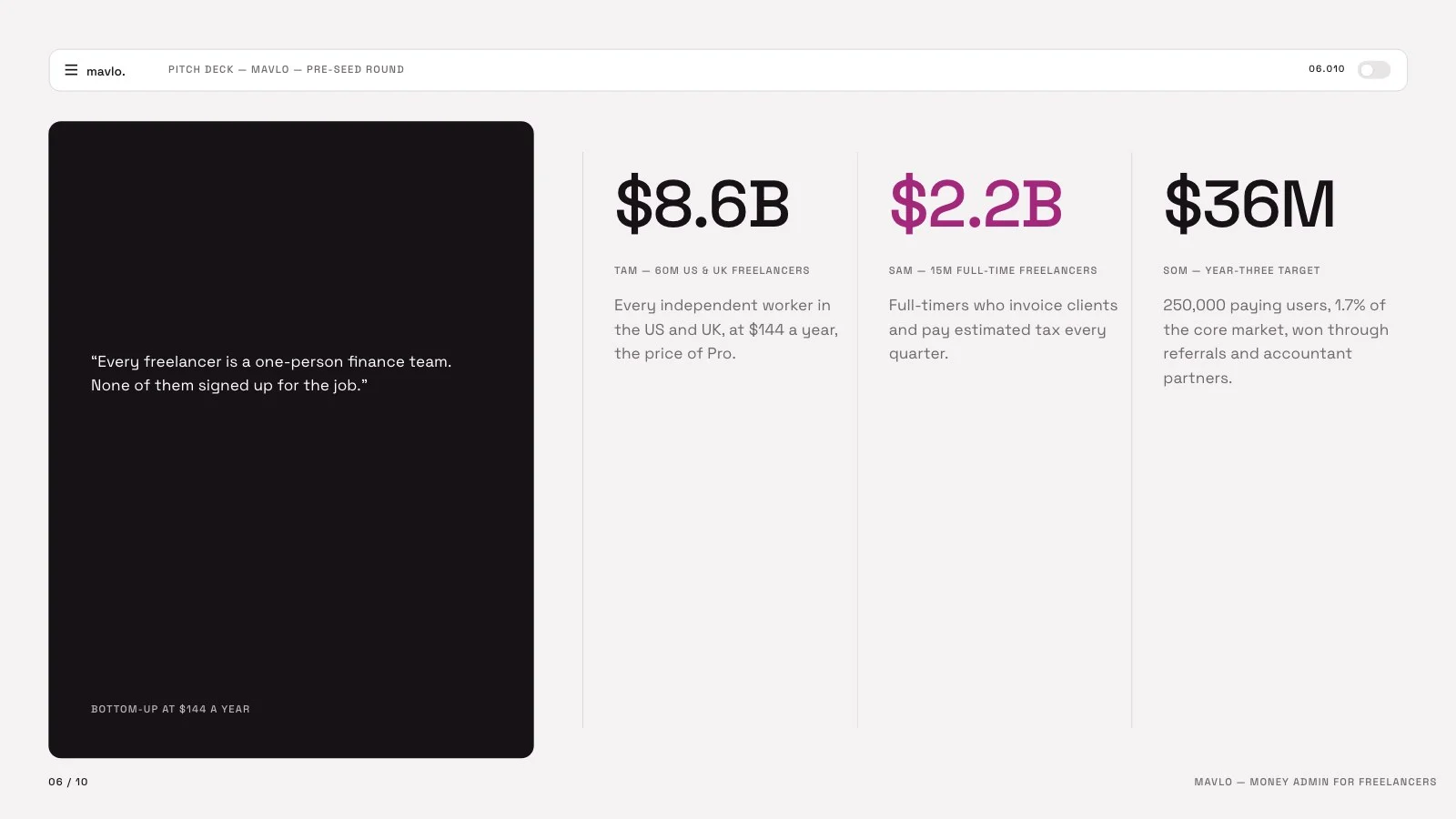
Built bottom-up from users times price, so every figure can be checked. The year-three target is a small, believable share, not a slice of the whole market.
07 Business model
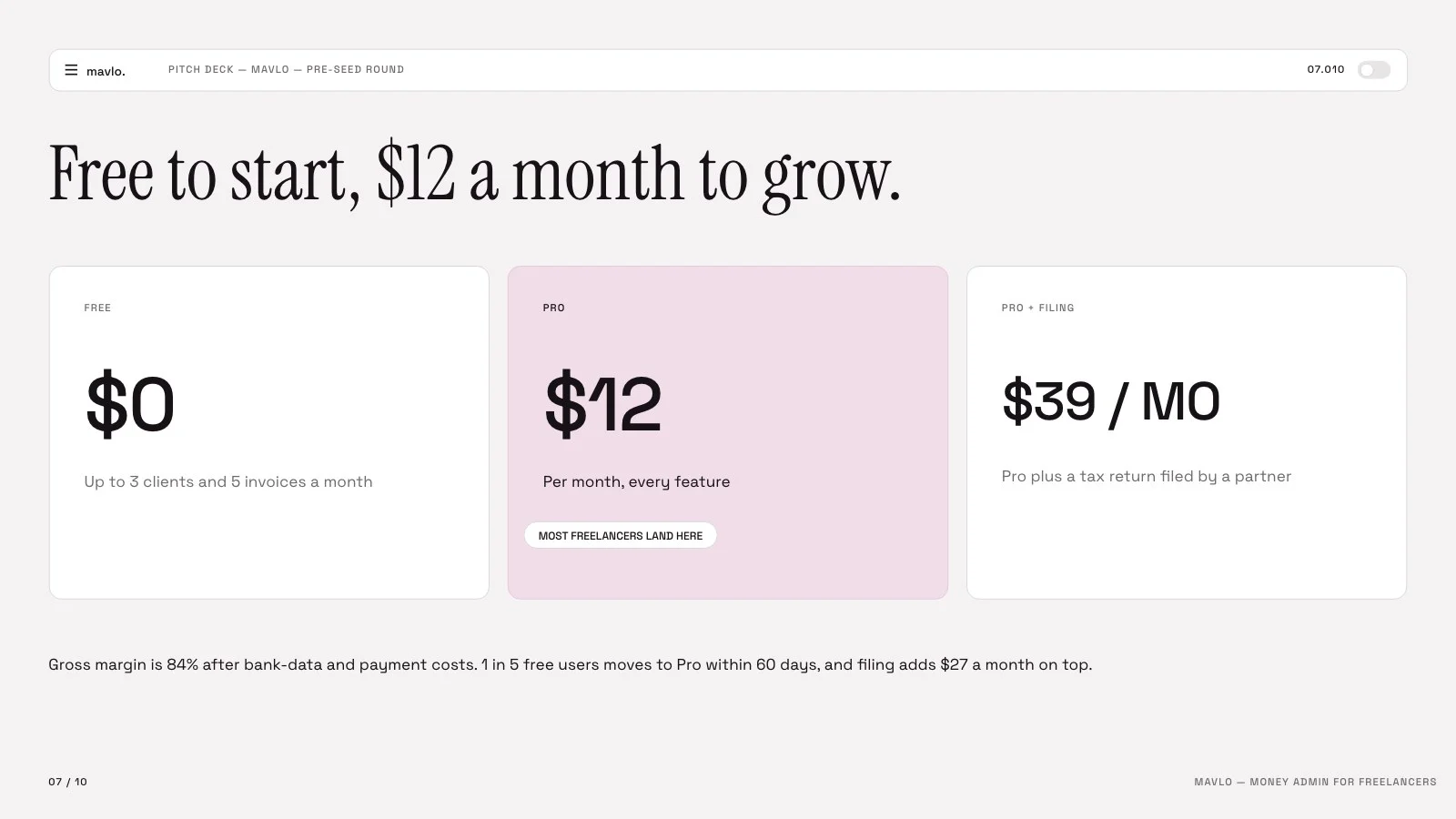
Prices, the plan most people choose and the margin all sit on one slide, so the model is easy to check.
08 Competition
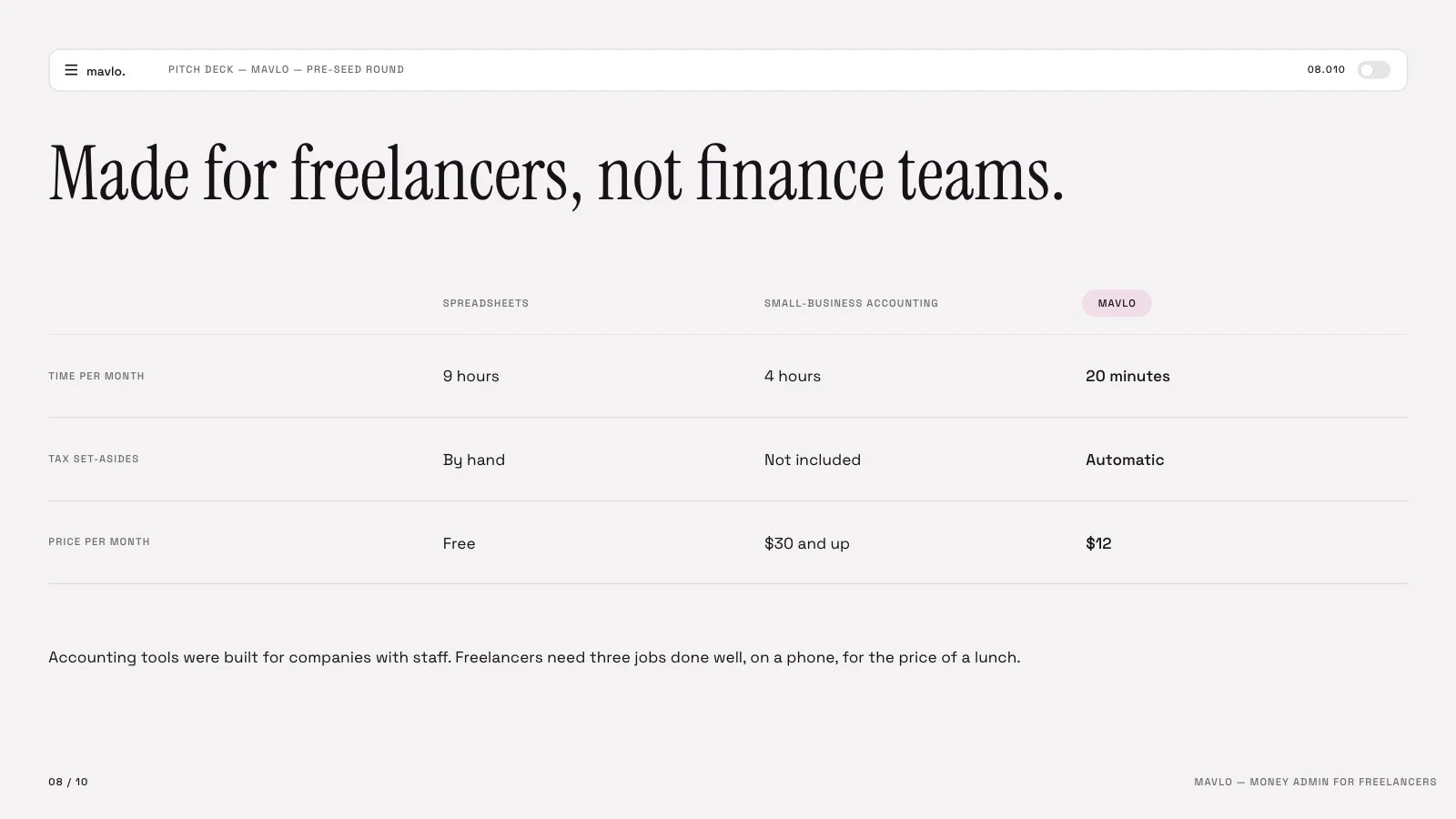
It compares on the three things the customer cares about, time, tax and price, and leaves out feature lists, so the gap is obvious at a glance.

09 Team
Each bio gives one reason this person fits this company. Customer, engineer and tax expert together cover the three risks an investor worries about.
10 The ask
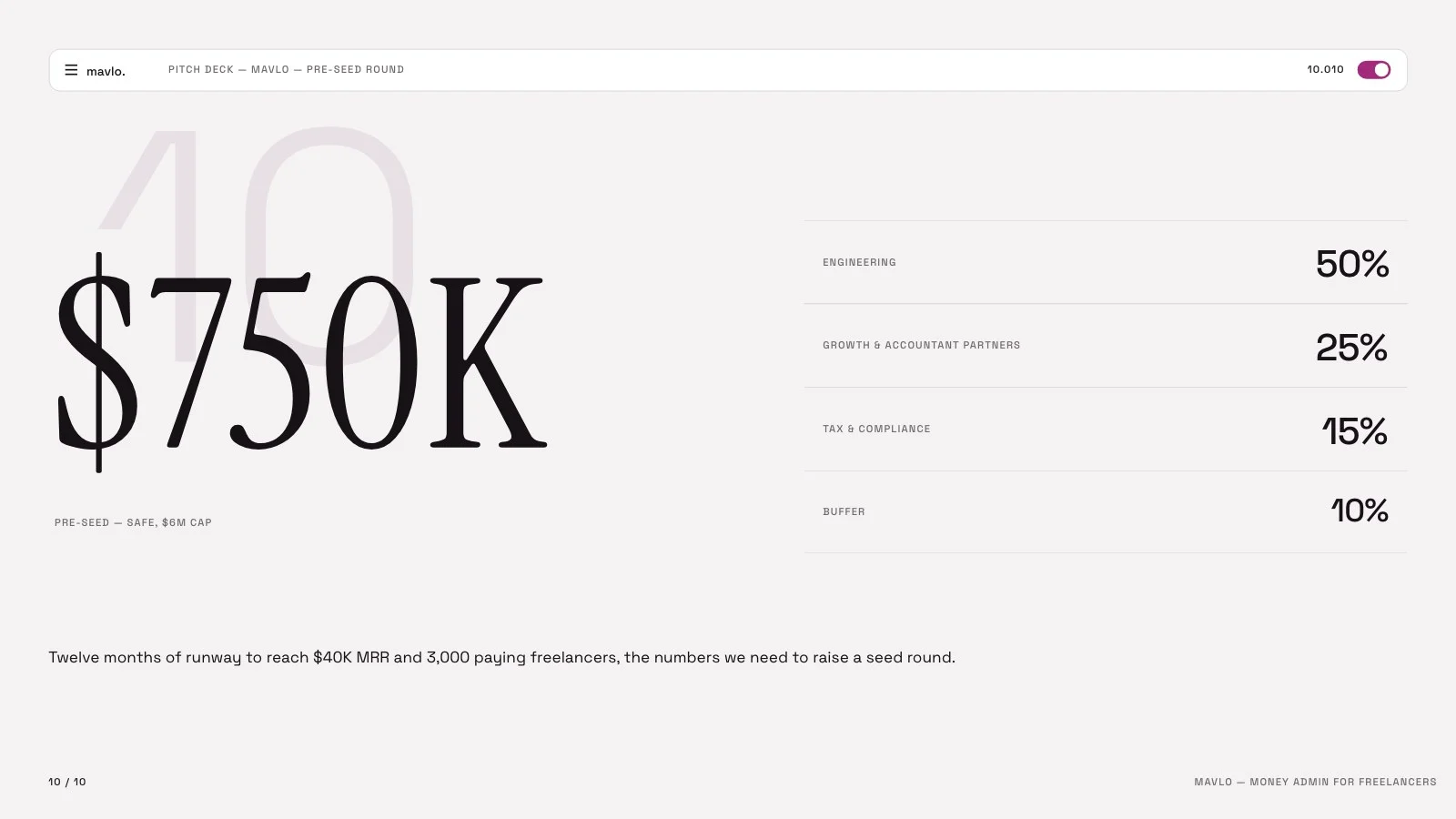
The amount, where the money goes and the milestone it buys fit on one slide. Ending on the seed-ready target tells investors when they’ll see the next round.
A pre-seed pitch for a fictional freelancer invoicing and tax app. Every company, person and number in it is made up.
Seed · raising $3M
Rouxline: a SaaS seed pitch.
Restaurant software raising $3M for 18 months. Measured pilot results, quarterly ARR and per-location pricing.
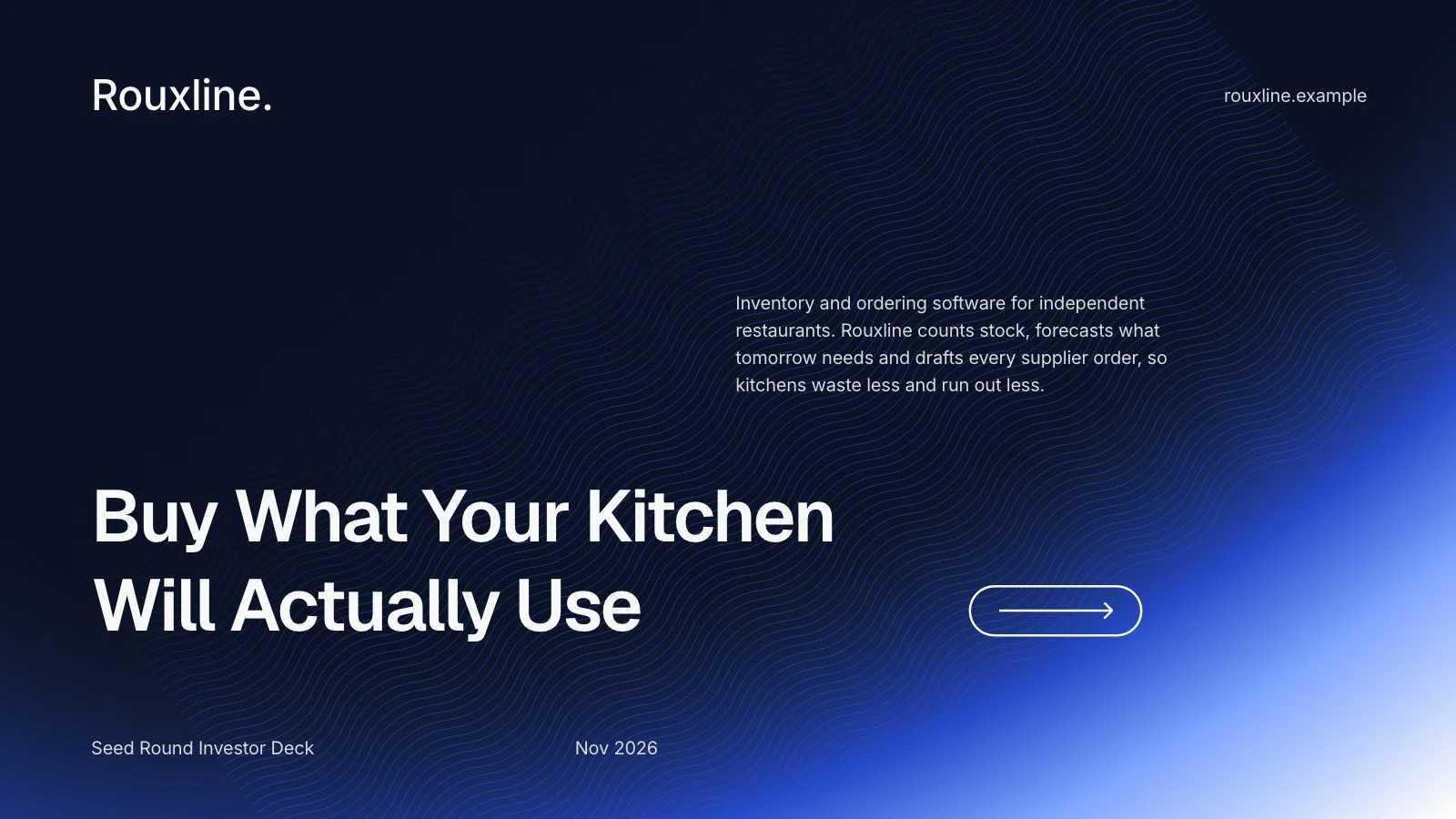
01 Cover
The headline is the customer’s outcome, not the product category, and one line says exactly what the company sells before the first slide turns.
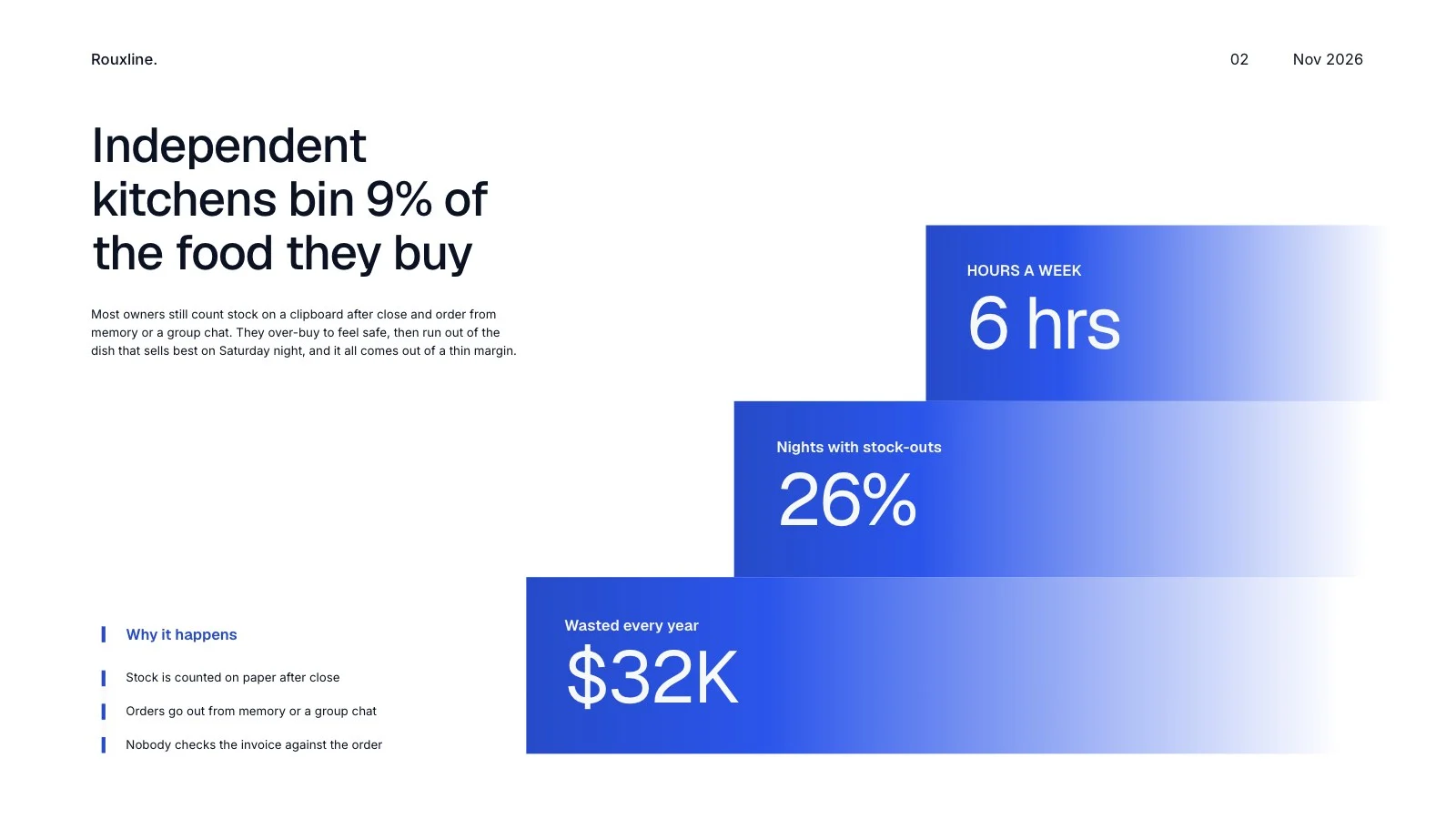
02 Problem
It stacks the pain from time to lost sales to dollars, ending on the biggest number, and says why the problem exists before showing the solution.
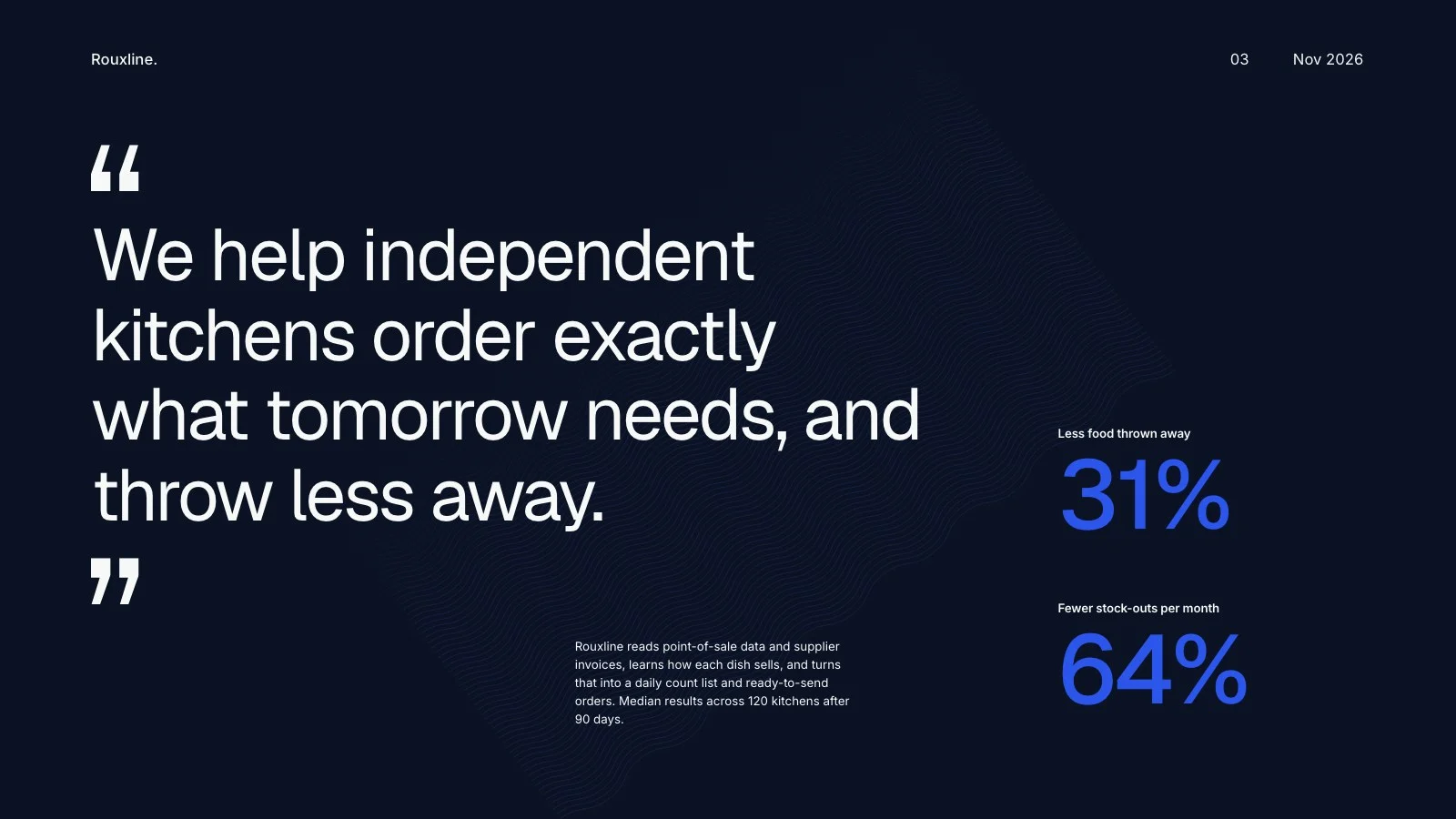
03 Solution
One sentence says what the company does, and two measured results prove it works, with the sample size stated so the numbers are believable.
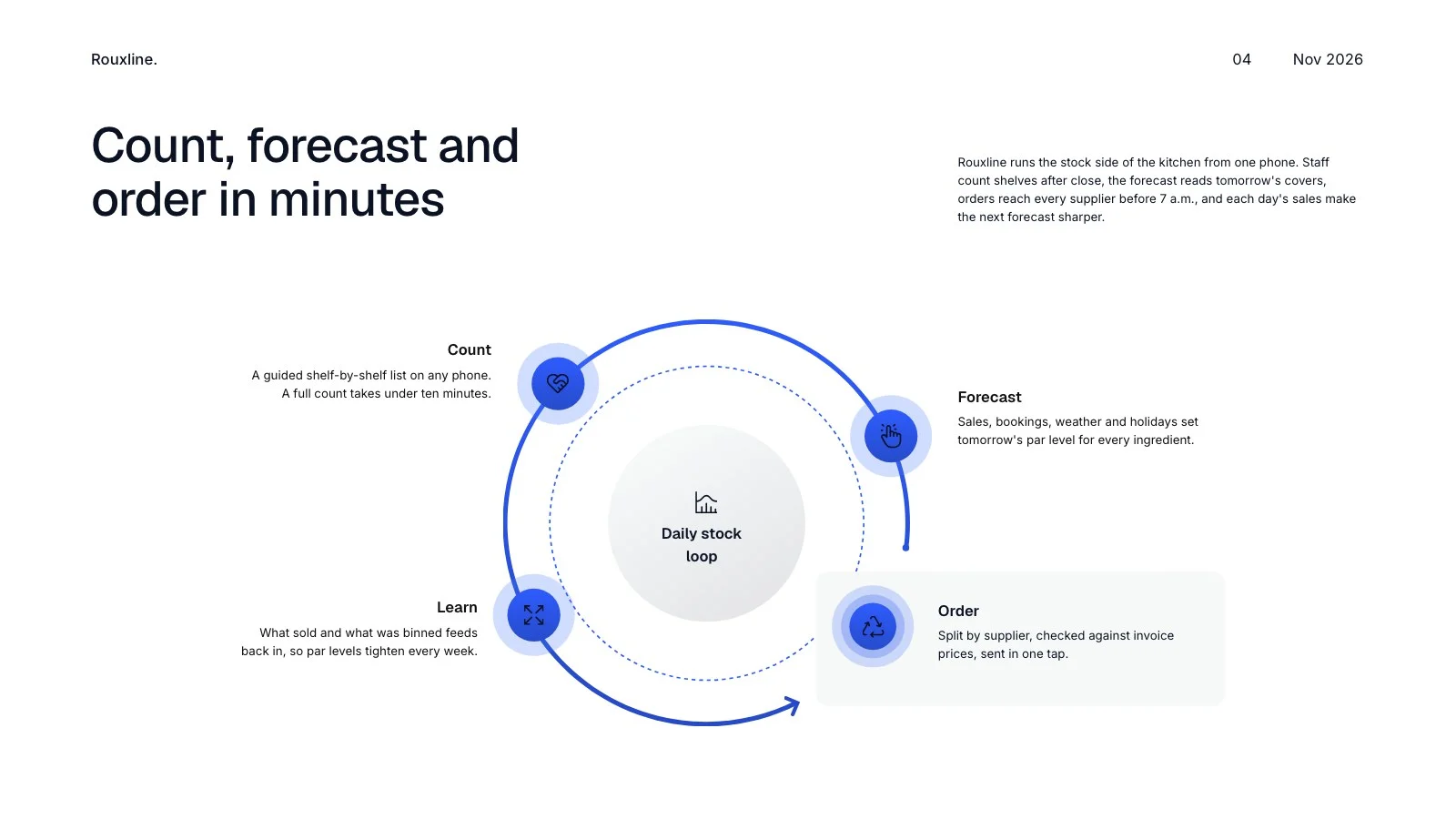
04 Product
Drawing the product as a loop shows how it fits the daily routine, and that it gets better the more it is used, without needing a demo.
05 Traction
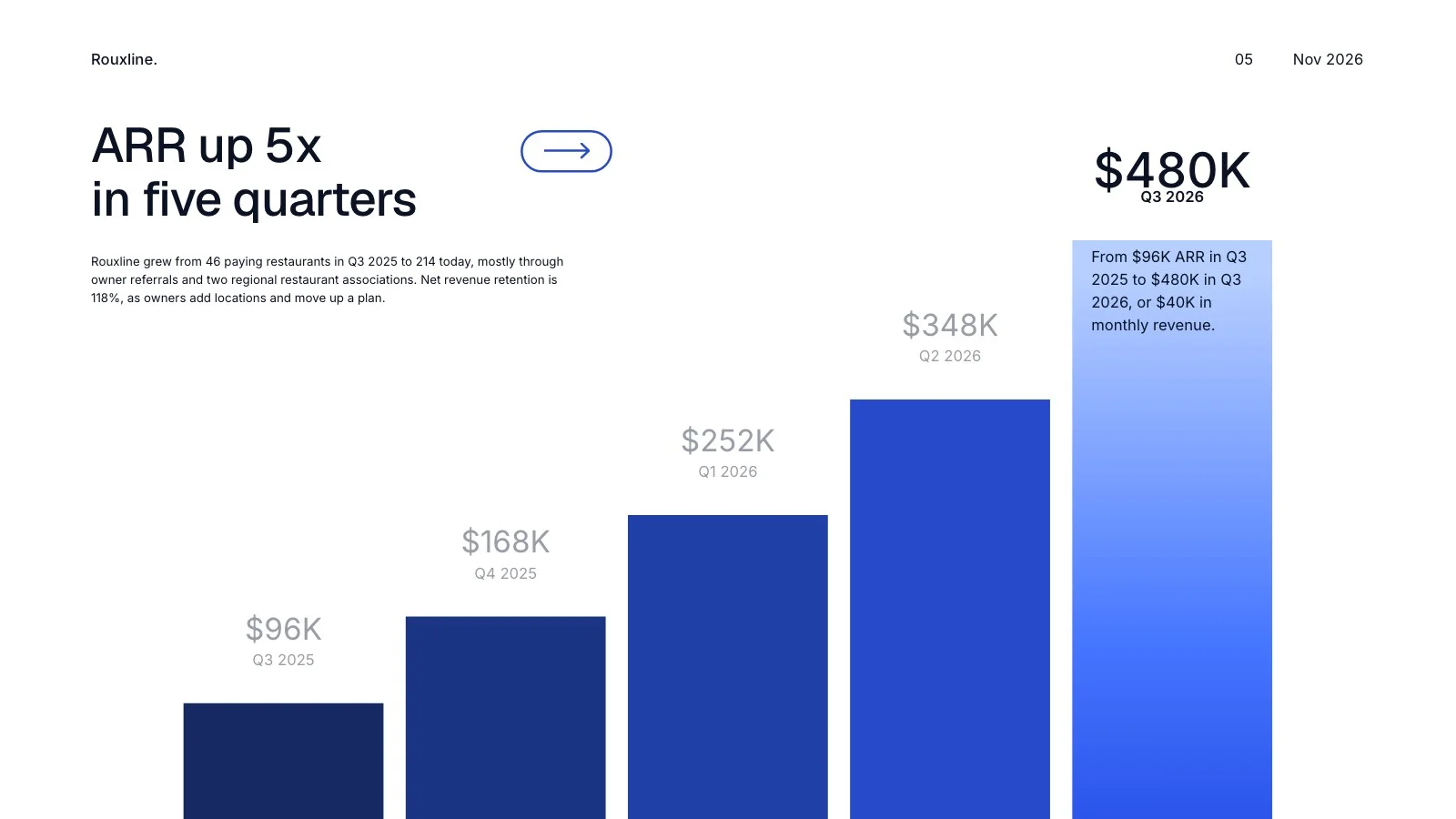
A simple bar chart with the latest number largest makes growth obvious at a glance, and the text says where it came from and that customers expand.
06 Market
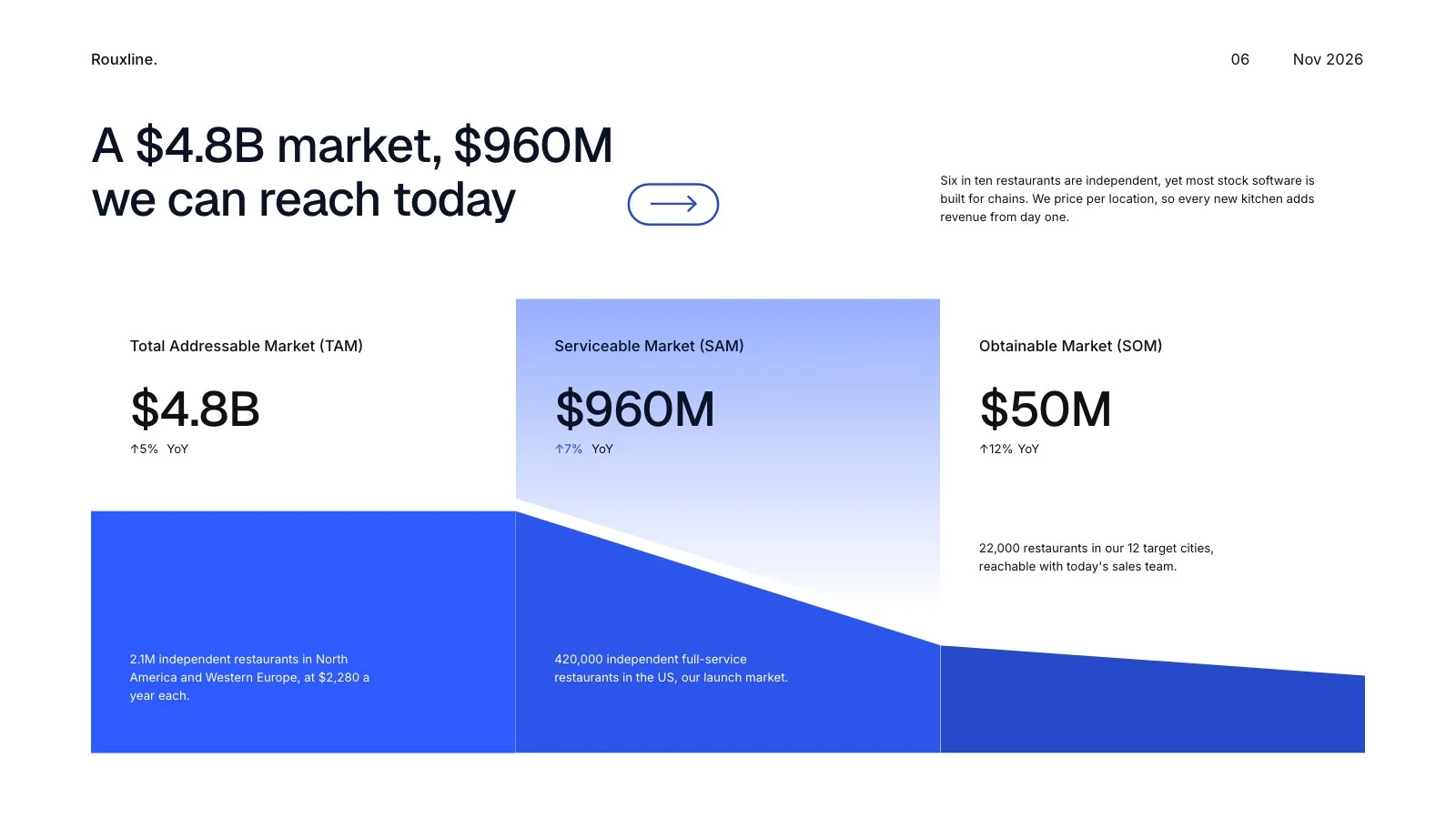
Each market number is built from a count of restaurants times the price, so an investor can check the math instead of trusting a report.
07 Business model
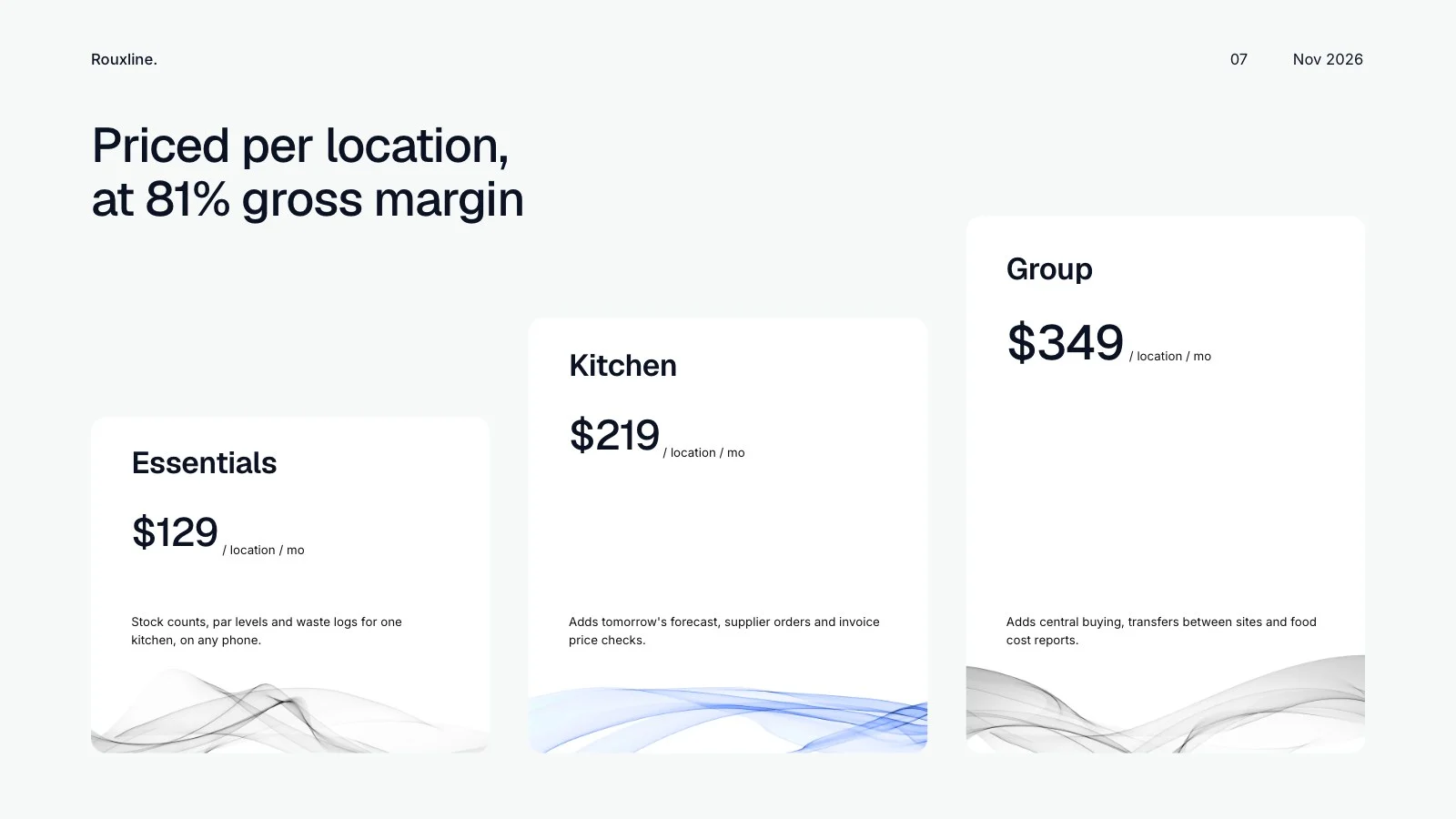
Clear prices plus gross margin in the title answer the two revenue questions investors ask: what each customer pays and how much you keep.
08 Competition
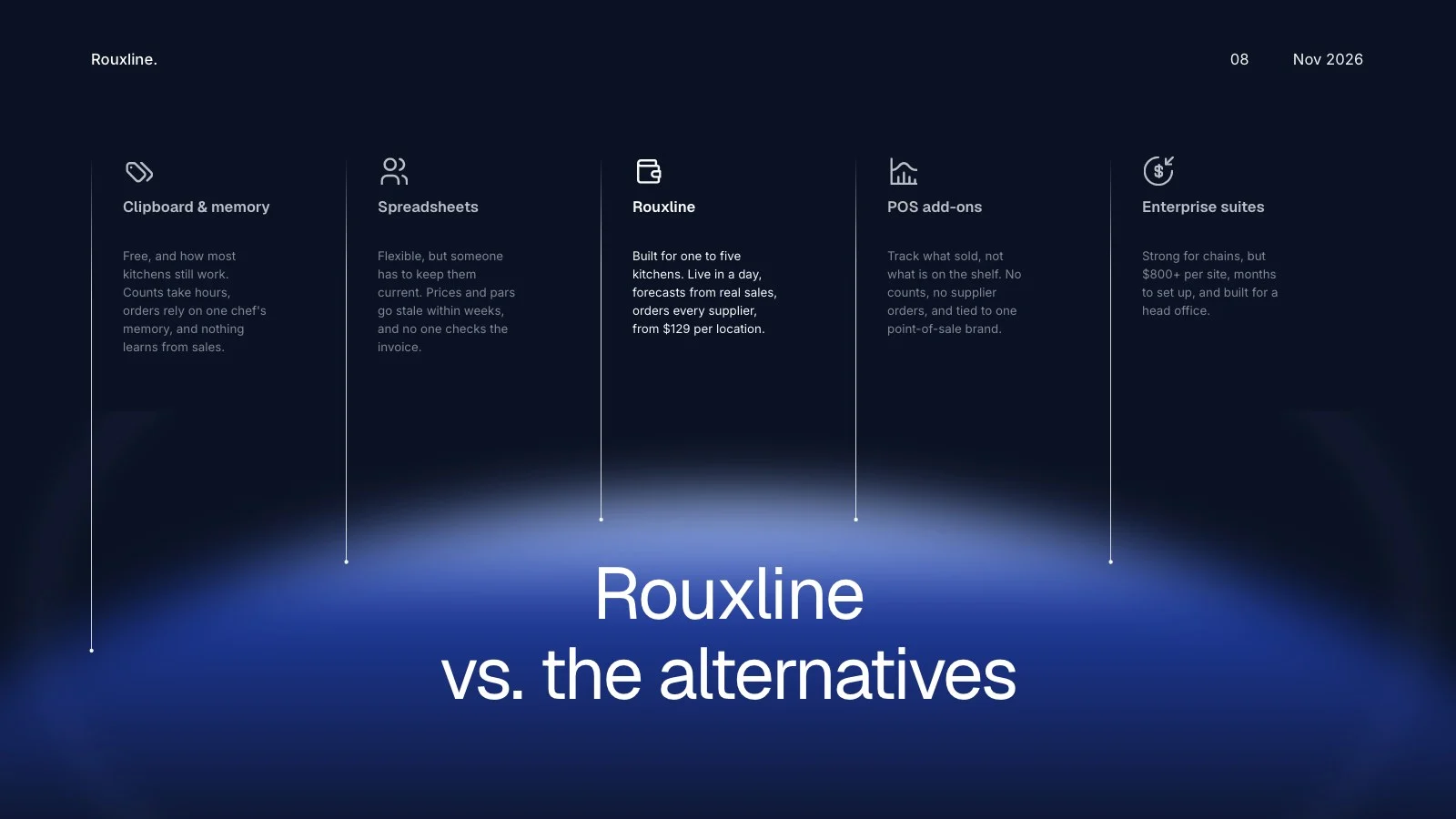
It compares against what restaurants actually use today, including doing nothing, and names one honest weakness of each, which reads as more credible than a checkmark grid.
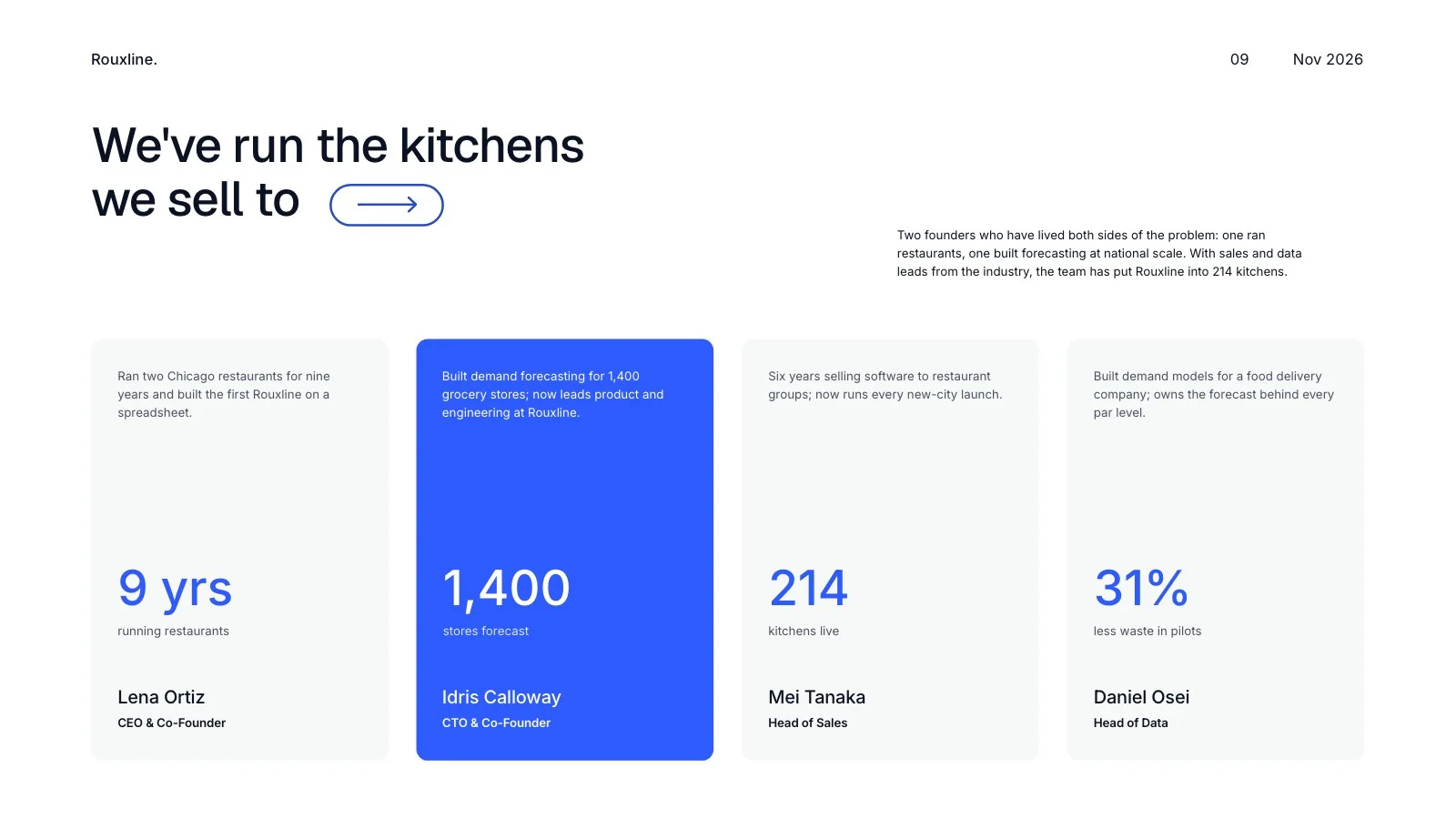
09 Team
Each person gets one proof number tied to the problem, so the investor sees why this team, not just who they are.
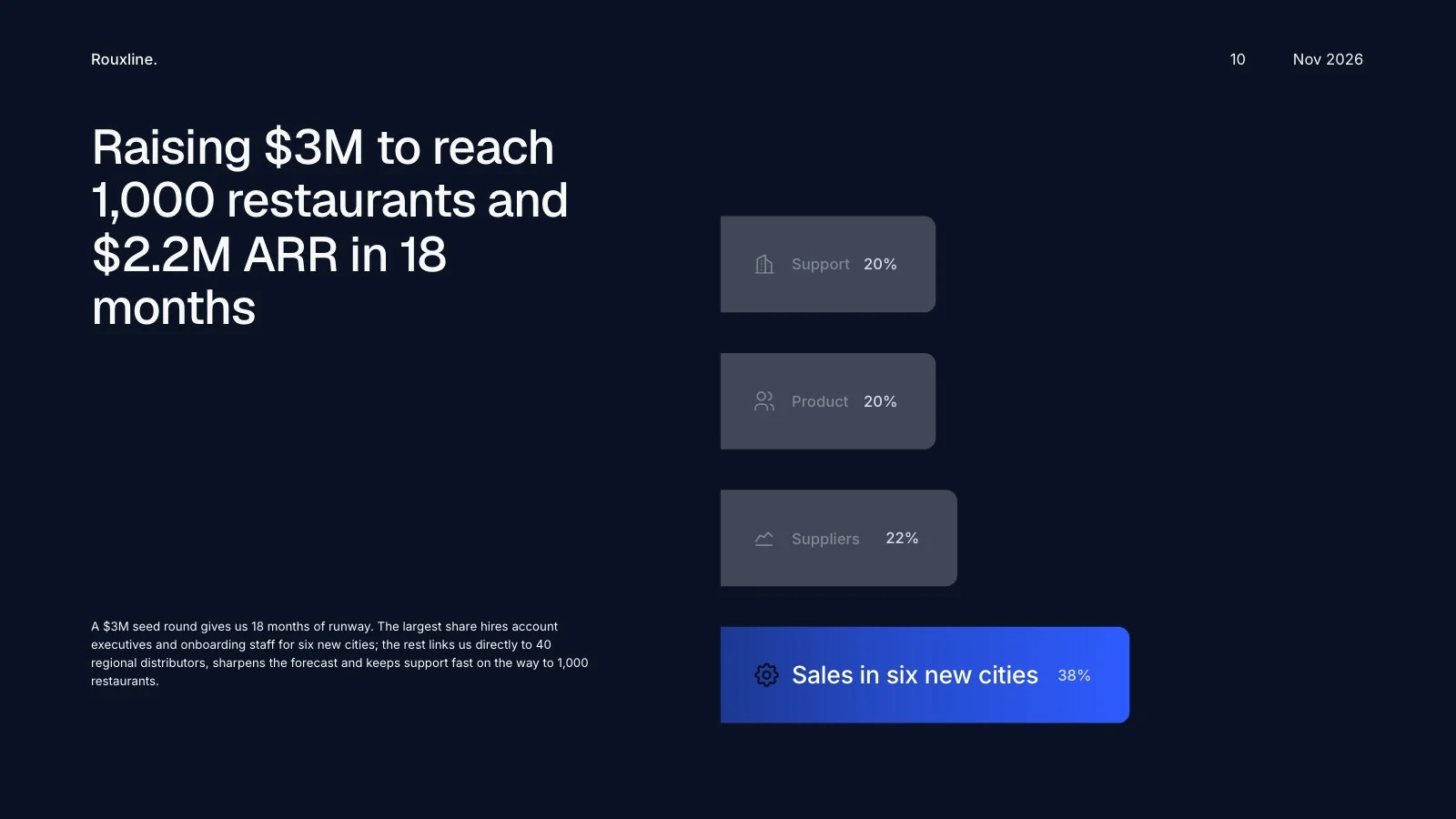
10 The ask
The title gives the amount, the milestone and the runway in one line, and the chart shows where every dollar goes.
A seed pitch for a fictional restaurant-inventory app. Every company, person and number in it is made up.
Seed · raising $4M
Cimova: a healthtech pitch.
A clinic-prescribed physio app raising $4M for 20 months. Outcomes, retention and a clear path from one clinic to hospital groups.

01 Cover
In one line it says who buys (clinics), who uses it (patients) and the result that matters (patients finish), so the investor knows the business before the first slide.
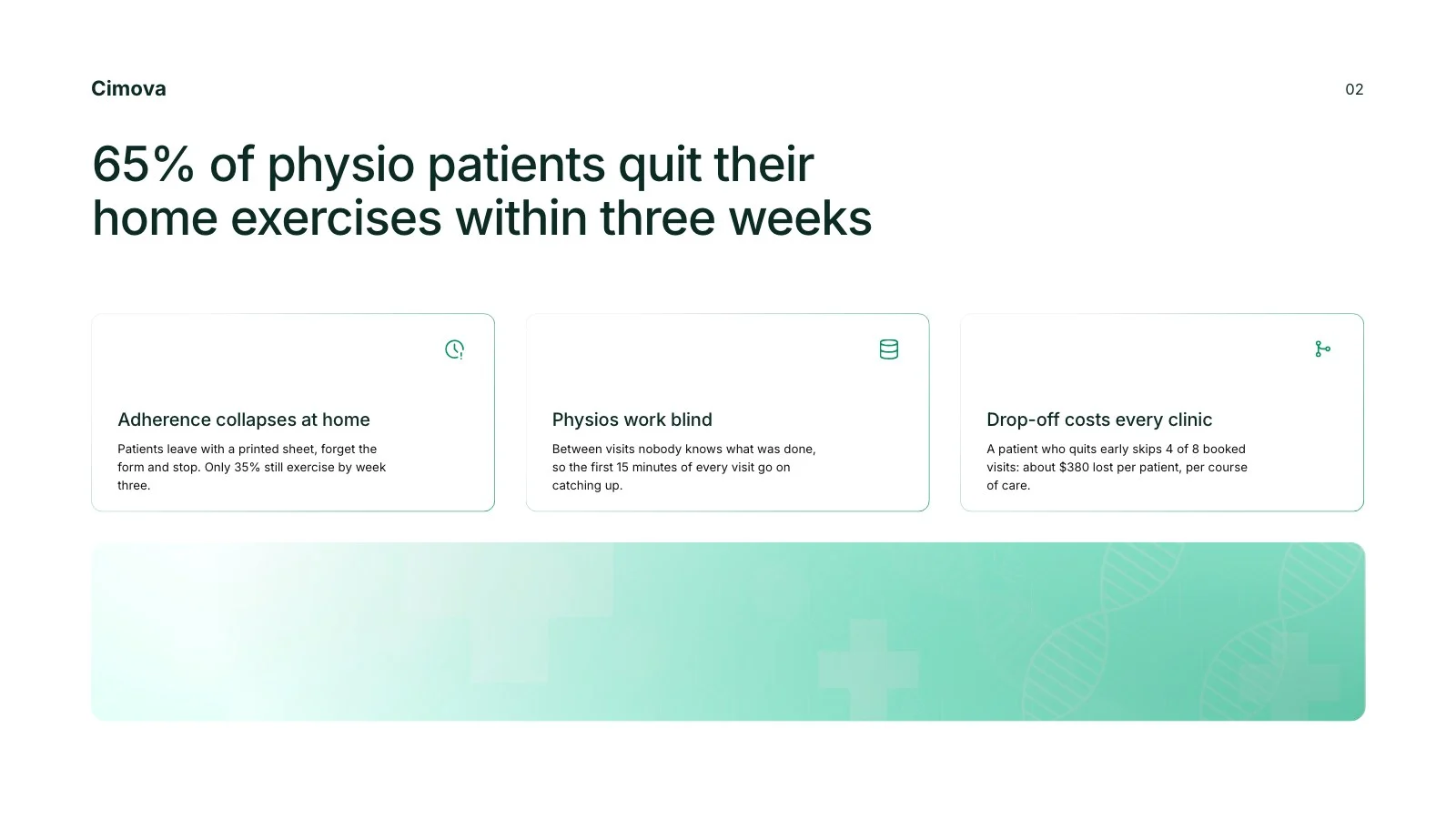
02 Problem
The title is the statistic, and three cards show what it costs each party: the patient, the physio and the clinic’s revenue.
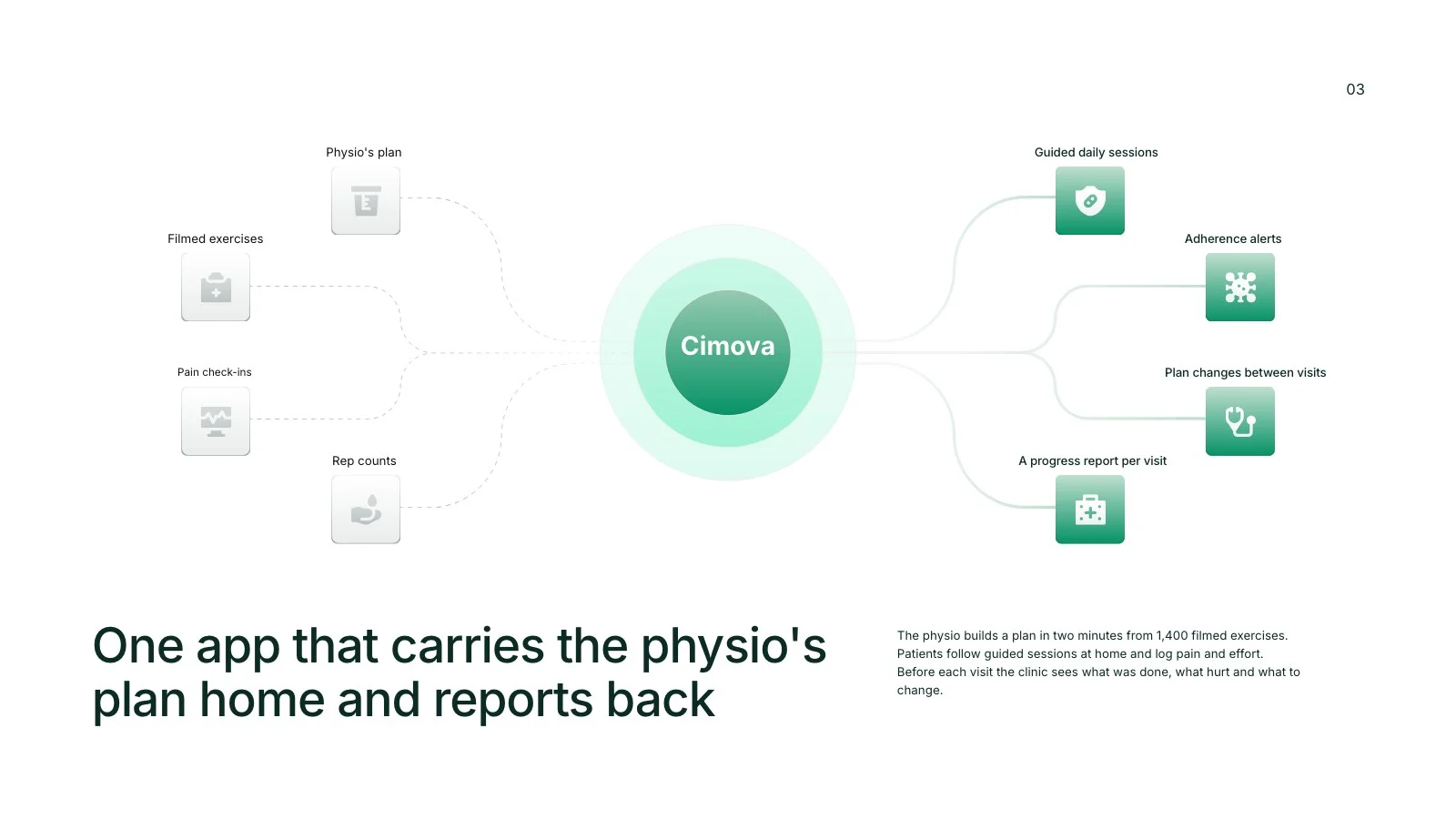
03 Solution
Showing what goes in and what comes out explains the product as a loop, so it reads as more than an exercise video library.
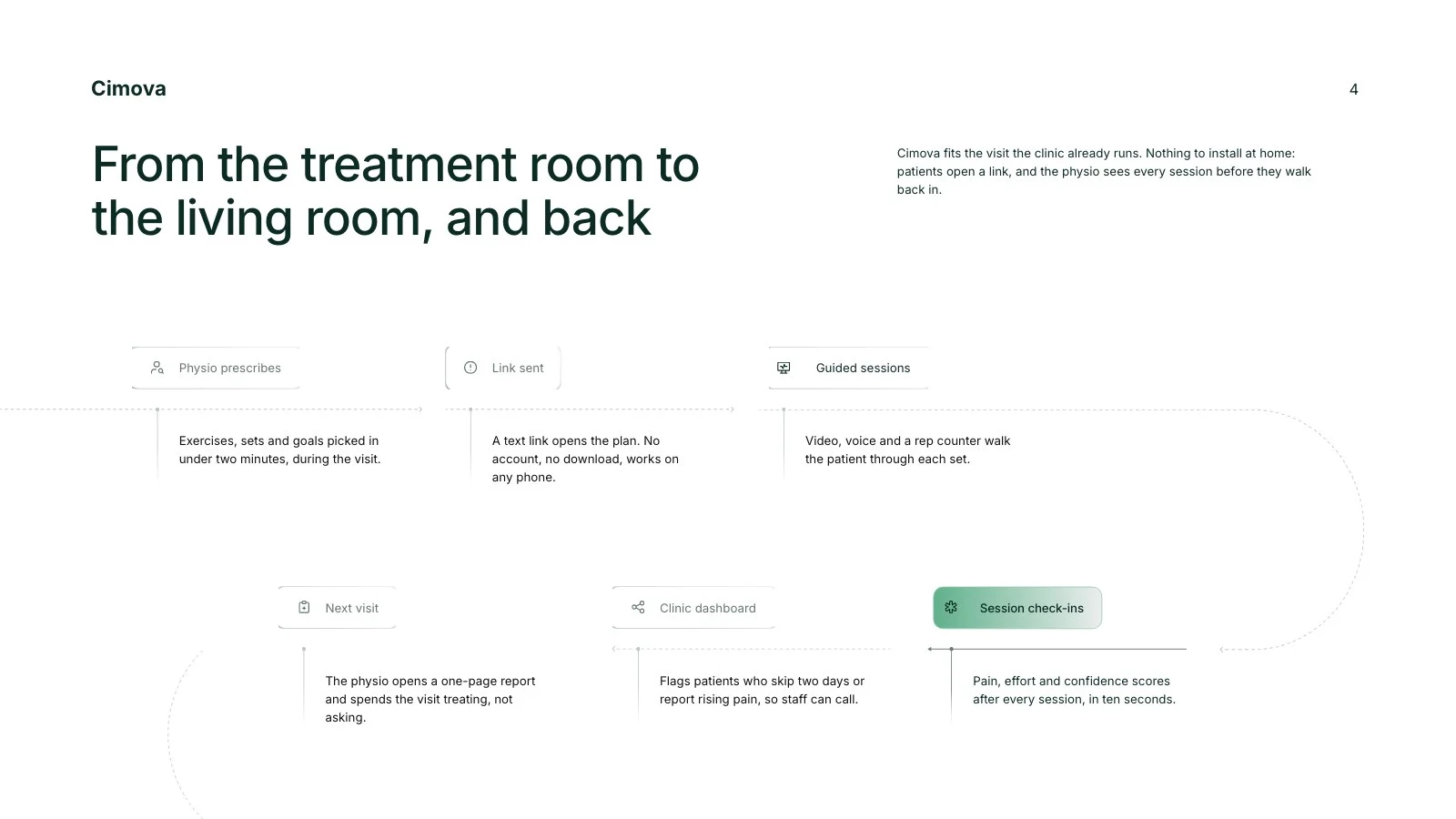
04 Product
Walking through one patient’s week lets the investor picture the product in use, and shows it fits the visits the clinic already runs.
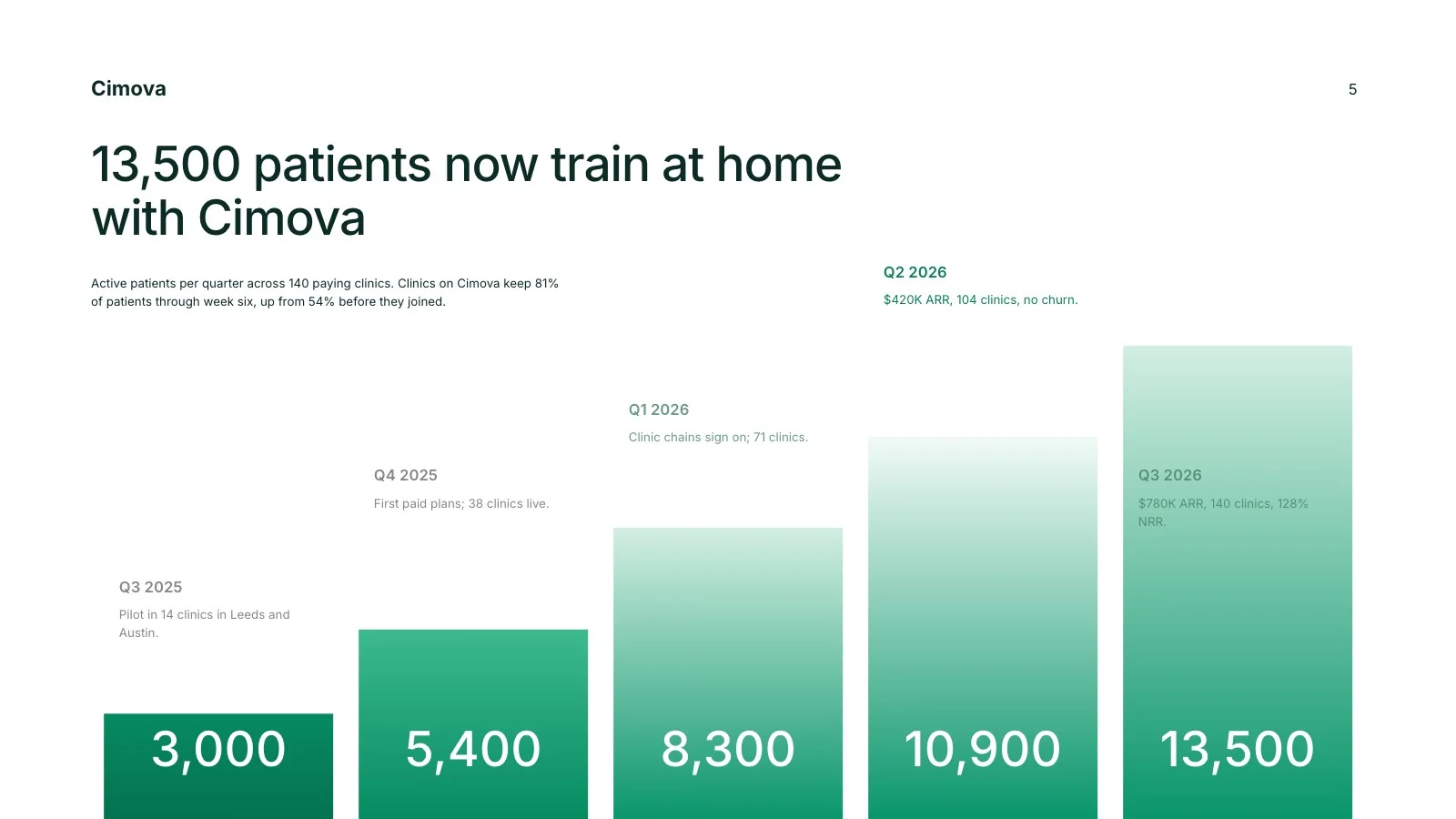
05 Traction
Steady growth, with each quarter tied to a milestone. Rising retention shows the product works, not just that it sells.
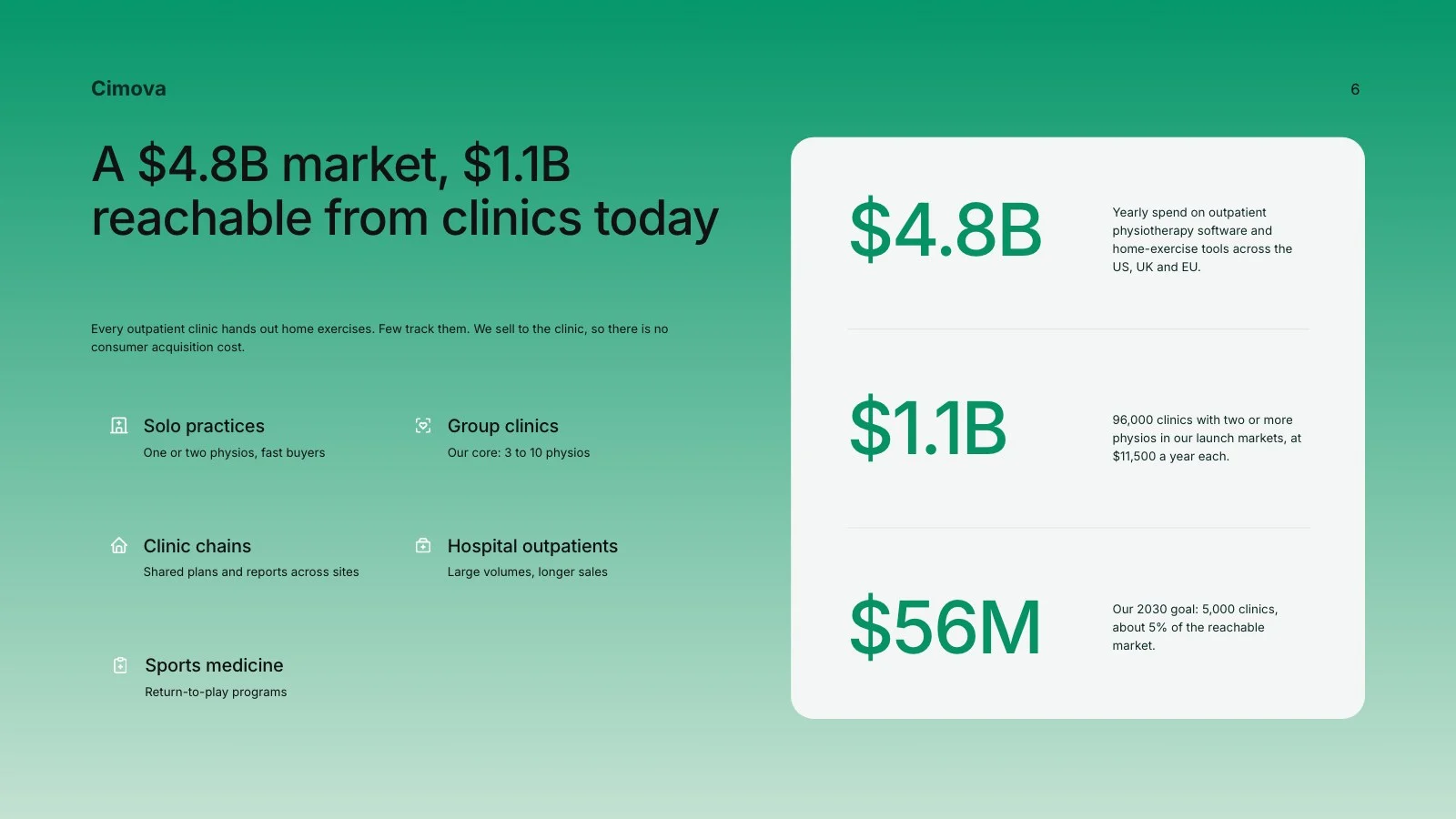
06 Market
It goes from the total down to a goal the team can defend and shows the math behind each figure, which makes the size believable.
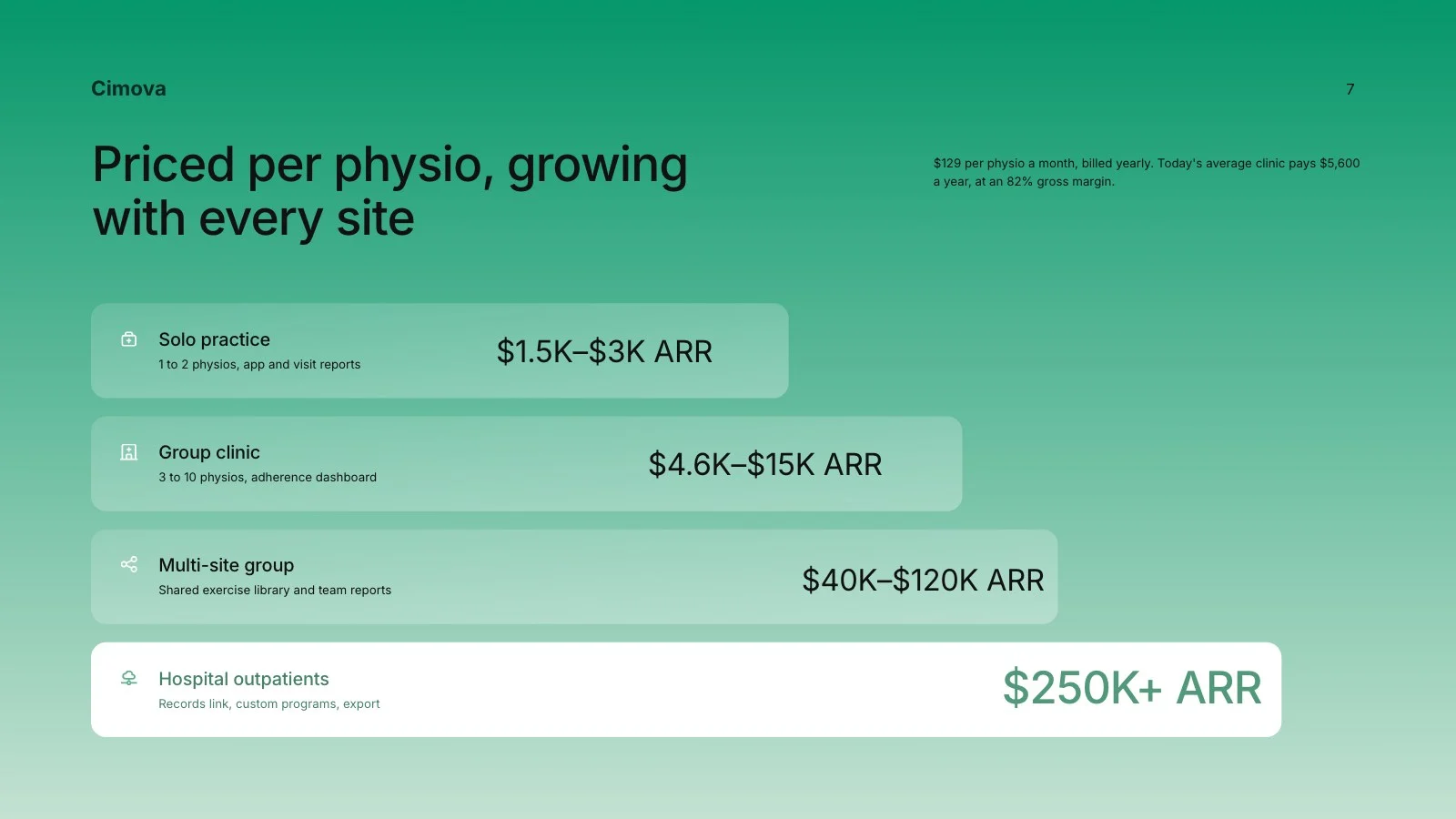
07 Business model
One clear price and the margin answer the money questions up front; the tiers show how accounts grow.
08 Competition
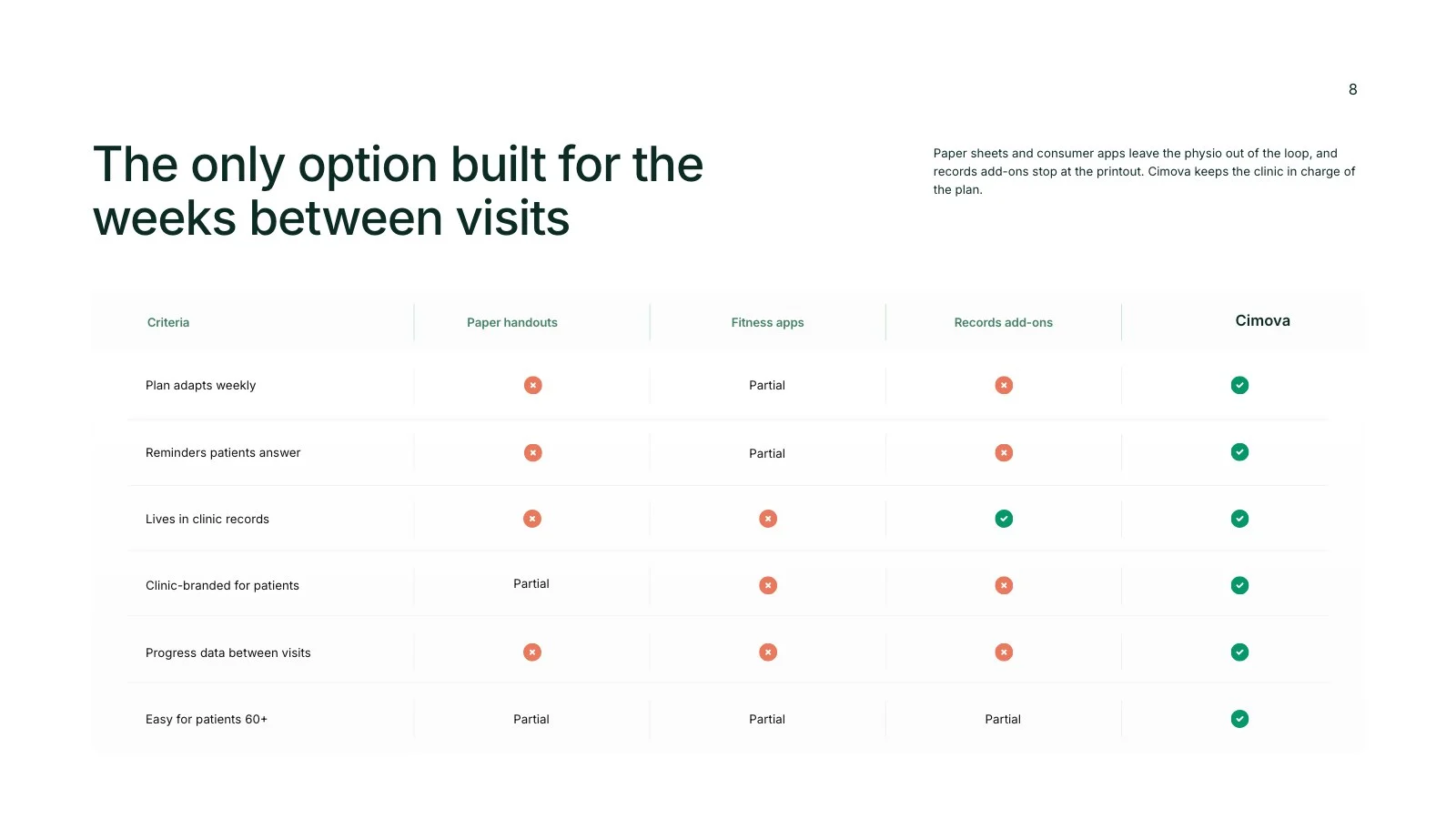
The criteria are real patient and clinic needs, and rivals get partial credit where they earn it, which makes the comparison easier to trust.
09 Team
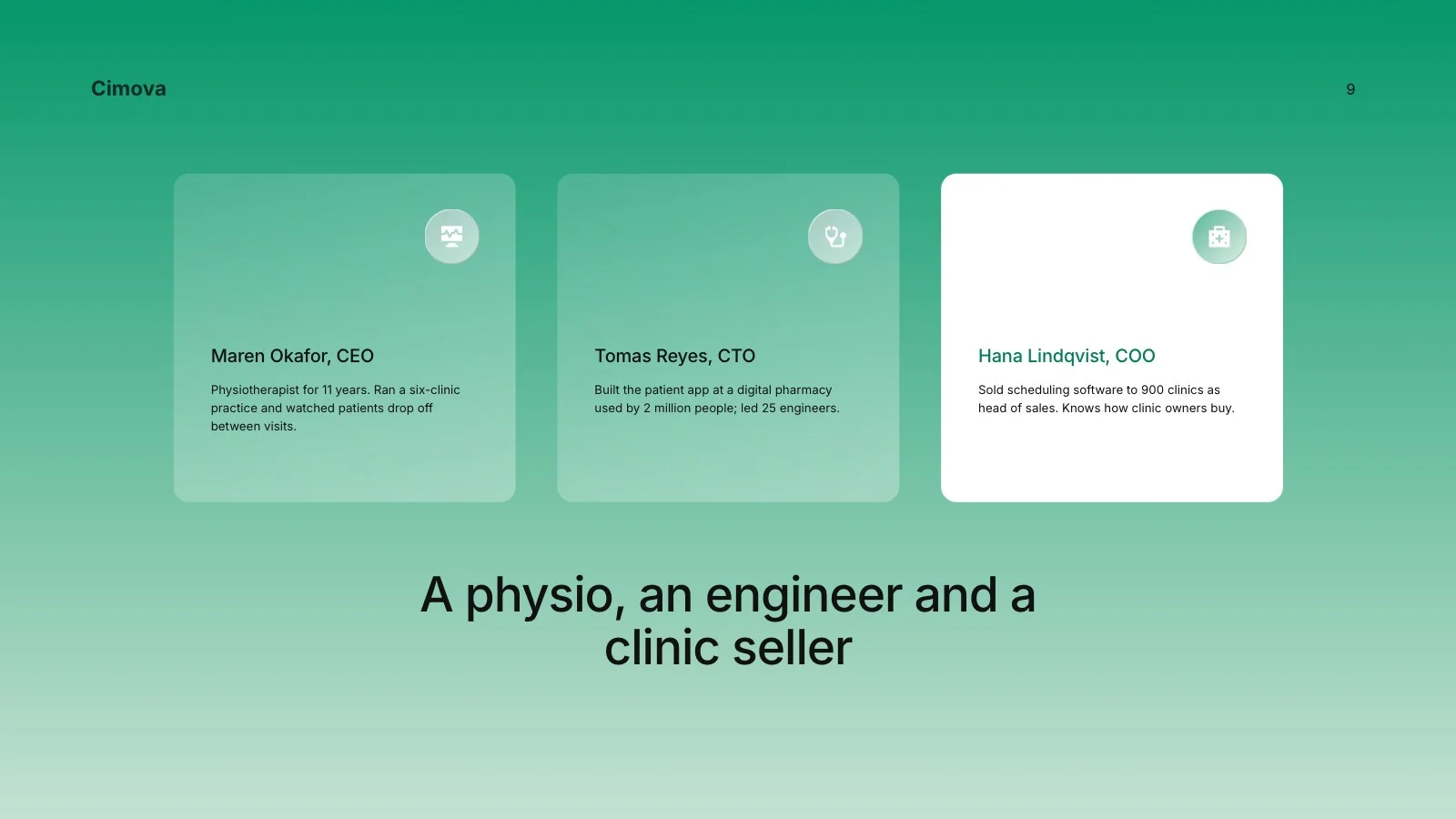
Each founder covers one risk: the clinical problem, building the product and selling to clinics. The title sums up the team in one line.
10 The ask
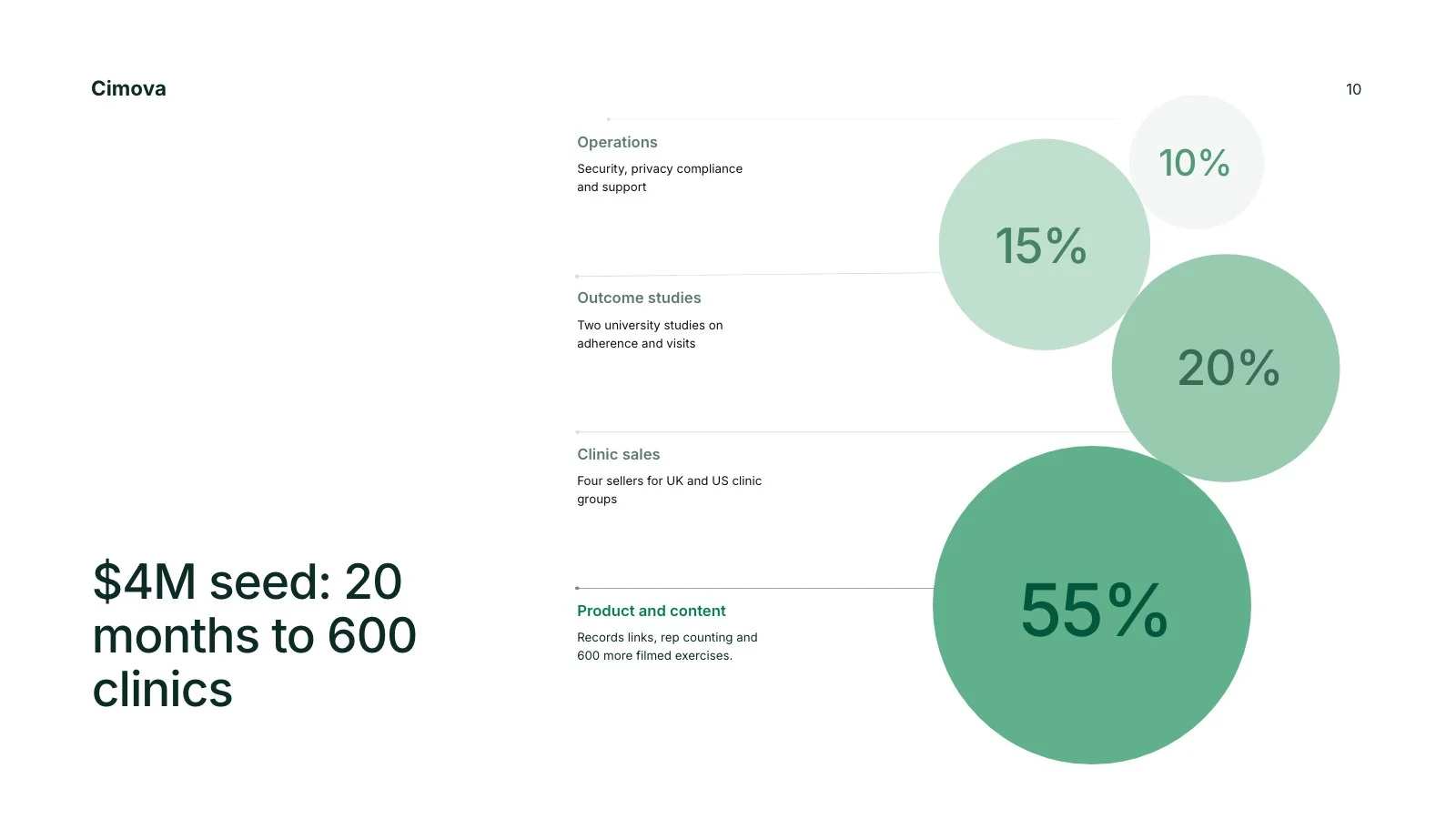
The amount, how long it lasts and the milestone it buys are all in the title, and the split shows most of the money goes into the product.
A seed pitch for a fictional at-home physiotherapy app that clinics prescribe. Every company, person and number in it is made up.
Seed · raising $5M
Bellwick: a fintech pitch.
Compliance software for small lenders raising $5M for 22 months. A narrow buyer, unit economics on one slide and an honest competition table.

01 Cover
In one line it says who the customer is and what changes for them, and puts the raise on the cover so the investor knows the ask from the start.
02 Problem
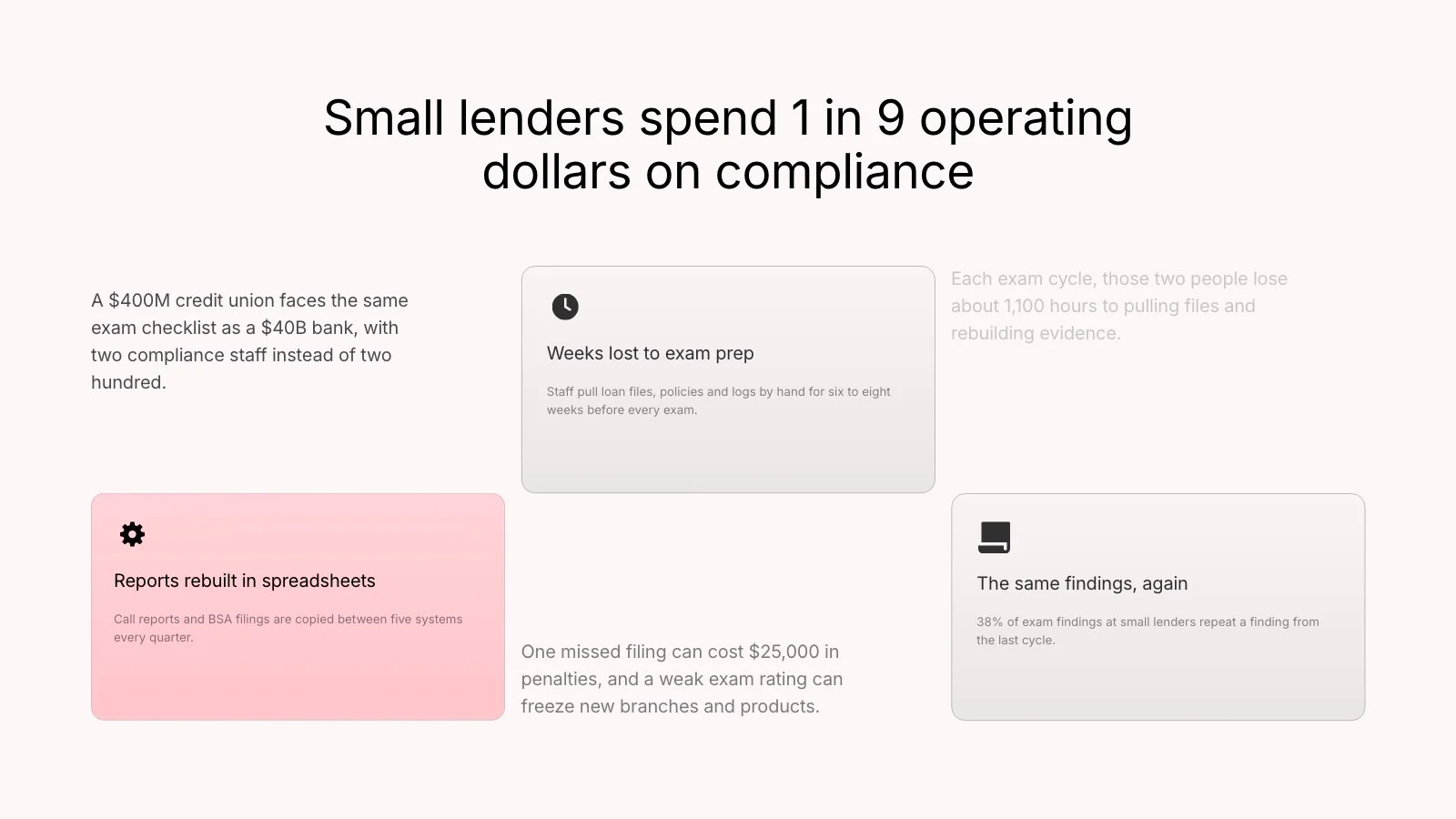
It pins the pain on one specific buyer, a $400M credit union with two compliance staff, and puts a number on every symptom.
03 Solution
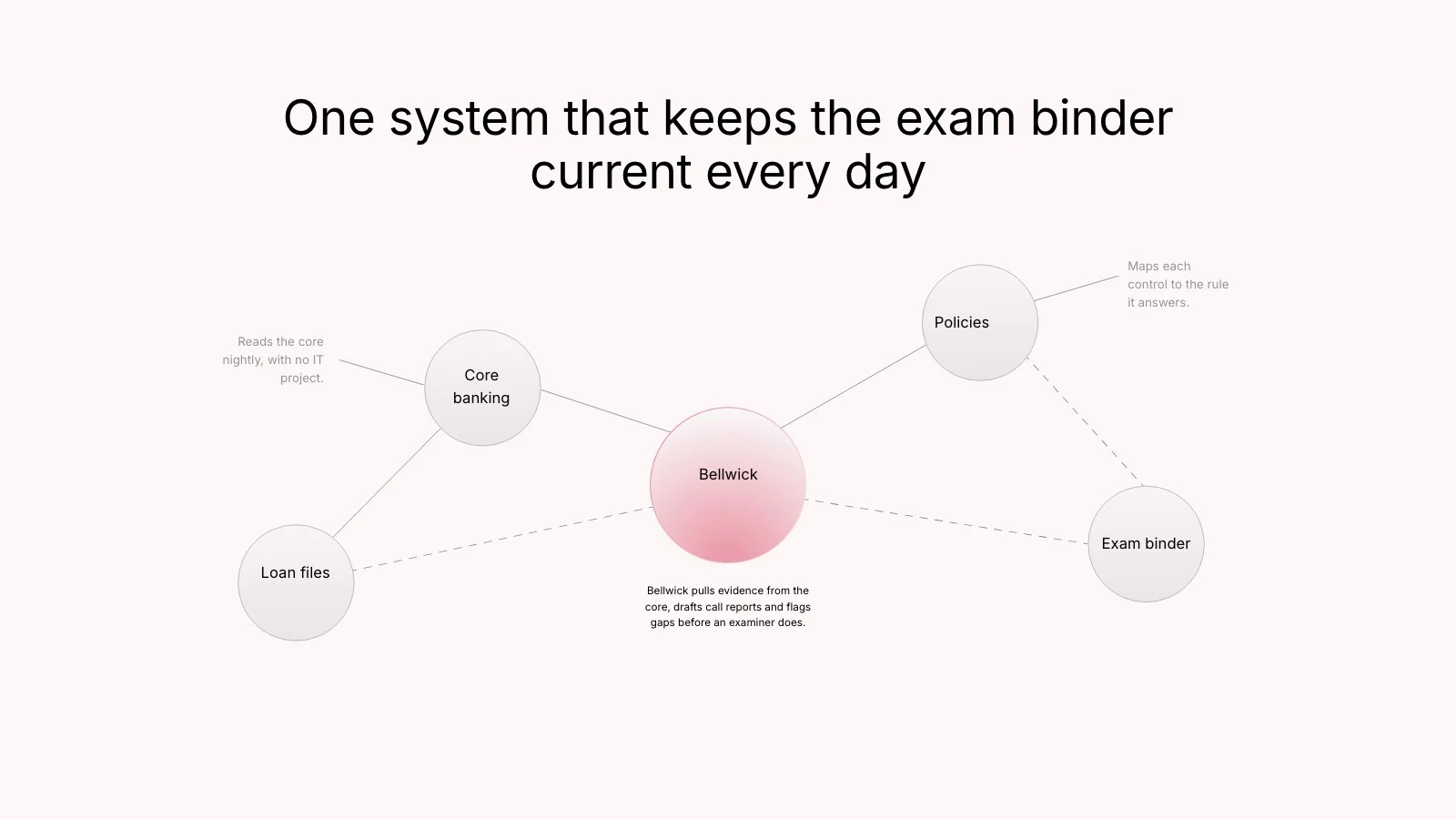
It shows the product as the hub between systems the buyer already owns, which answers “what do we have to replace?” before anyone asks.
04 Product
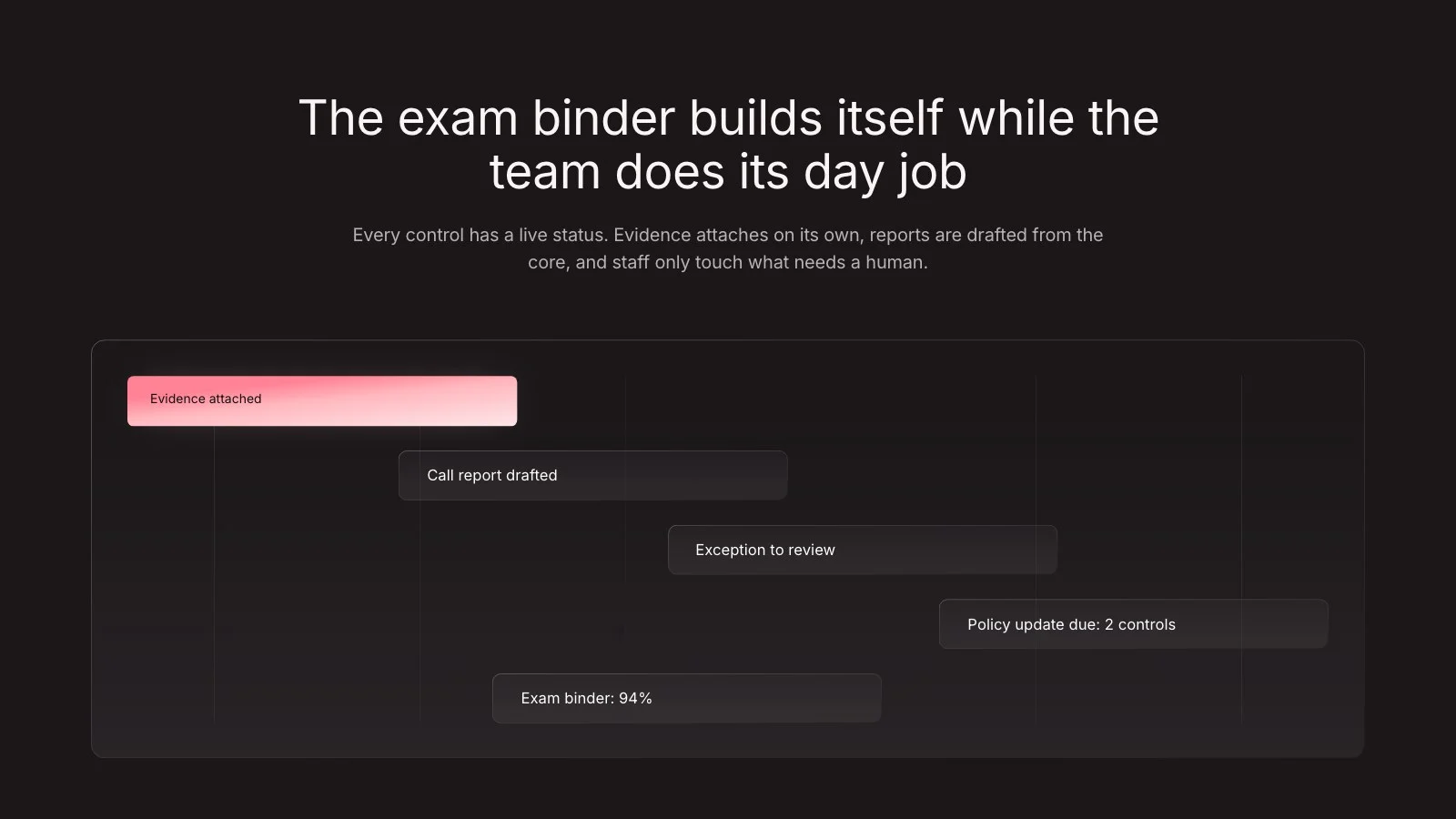
Real statuses from inside the product make the claim concrete and show exactly where staff still step in.
05 Traction
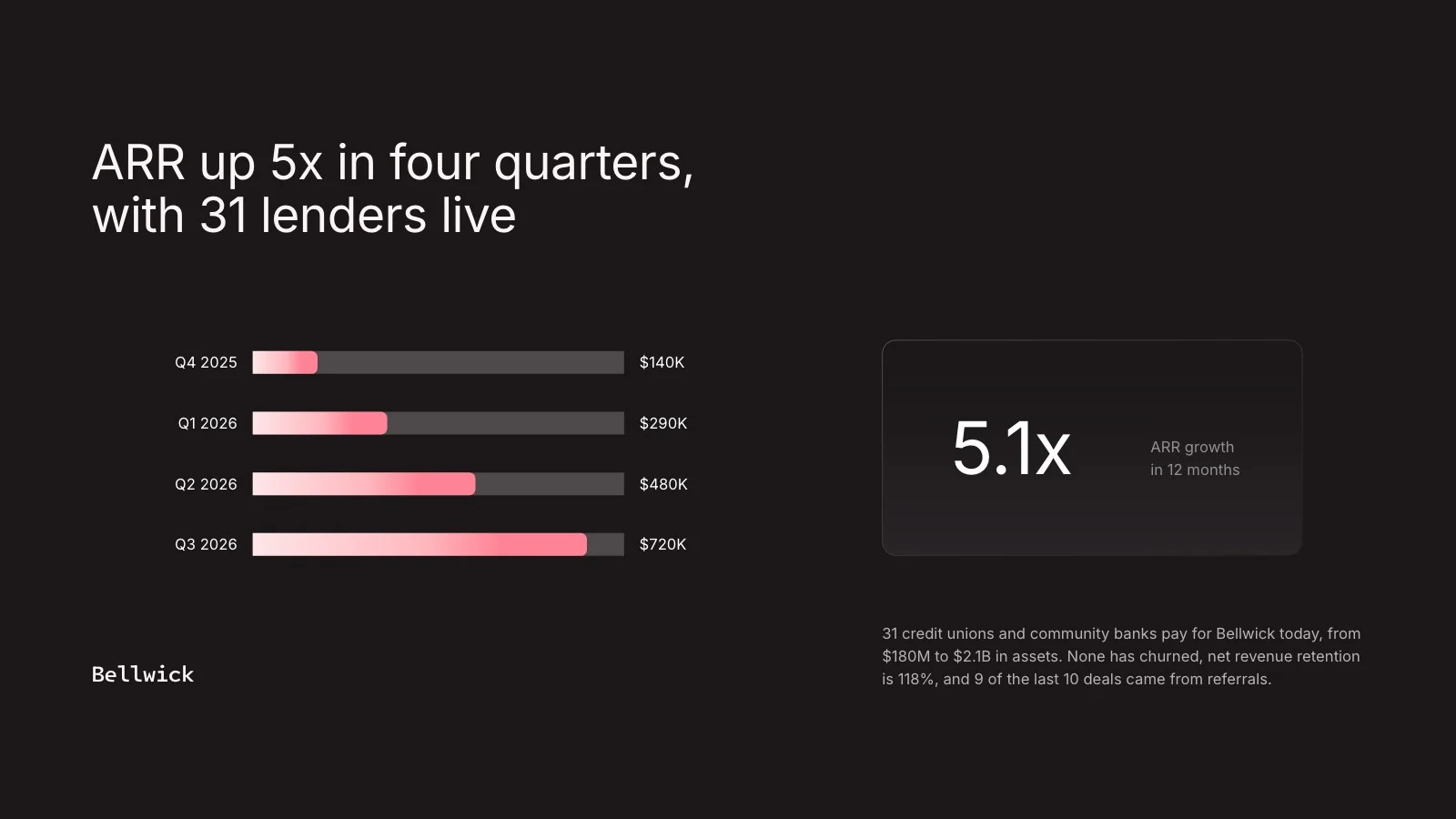
Four quarters of ARR on one chart prove the growth is steady, and retention shows customers stay and bring in others.
06 Market
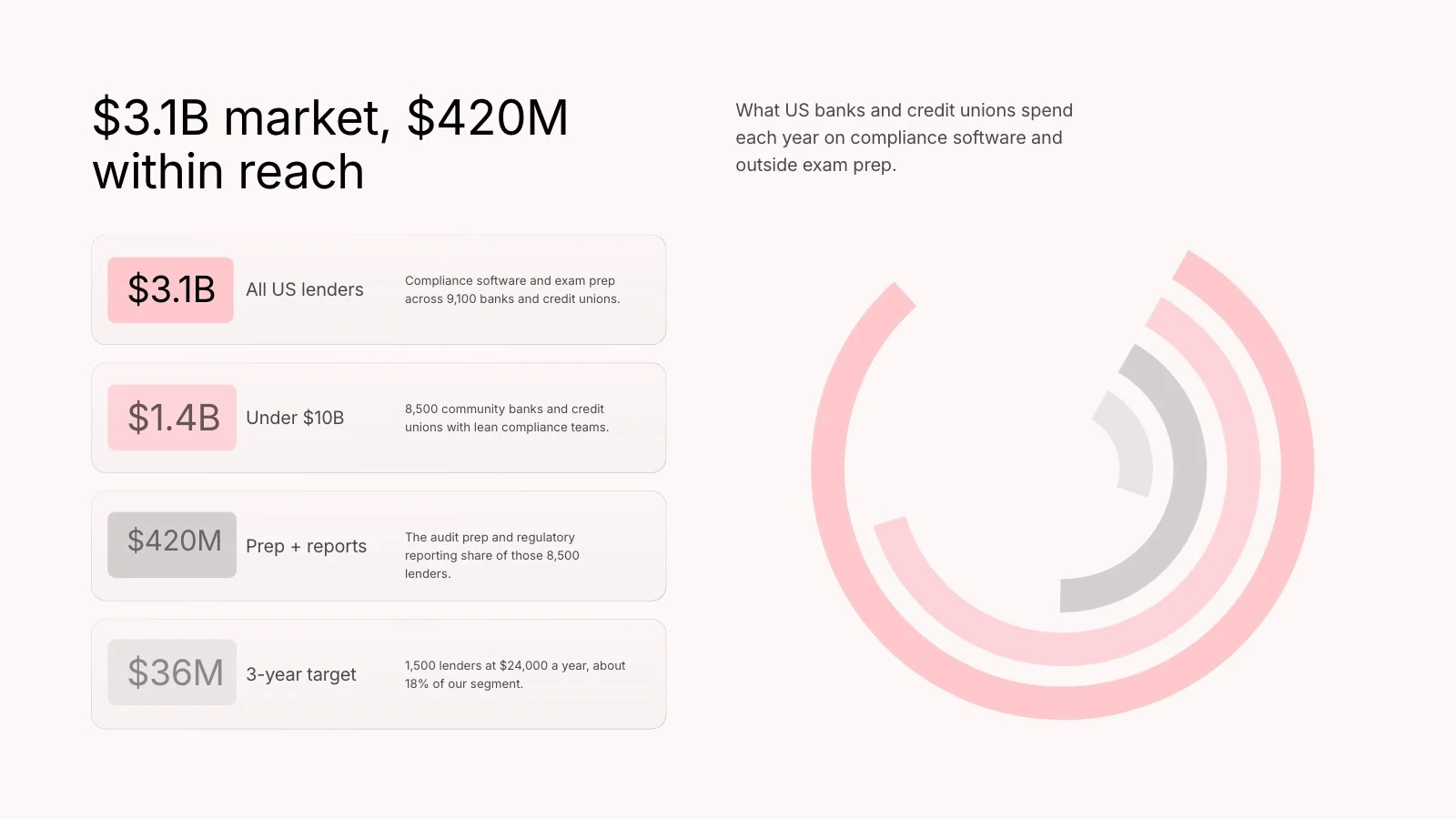
It narrows the market step by step to a target built from lenders times price, so the big number feels earned rather than inflated.
07 Business model
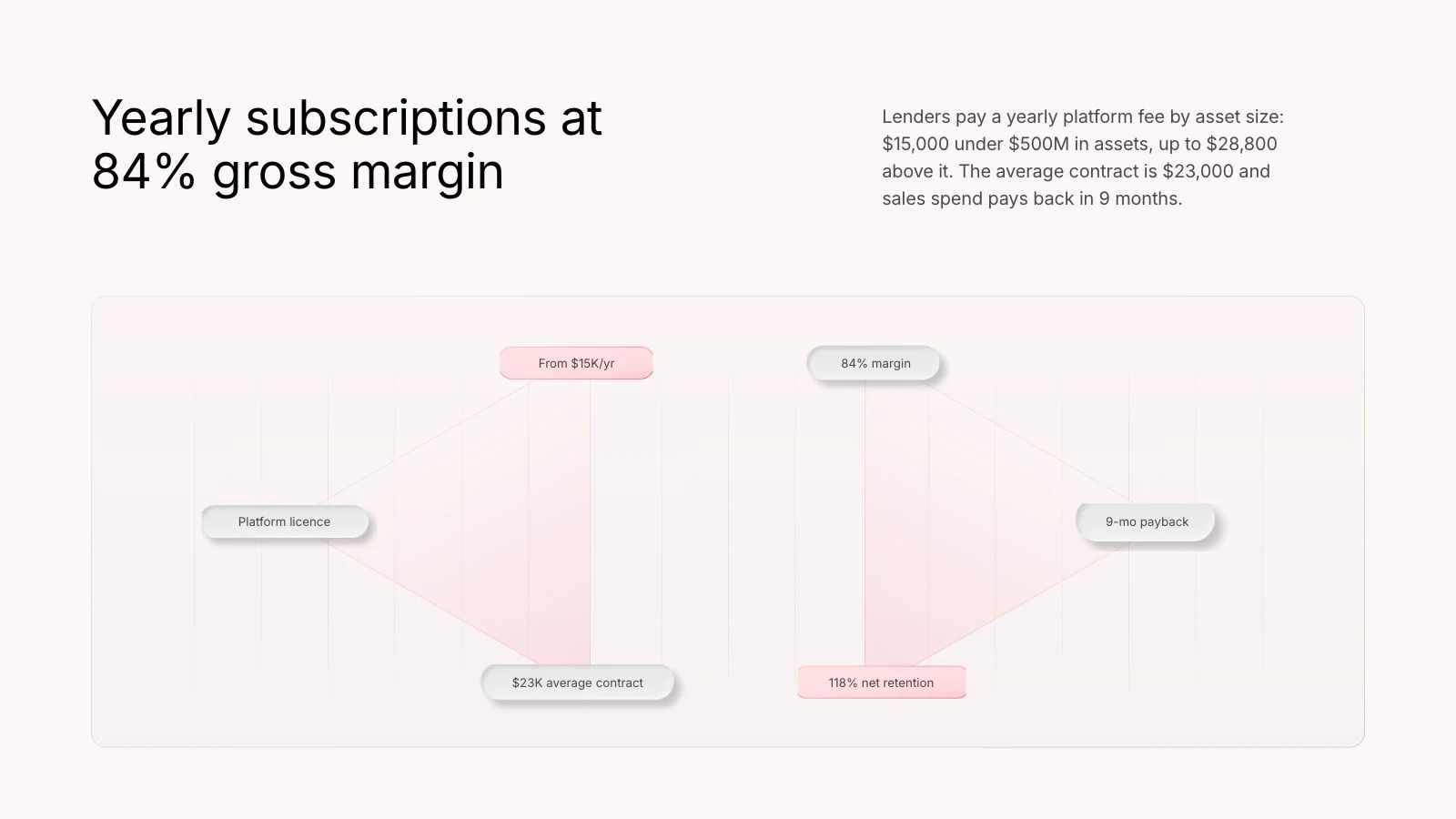
Price, margin, payback and retention on one slide let an investor check the unit economics without asking for the model.
08 Competition
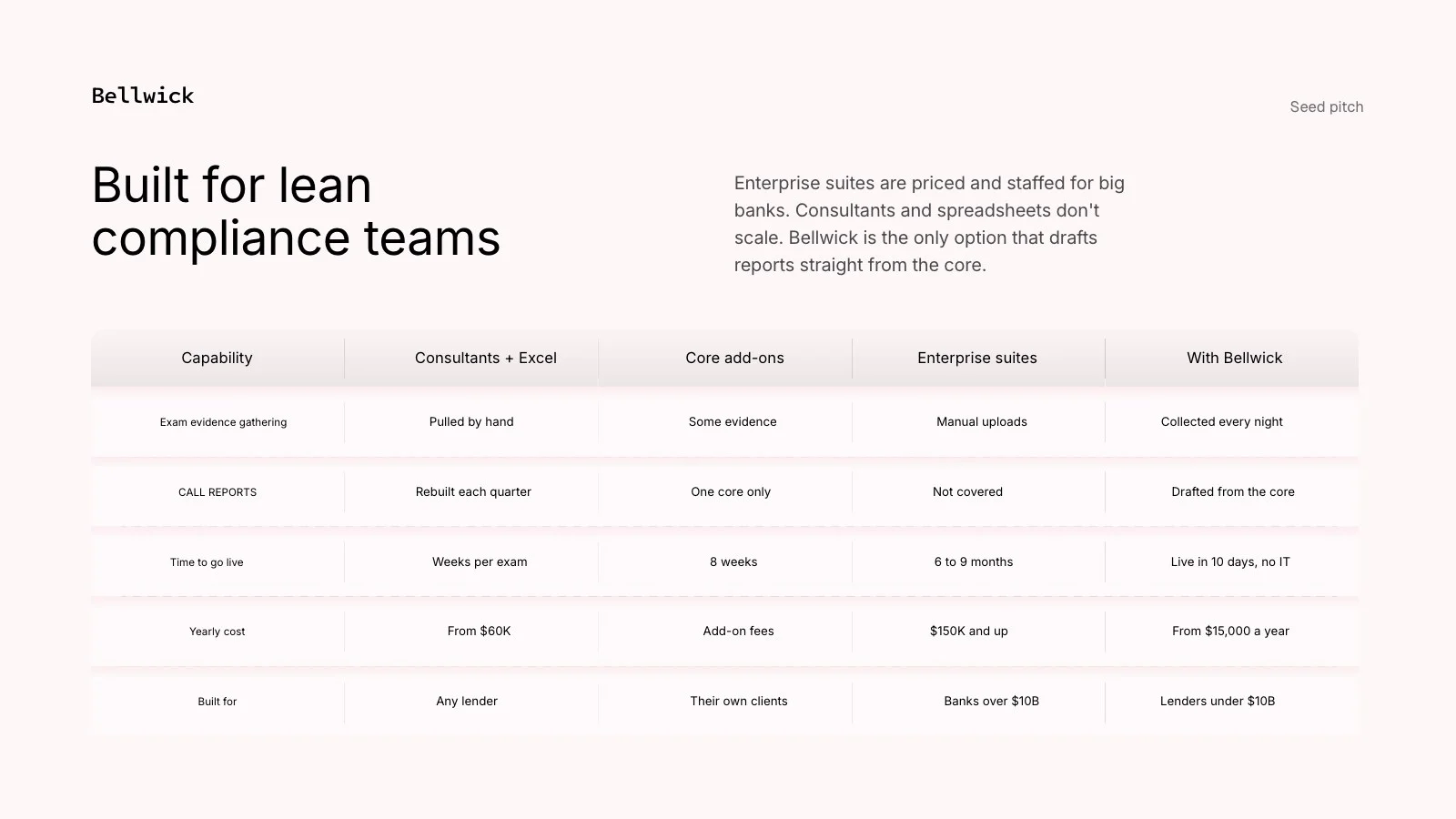
It compares on what the buyer cares about, setup time and cost, and names the segment the big suites ignore instead of claiming to win everything.
09 Team
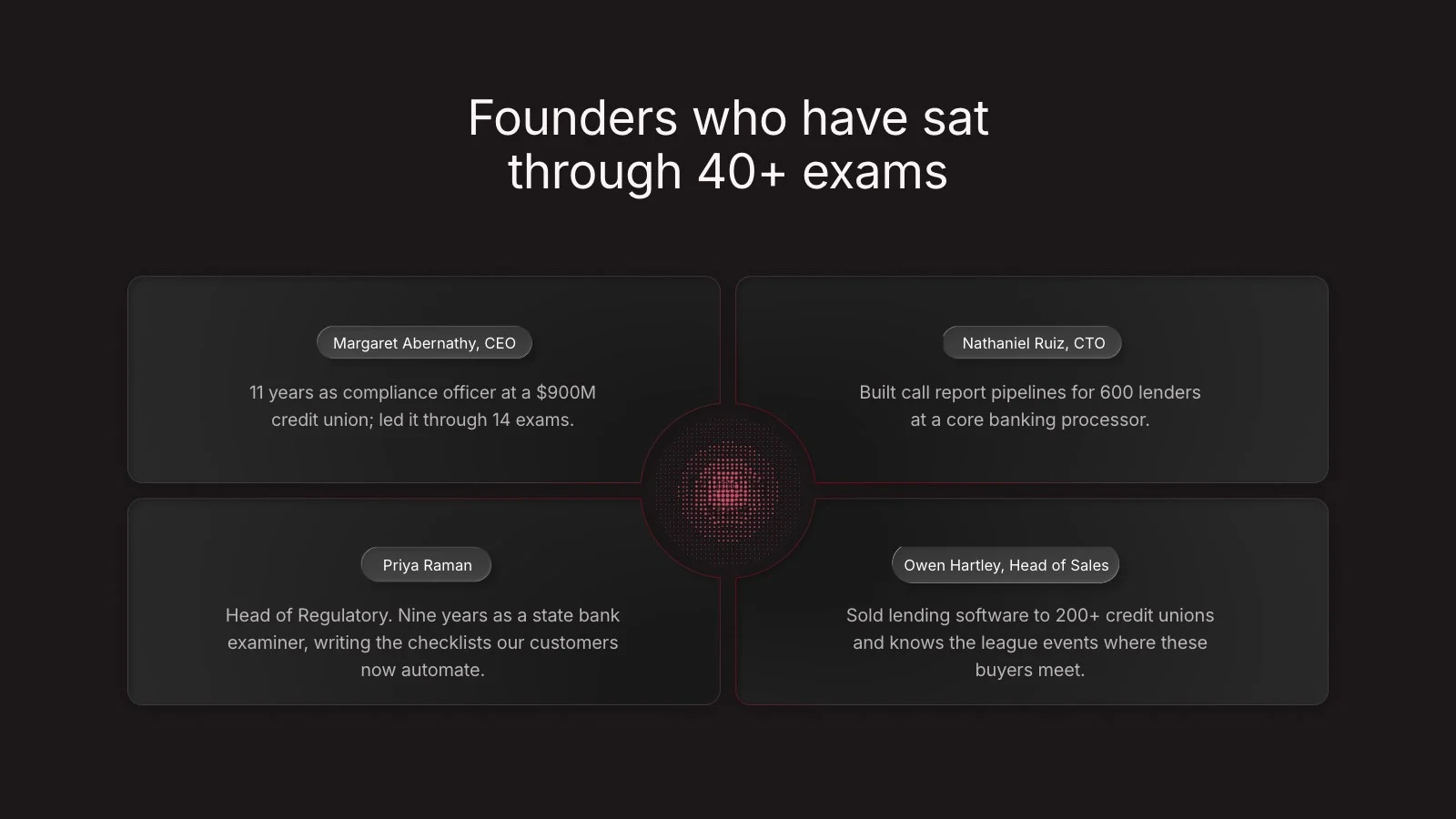
Each bio ties a past job to a risk in the plan: the buyer’s pain, the data plumbing, the regulator’s view and the sales channel.
10 The ask
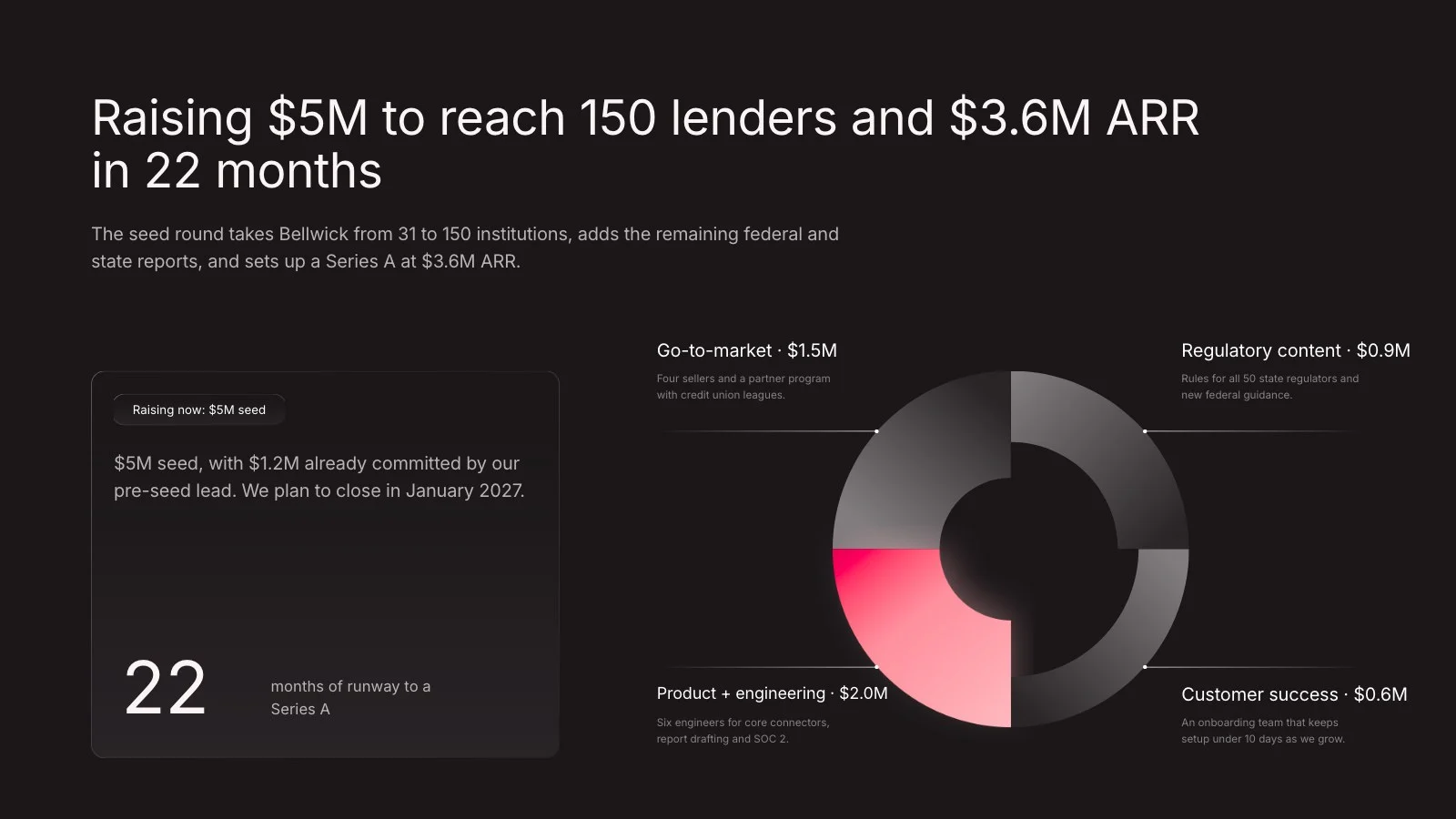
The amount, the runway and the milestone it buys are all in the title, and the use of funds adds up to the raise.
A seed pitch for a fictional compliance-automation startup serving credit unions and community banks. Every company, person and number in it is made up.
Seed · raising $2.5M
Zabrik: a marketplace pitch.
A construction-surplus marketplace raising $2.5M for 18 months. GMV growth, take rate and a comparison with what builders do today.

01 Cover
It names the company and says what it does in six words, so the investor knows the category before the first real slide.
02 Problem
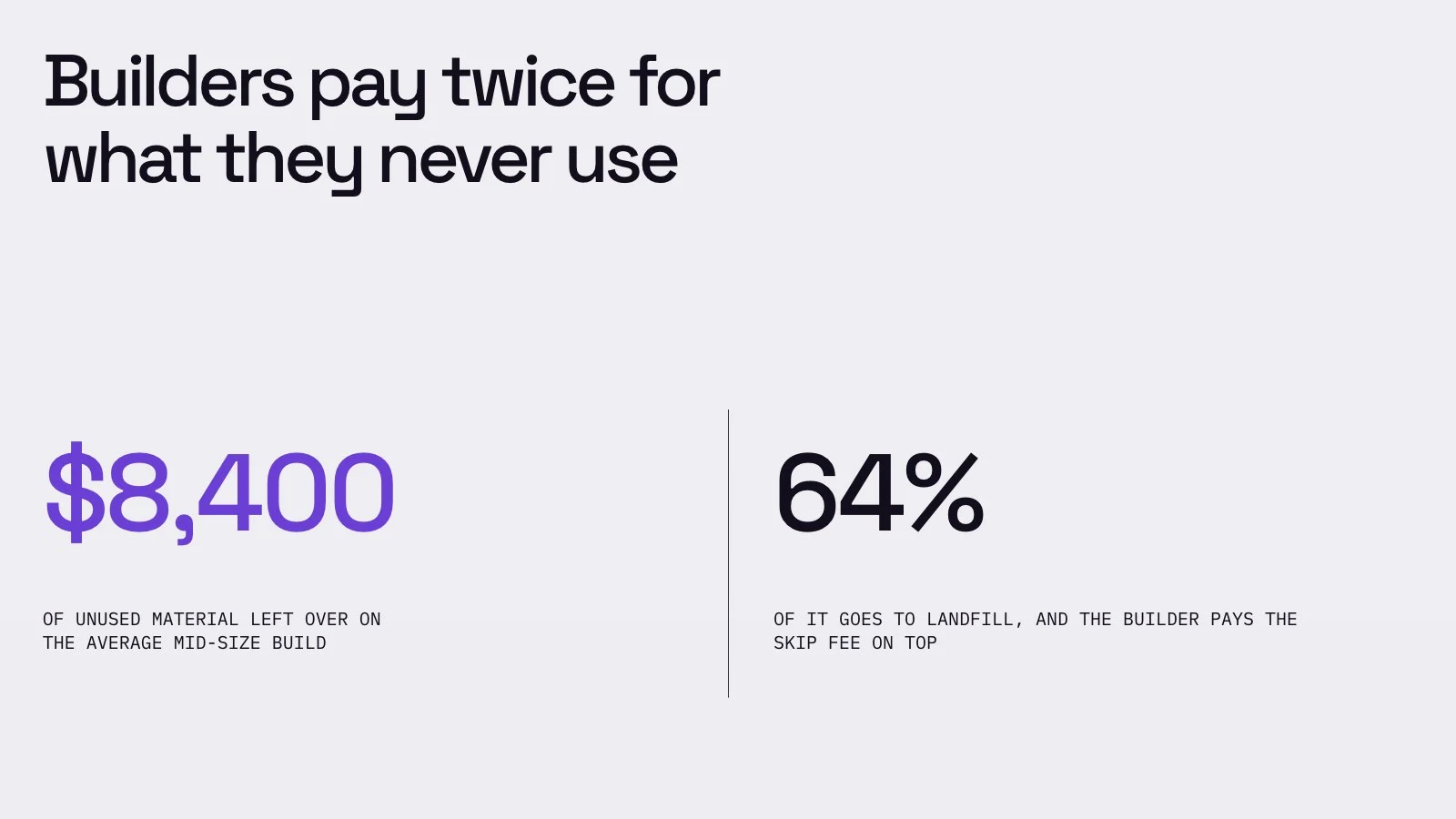
Two numbers make the pain concrete: money wasted, then money spent throwing it away. The title states the problem, so the numbers only have to prove it.
03 Solution
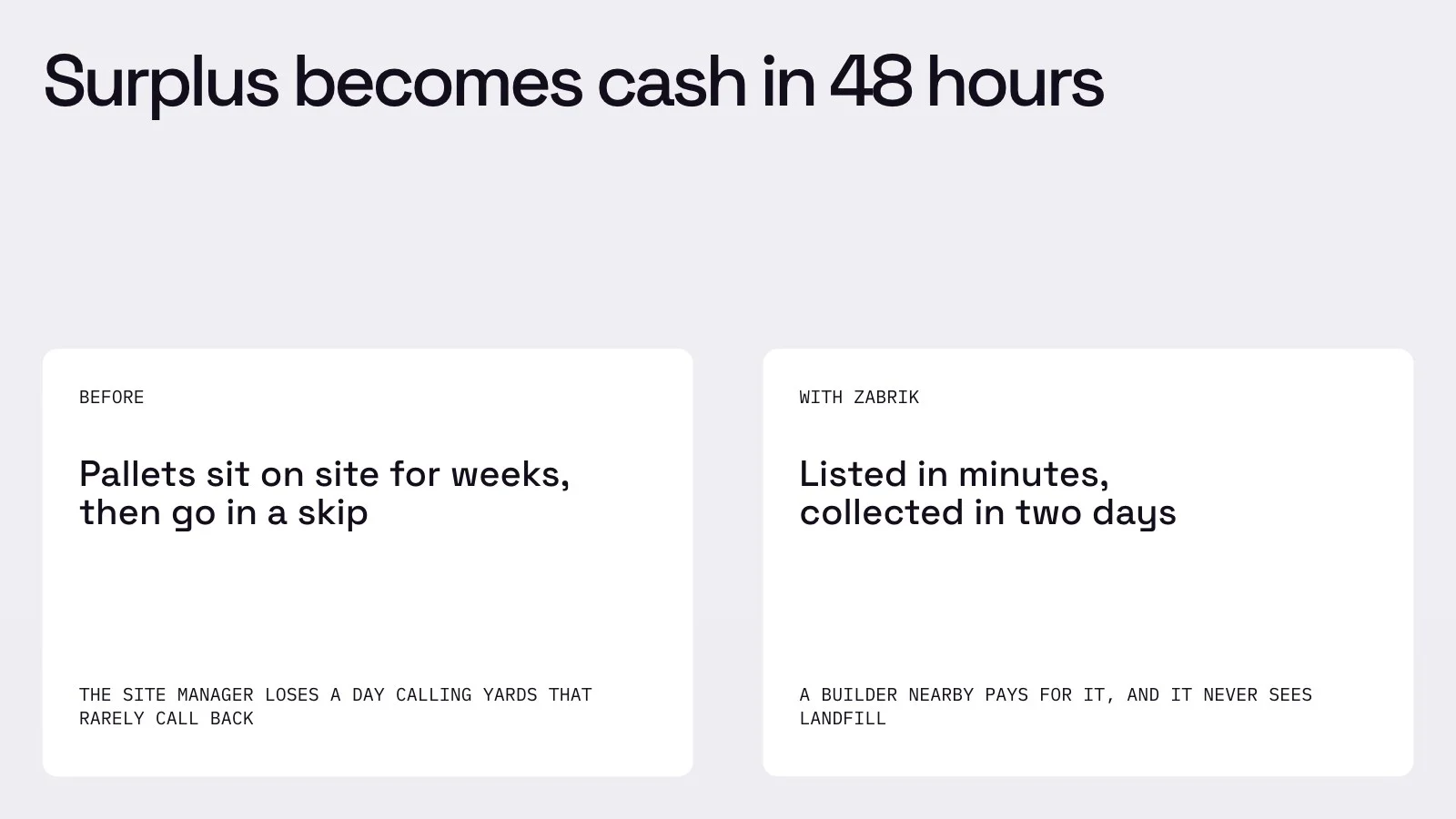
Before-and-after lets the investor see the change in one glance. A specific time in the title is more convincing than calling the product faster.
04 Product
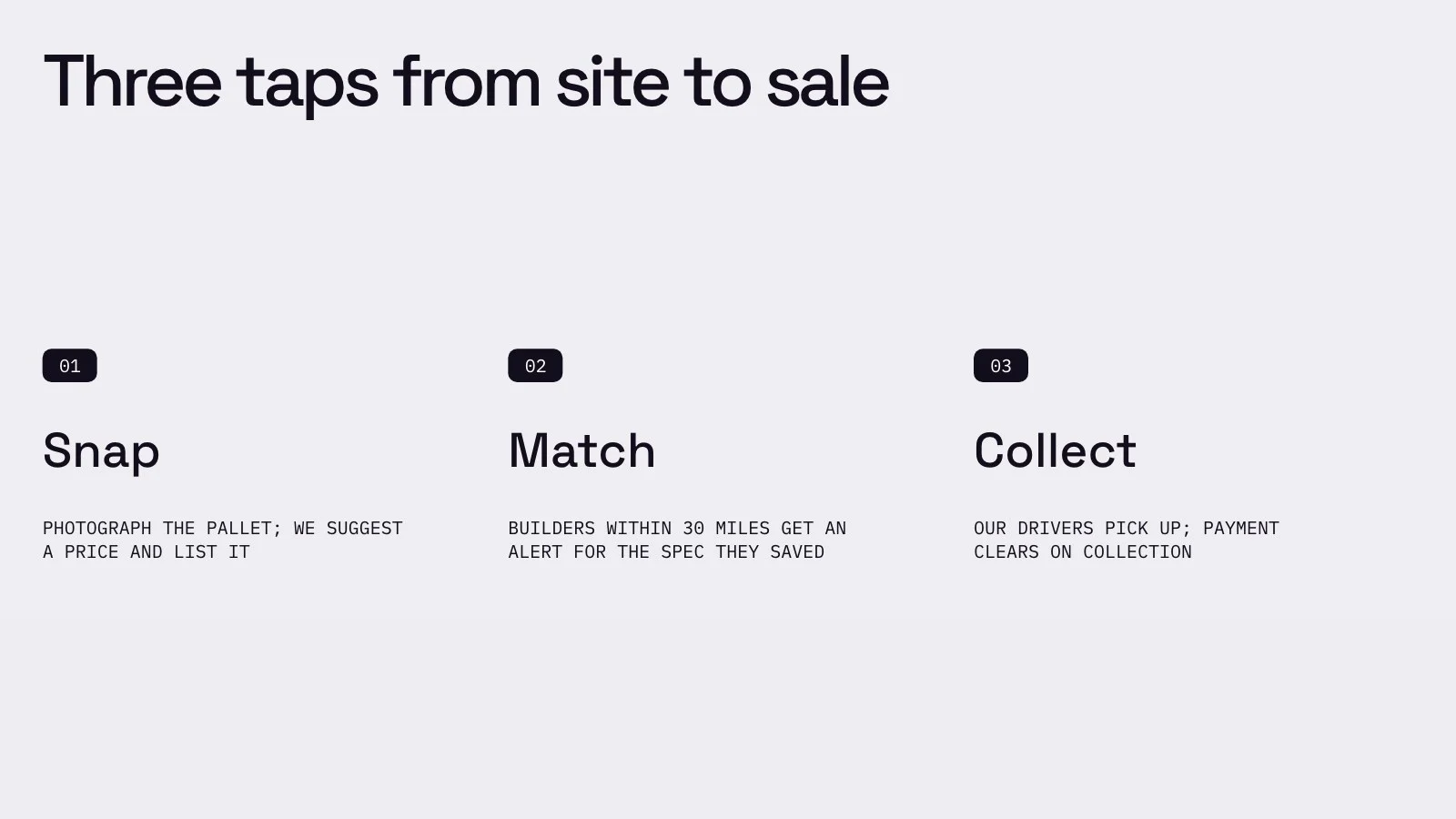
Three short steps show the product is simple to use and that the company handles the hard part: matching and collection.
05 Traction
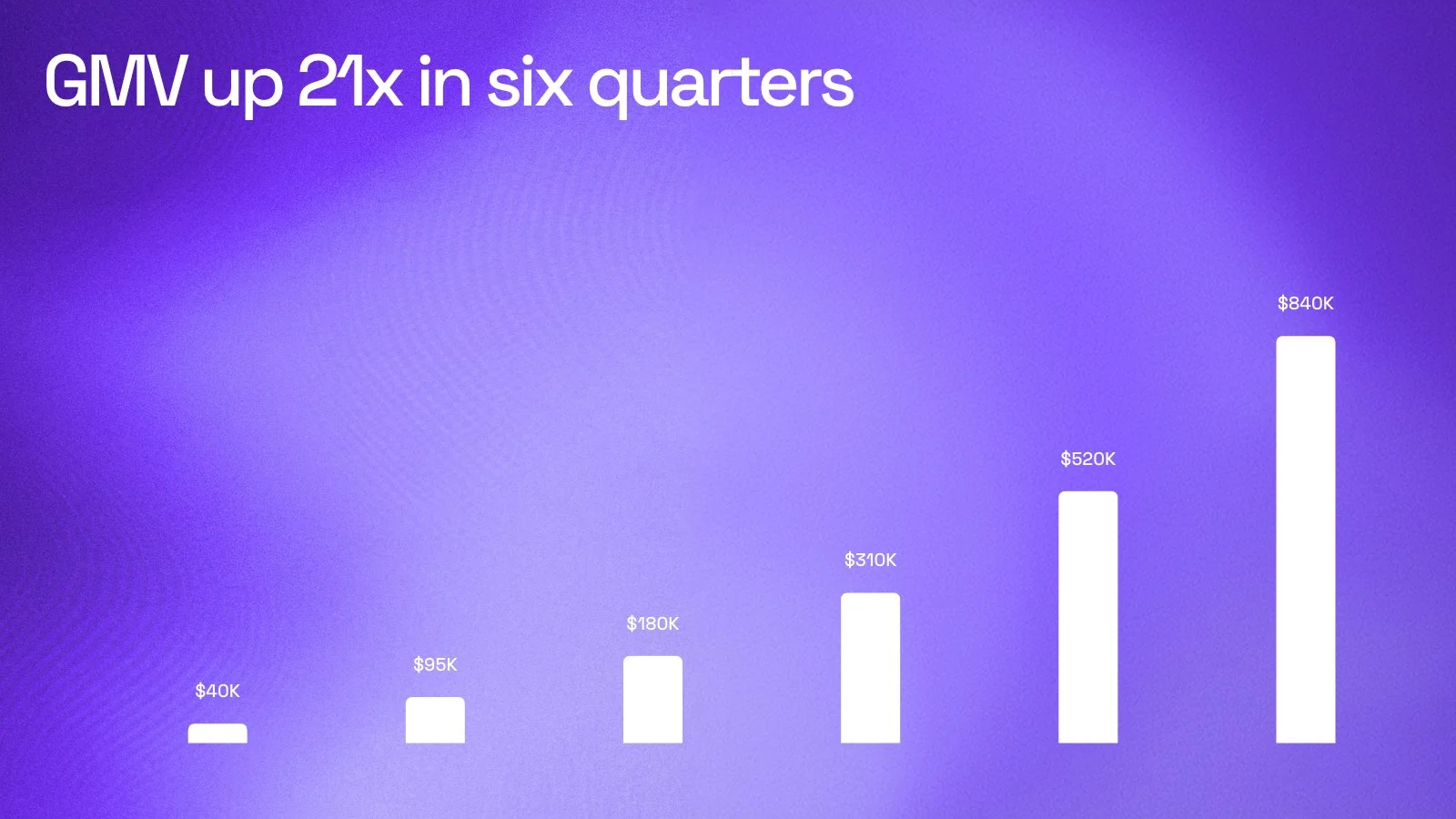
The title reads the chart for the investor, and every bar is labelled, so the growth claim can be checked in seconds.
06 Market
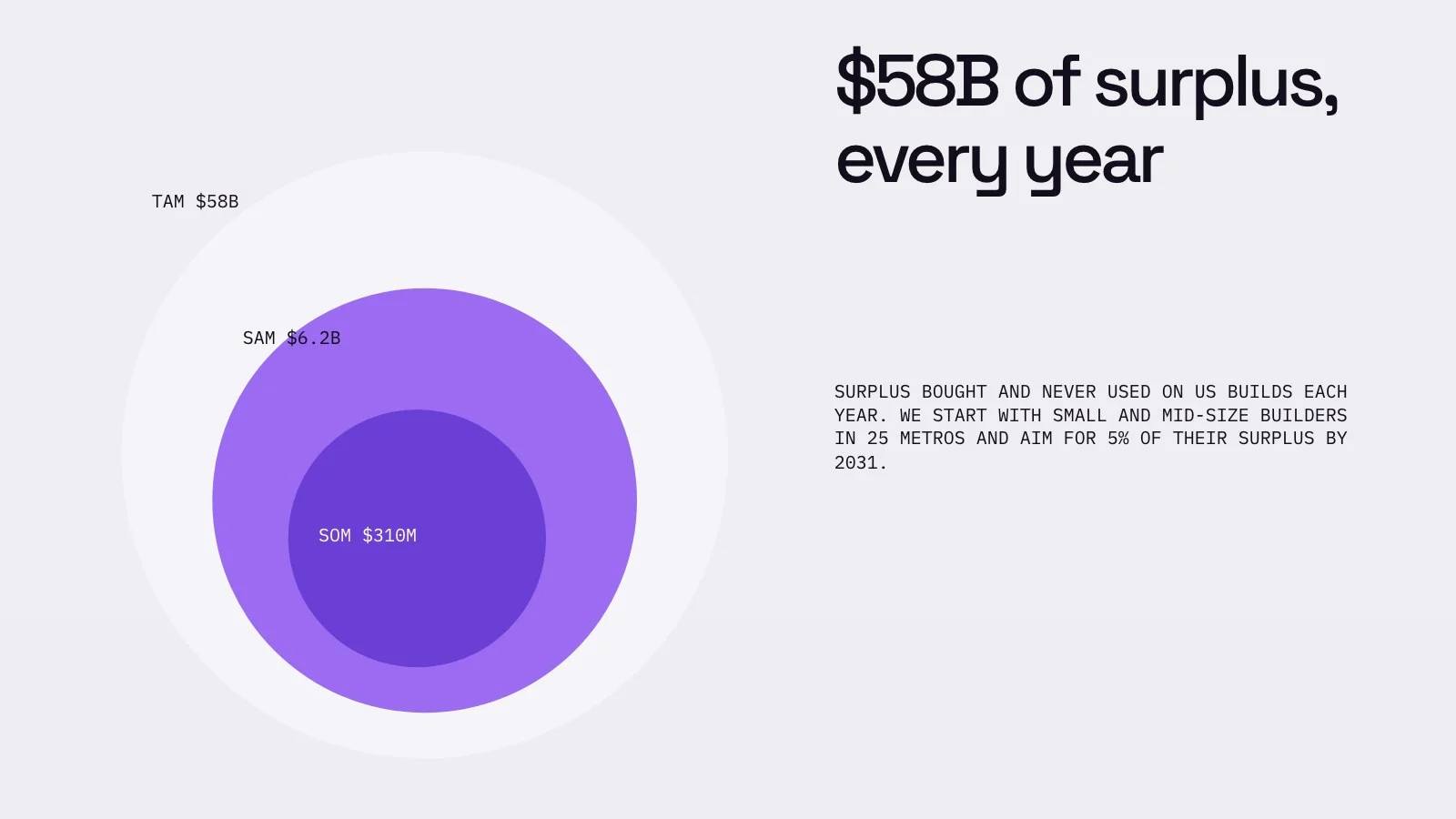
It goes from the whole market to the part the company can actually win, with a named segment and a date, so it reads as a plan rather than a big number.
07 Business model
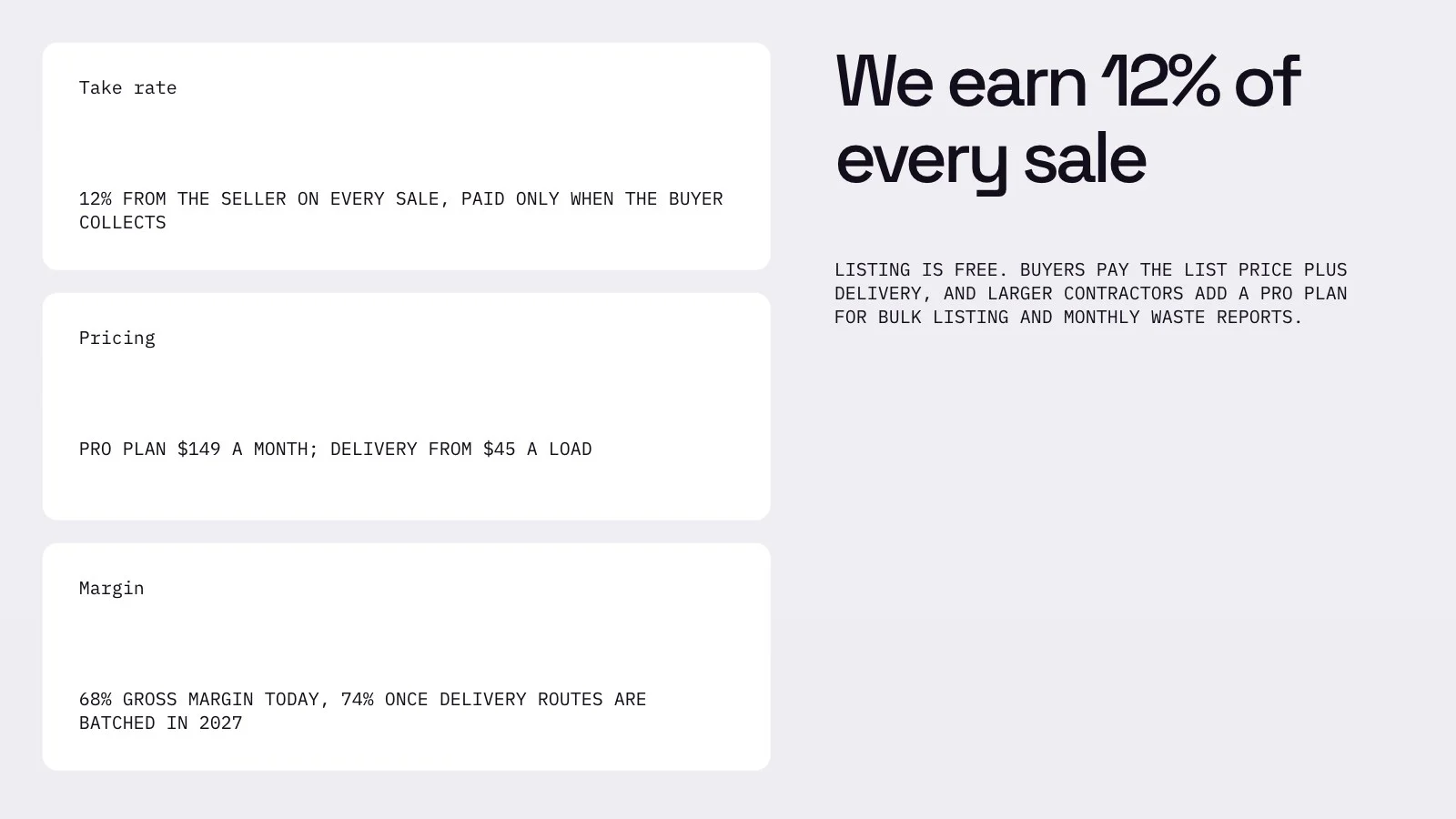
It answers the three money questions in one place: what you charge, who pays, and what margin is left.
08 Competition
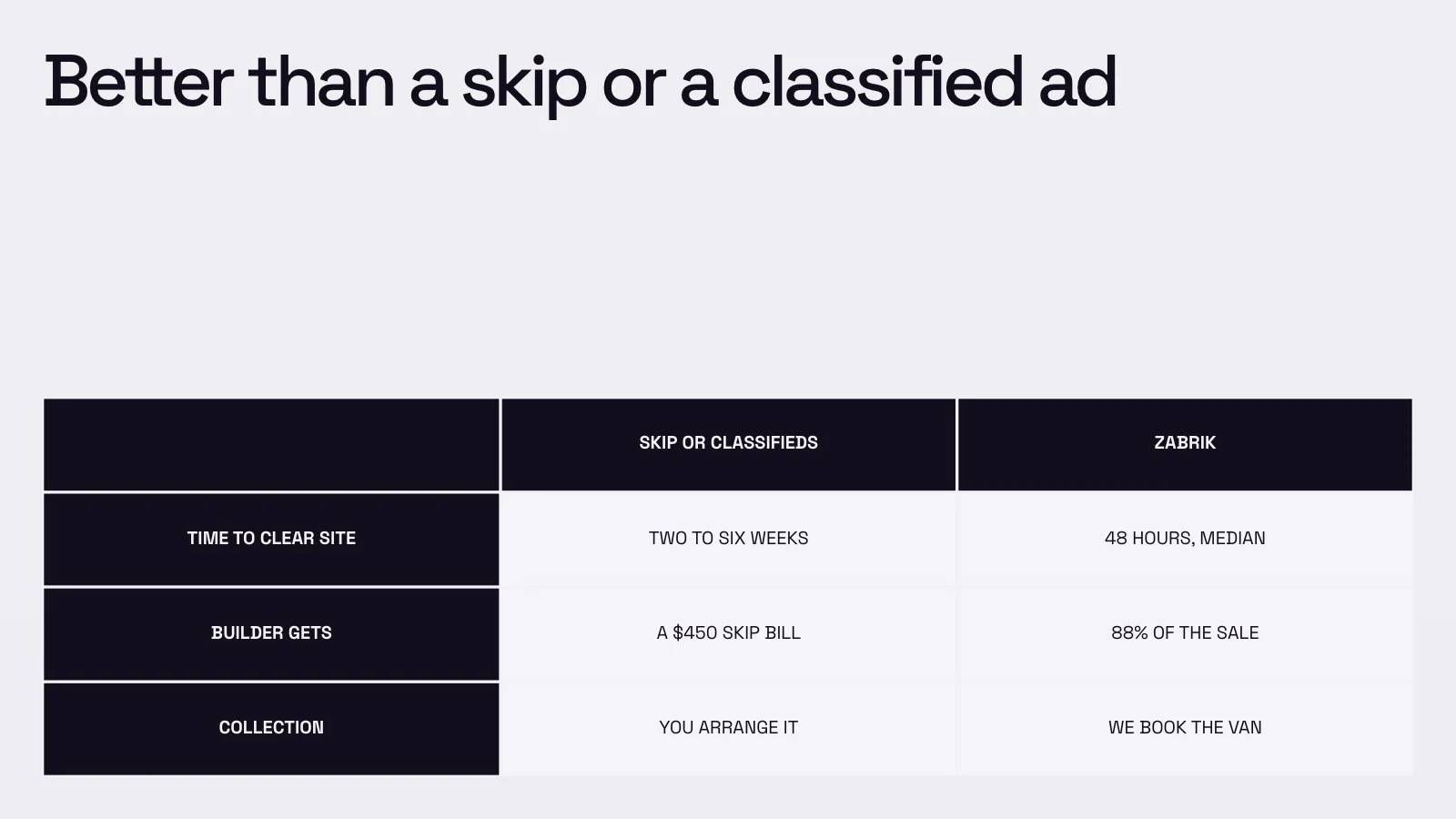
It compares against what builders do today, not a list of logos, and wins on time, money and effort, the three things the customer cares about.
09 Team
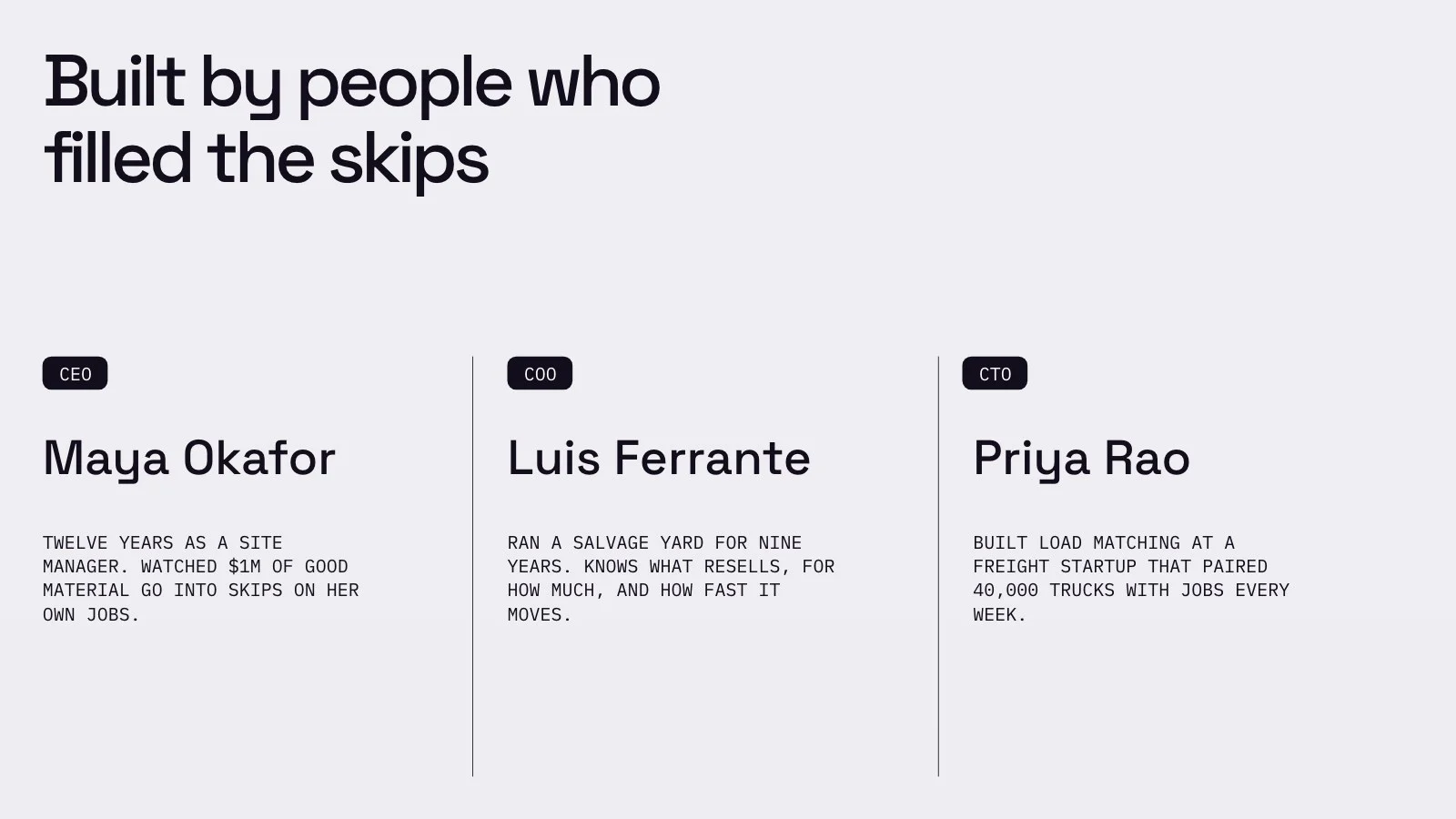
Each bio says why that person is right for this exact problem, instead of listing job titles.
10 The ask
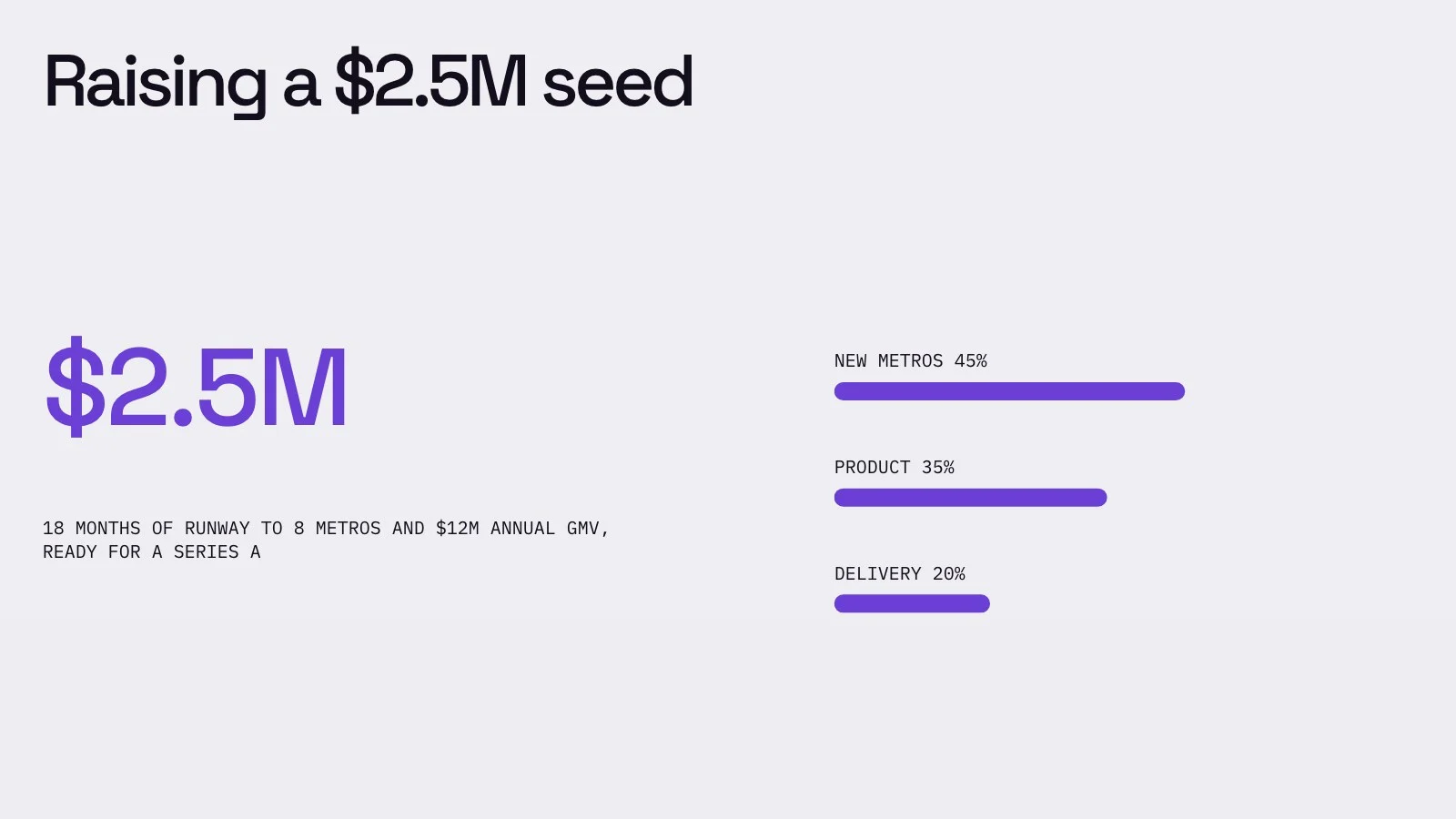
It gives the amount, the runway and the milestone it buys in one line, so the investor knows what the next round will be raised on.
A seed pitch for a fictional marketplace for surplus building materials. Every company, person and number in it is made up.
Series A · raising $12M
Jurna: a Series A pitch.
A shift-staffing marketplace raising $12M for 24 months. Both sides of the marketplace, unit economics and a city-by-city plan.
01 Cover
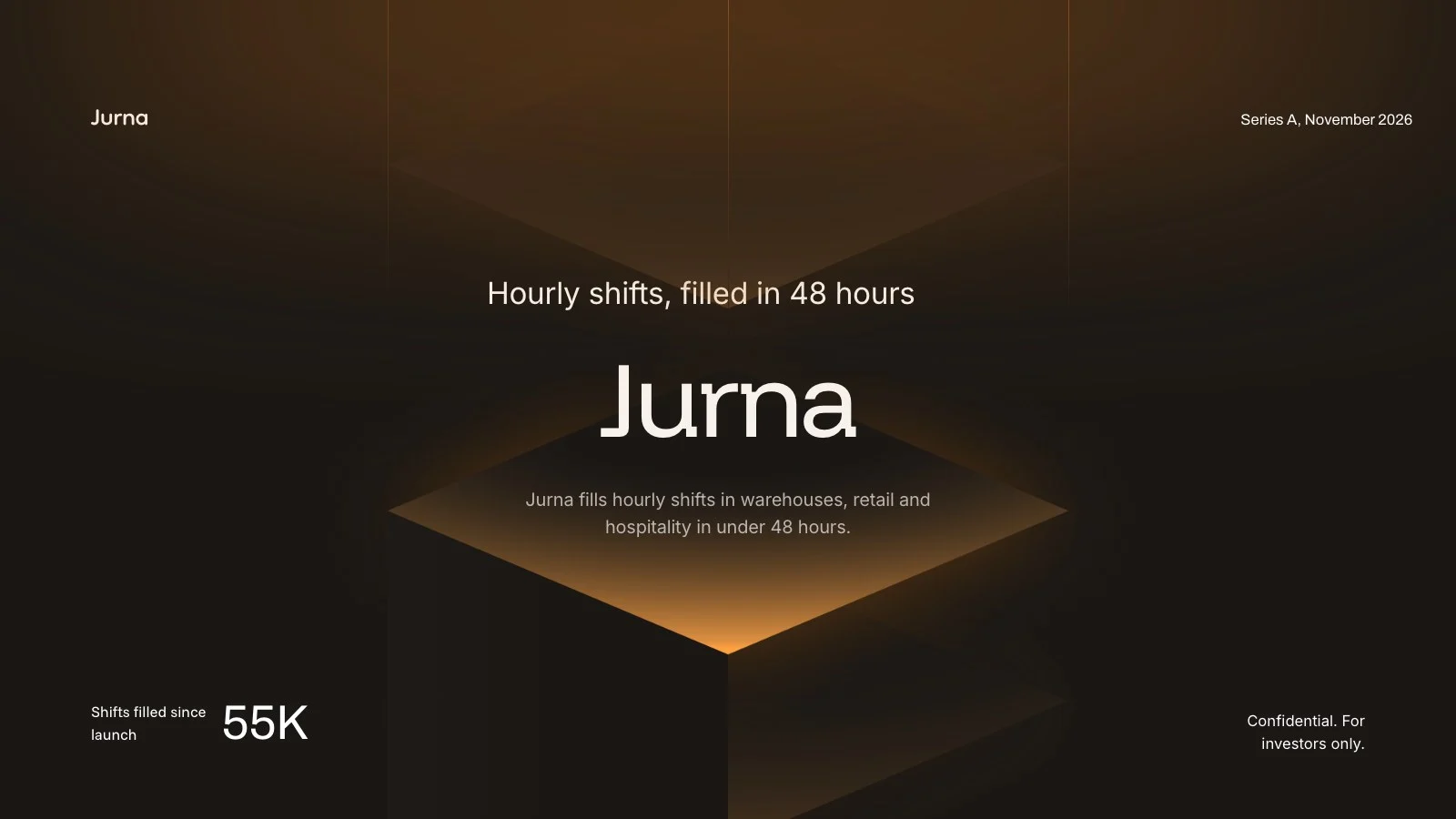
The one-liner names the customer, the job and the speed in one sentence, and a single proof number sits beside it.
02 Problem
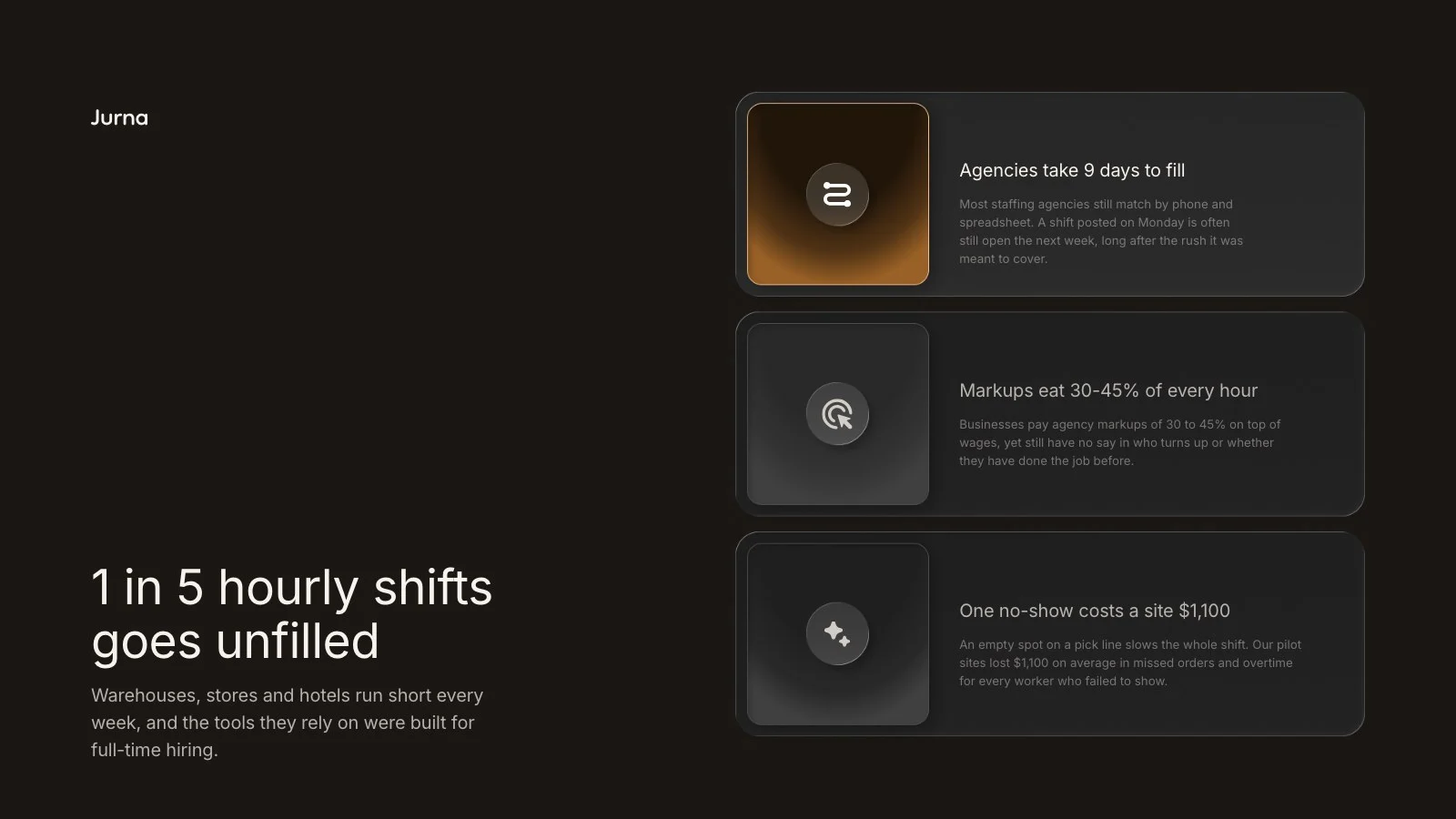
Each pain point carries its own number, so the investor sees time, money and lost output, not a vague complaint.
03 Solution
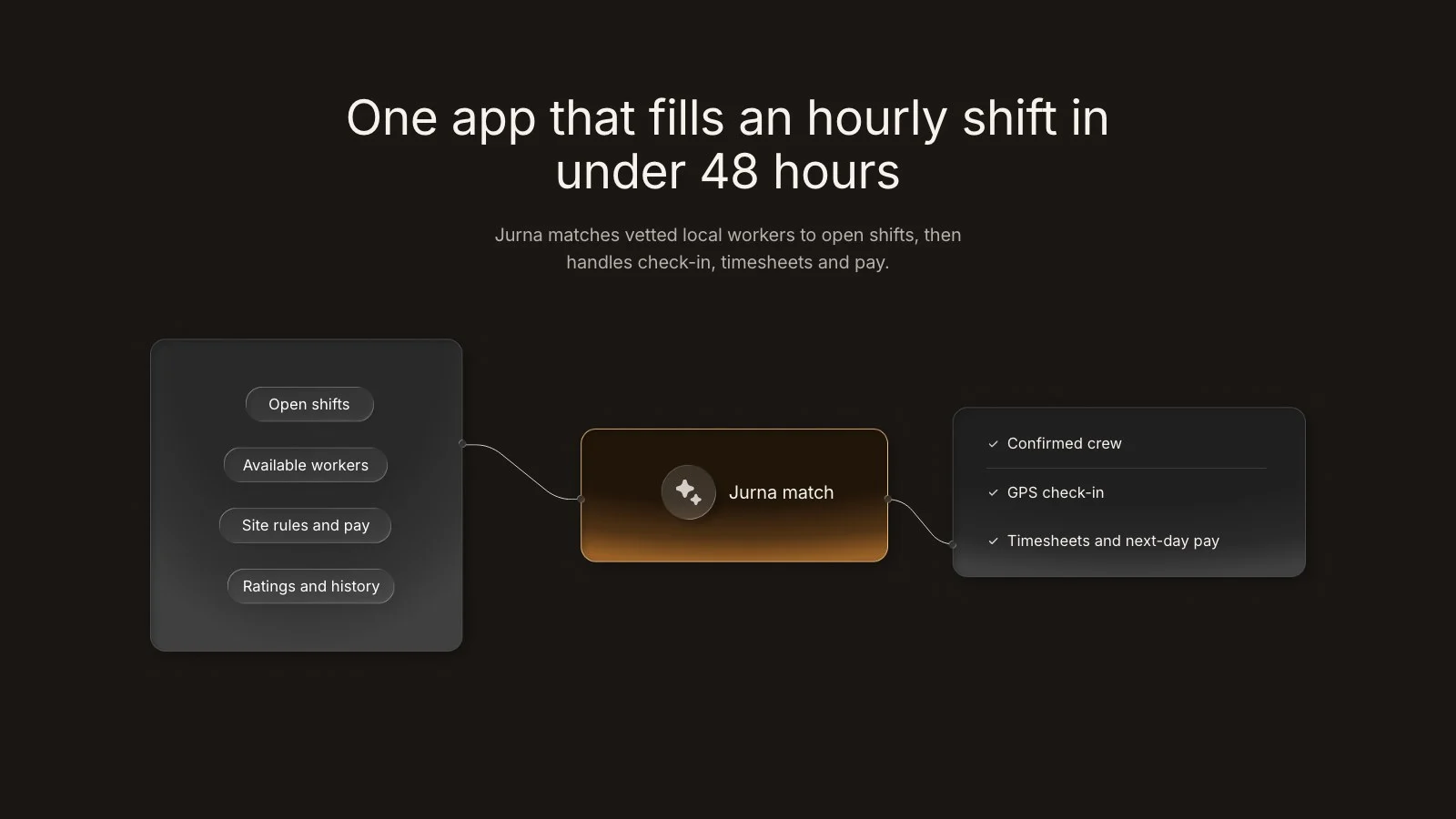
Inputs on the left, outcomes on the right. The investor can repeat what the company does after one look.
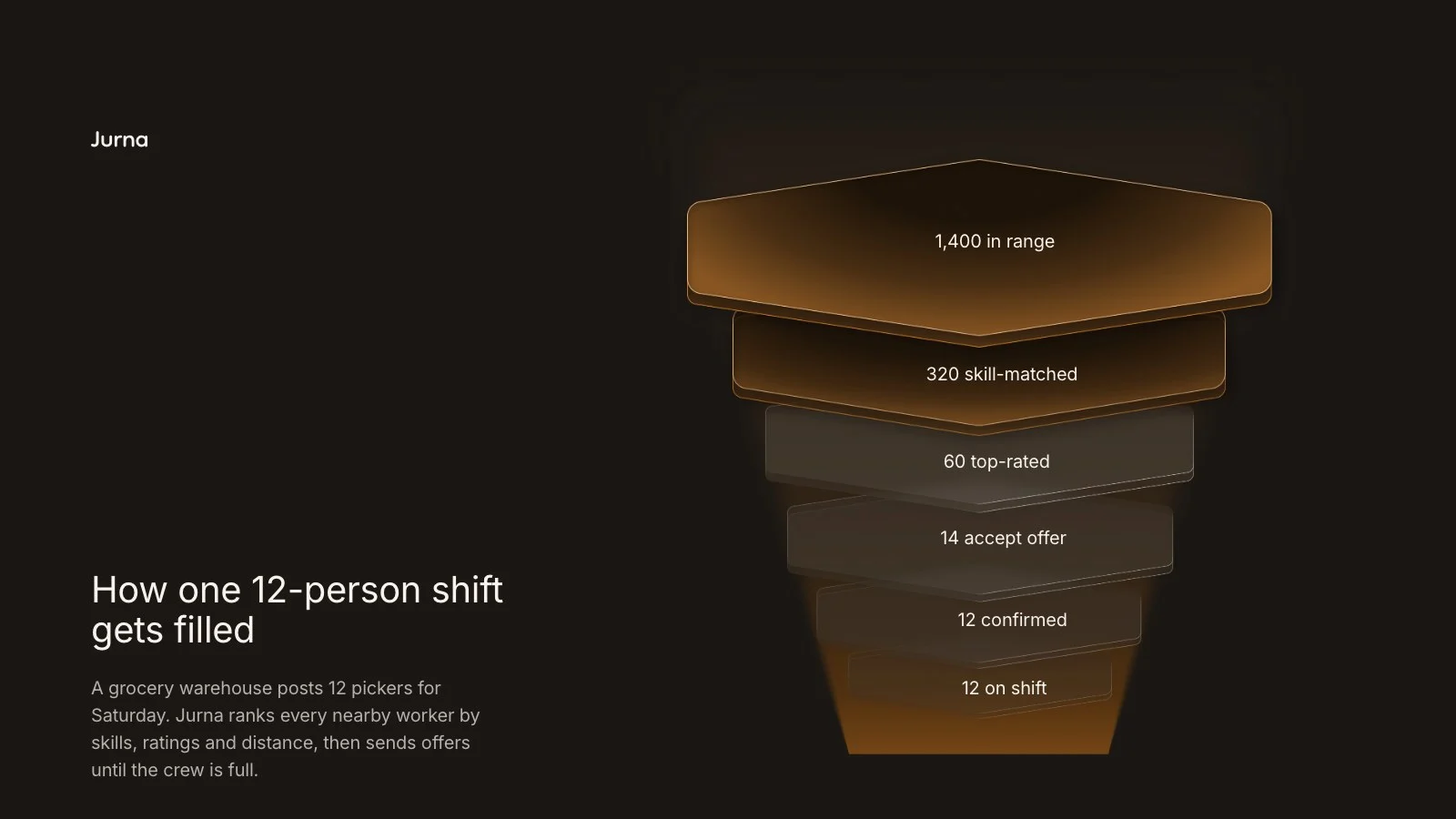
04 Product
It walks through one real order from start to finish, so the product feels concrete without a screenshot.
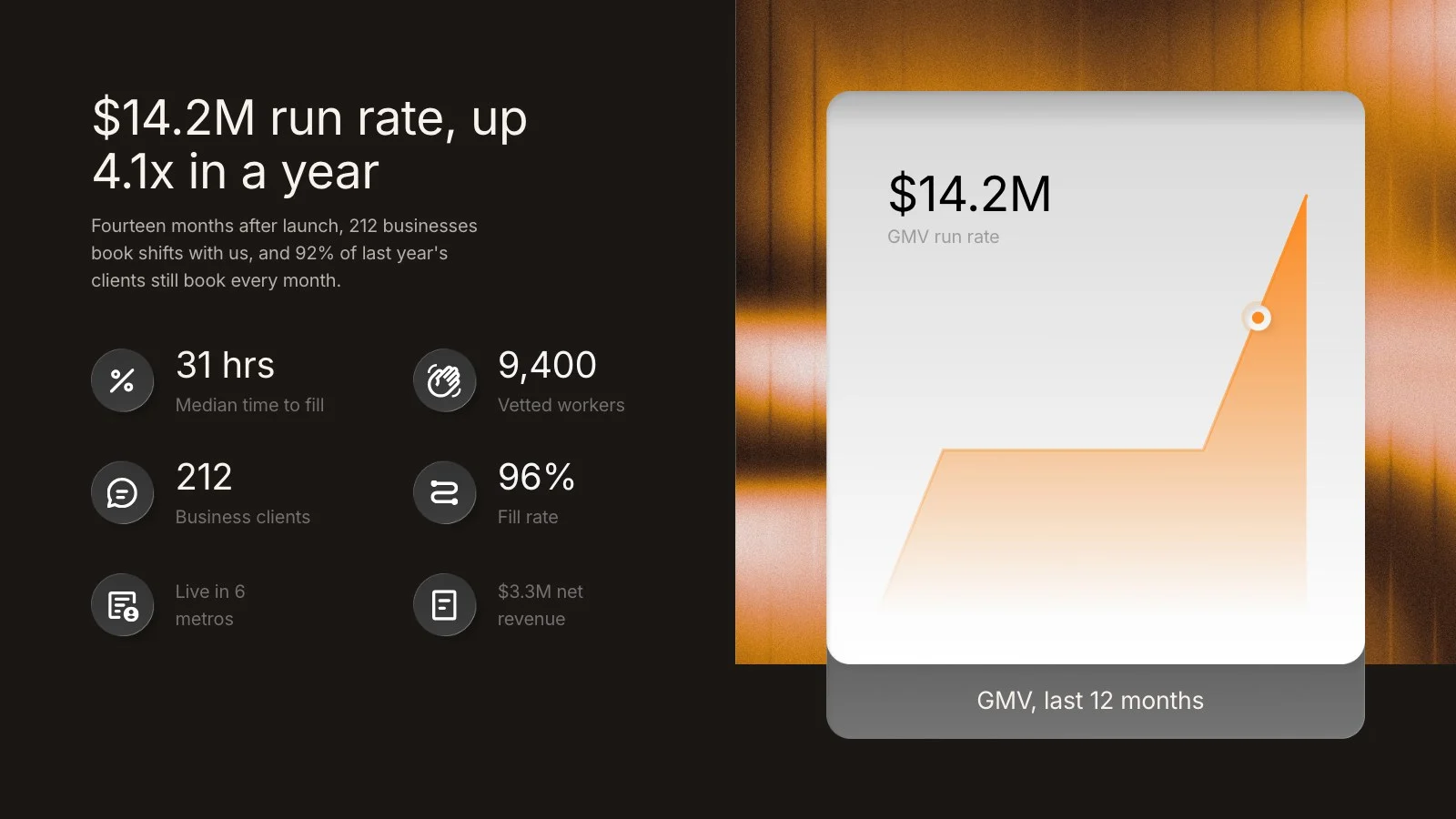
05 Traction
Growth leads the title, and the supporting numbers back up both sides of the marketplace: demand, supply and speed.
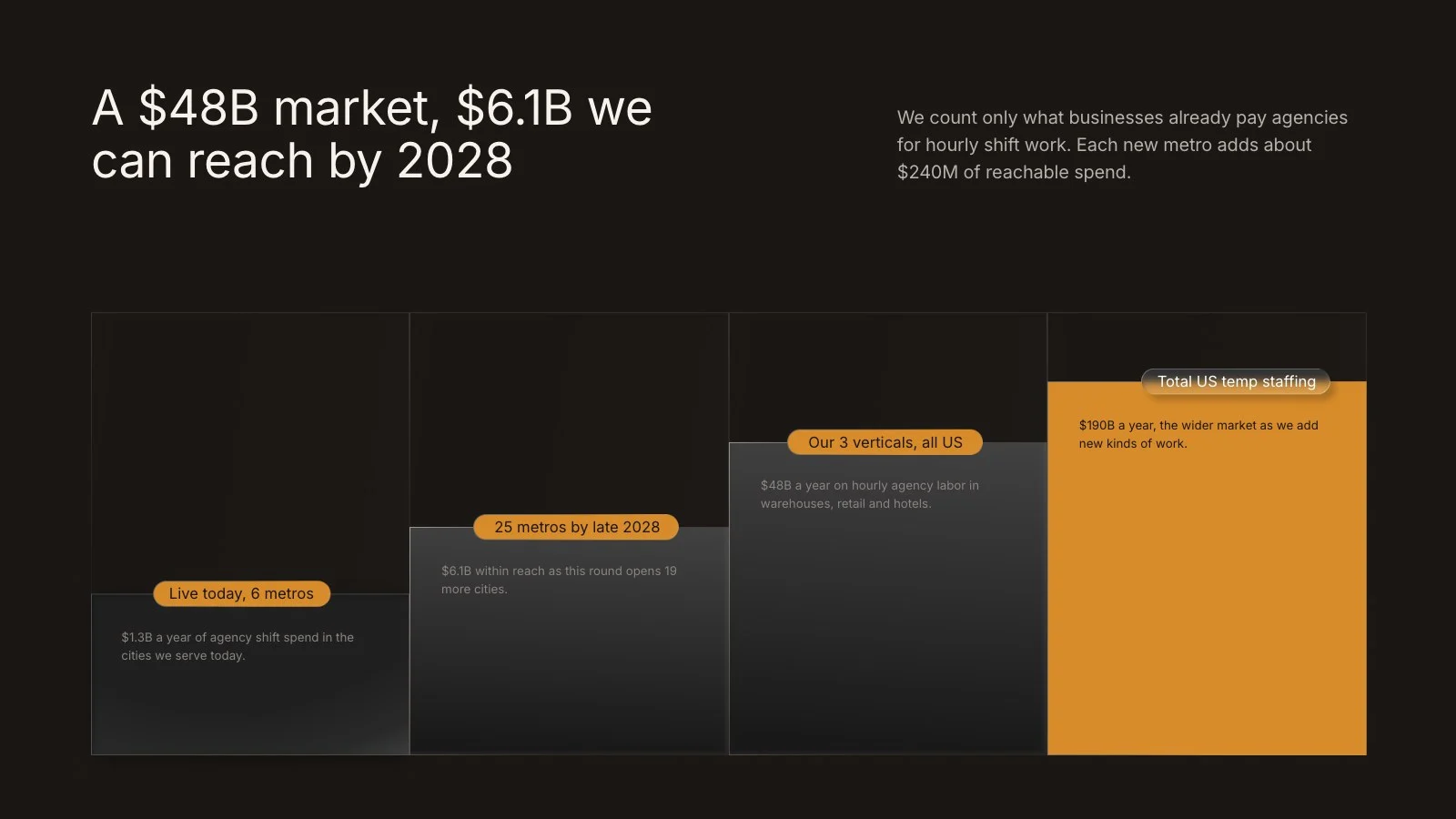
06 Market
It counts only money businesses already spend and steps from today’s cities up to the total, so the big number feels earned.
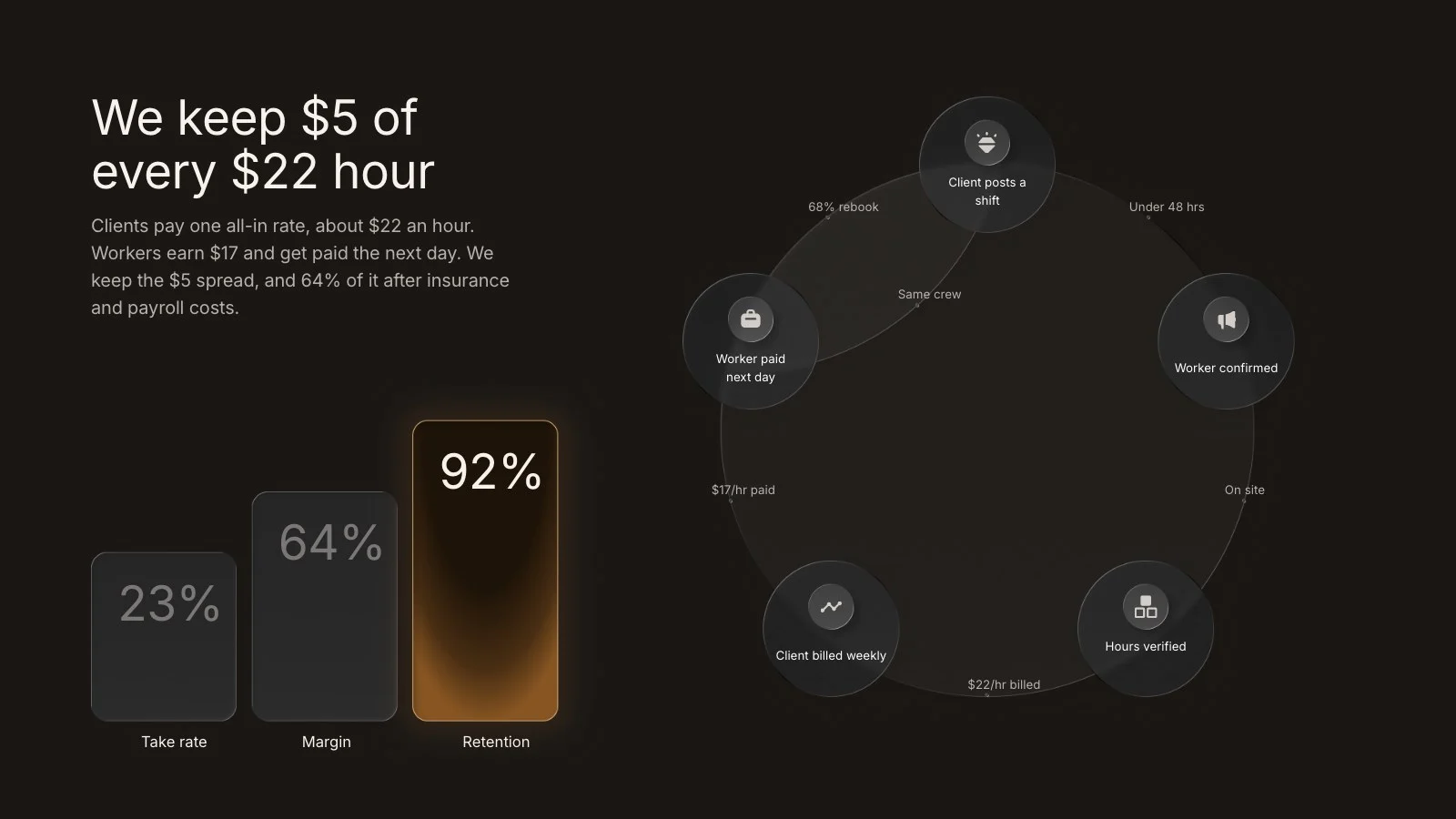
07 Business model
Unit economics in one plain sentence. Investors can check the take rate and margin before reading anything else.
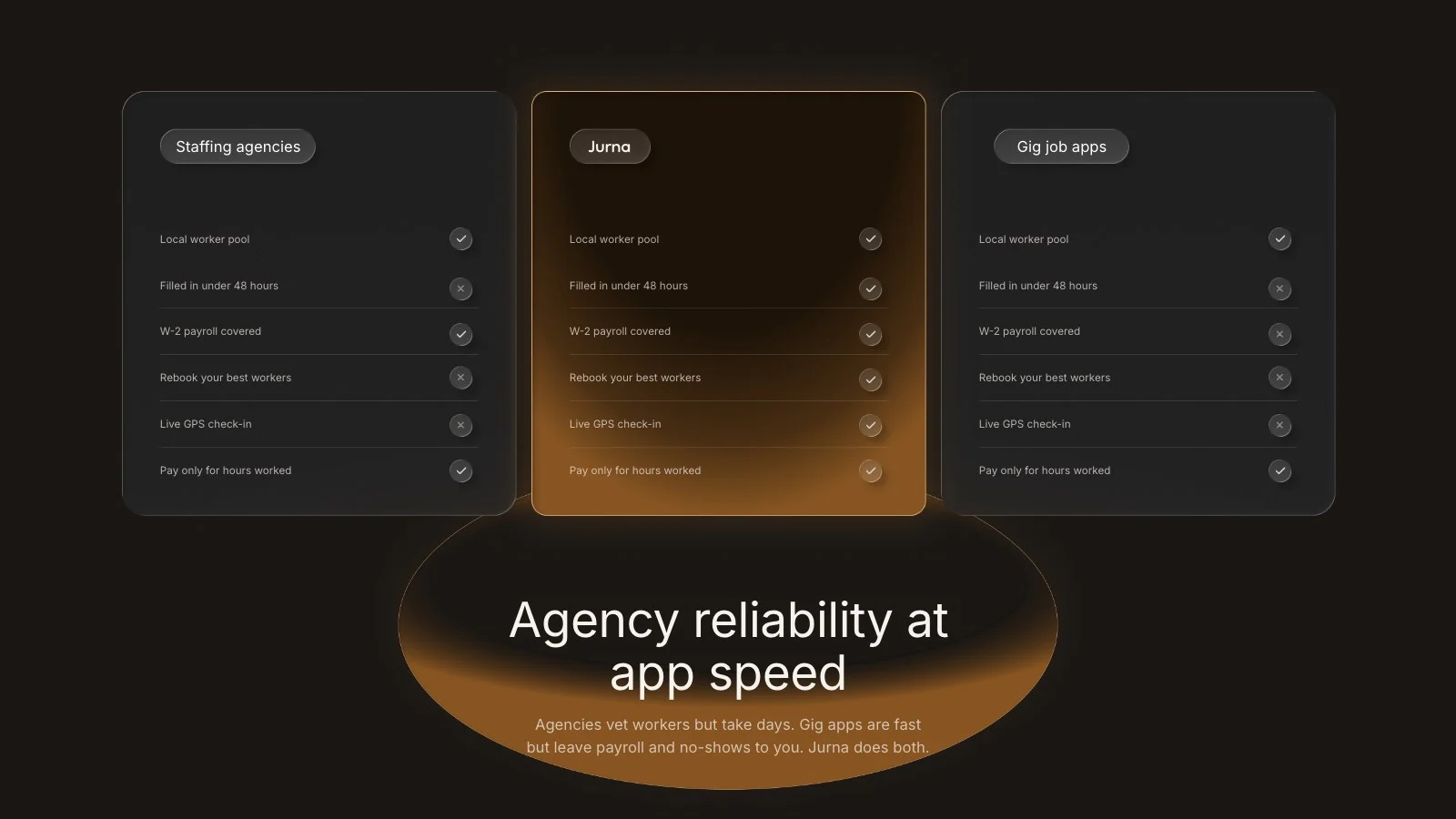
08 Competition
It names the two alternatives buyers already use and shows the trade-off each forces, which Jurna removes.
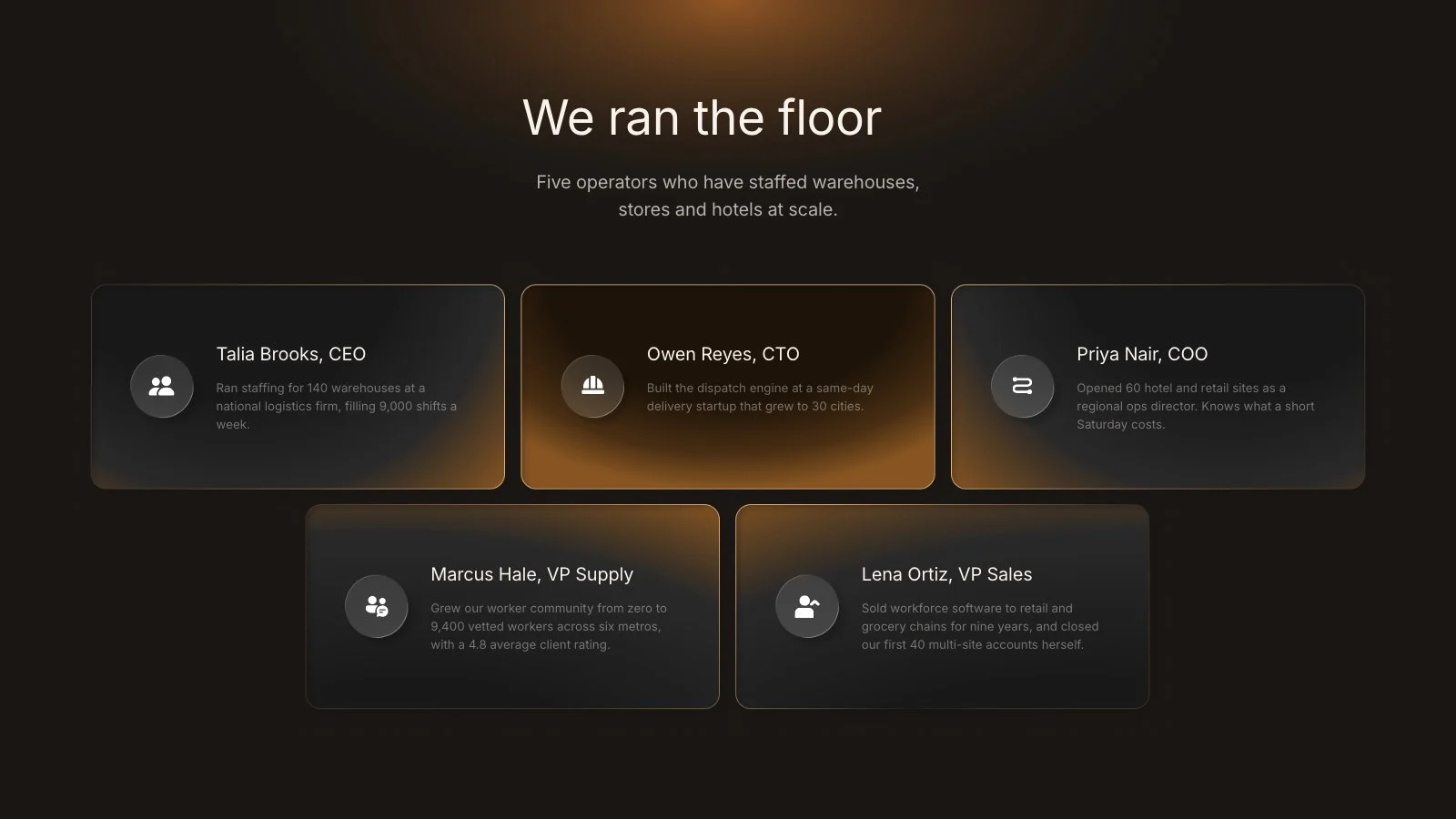
09 Team
Every bio ties past work to this exact problem, so the investor sees why this team will win, not just their job titles.
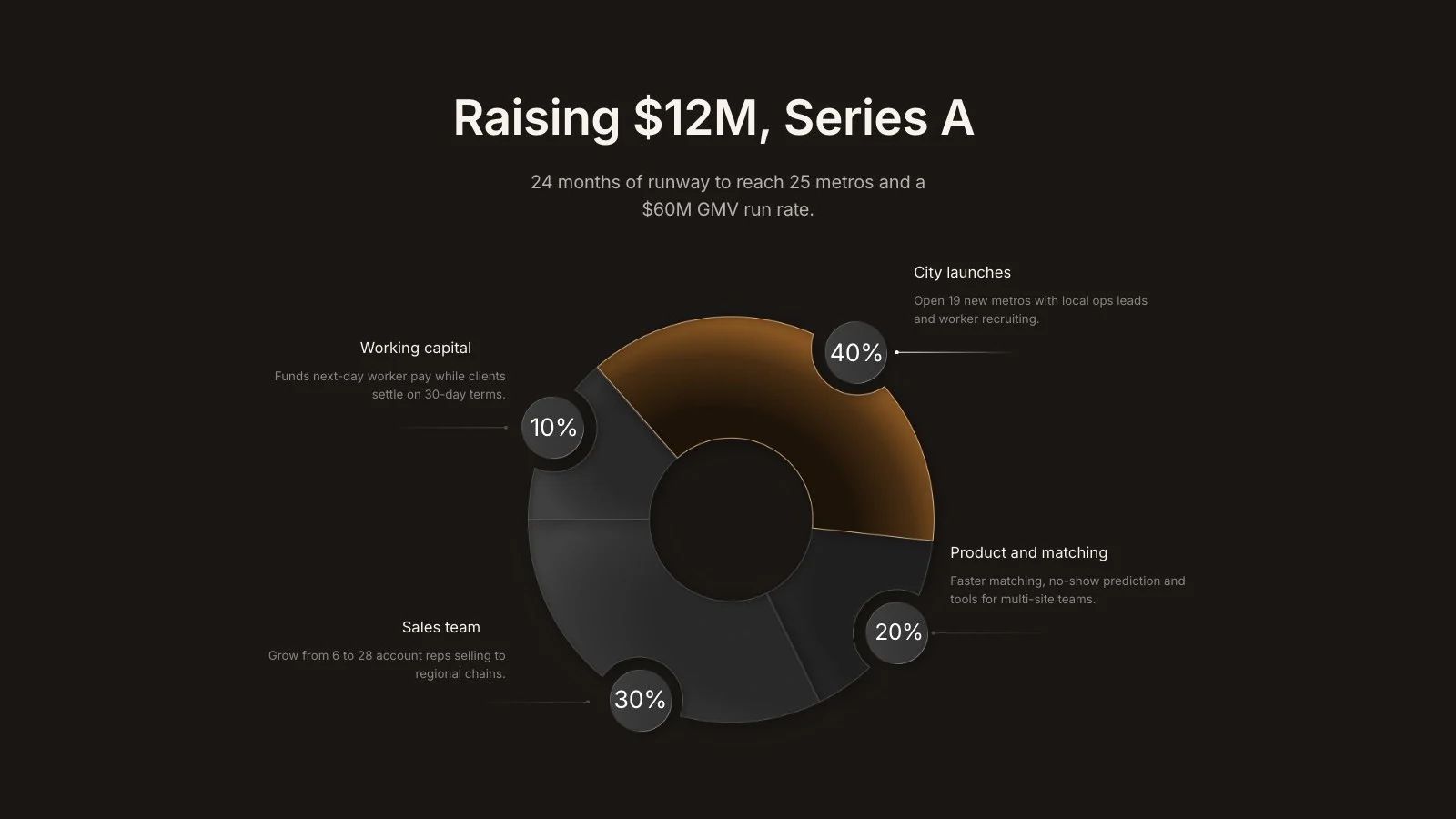
10 The ask
The amount, the runway and the milestone sit in the first two lines, and every dollar is tied to the growth plan.
A Series A pitch for a fictional shift-staffing marketplace. Every company, person and number in it is made up.
Keep reading
Write your own pitch.
Questions
Pitch decks, answered.
What should a pitch deck include?
How many slides should a pitch deck have?
Are these real companies?
Can I make a pitch deck like these?
Your pitch deck, designed in about a minute.
Paste your website or drop in your notes and numbers. The AI pitch deck generator writes and designs every slide. Free to start.
1,000 free credits every month · No card needed